








Tree guards and baffles are essential tools to safeguard your young trees from harm. These protective wraps and shields, whether made of sturdy metal or durable plastic, defend your tree’s vulnerable bark from gnawing critters, harsh lawn equipment, and even extreme weather. By encircling the lower trunk, a tree guard can prevent hungry rabbits or voles from chewing the bark and stop deer from rubbing their antlers.
At the same time, guards protect against “misguided” weed whackers and lawn mowers that might scar the trunk, and they even shield against environmental stress like scorching sun and frost. In short, using a tree guard is a simple, proactive step to help your trees grow strong and healthy for the long run.
You would not leave a toddler alone in a busy street without some sort of protective measure, so why leave a young tree unguarded, exposed to an array of potential dangers? You might be wondering, “Are all tree guards the same?” The truth is, while many varieties of guards exist, not all are created equal.
What Exactly Are Tree Guards and Baffles?
Tree guards are protective barriers placed around a tree’s trunk to prevent damage. They can be made of metal, plastic, mesh, or other materials, and they typically form a cylinder or wrap around the trunk. Tree baffles, on the other hand, are a type of guard, often a widened or flared shield, designed specifically to stop animals from climbing up the trunk.
In other words, a baffle is usually a smooth, disk-like or cone-shaped guard that animals like squirrels or raccoons can not get past.
Entendiendo la función principal de los protectores de árboles
A well-designed tree guard offers shelter, security, and the freedom to thrive without hindrance. But why do young trees need protection in the first place?

Picture a newborn in a bustling world: It is not that the world intends to harm them, but there are countless inadvertent threats, such as people moving around, objects falling, harsh weather conditions, and malicious animals.
For trees, hazards might include gnawing rodents, passing lawnmowers, a misapplied weed spray, or the scorching sun.

When you explore tree guards, you enter a world of shapes, materials, and designs. Some are made of simple plastic tubes, others are mesh-based, and a growing number are now made of robust metal, which is the best kind.
Una mirada rápida a los diferentes tipos de protectores de árboles
Antes de profundizar en por qué los protectores de árboles de metal son los más populares, dediquemos un momento a explorar los diferentes tipos disponibles. Desde redes de plástico livianas hasta deflectores de metal duraderos y resistentes a los impactos, cada opción tiene sus ventajas y limitaciones. Comprender estas distinciones lo ayudará a tomar la mejor decisión para sus árboles en crecimiento.
Redes básicas o plásticos
These are convenient, easy to put on, and they get the job done. Many come in tube form: you just slide them around the trunk, and voilà, you have a rudimentary shield. They can protect against small critters like rabbits or voles and can help reduce damage from minor weed control processes. However, these guards can sometimes feel like they offer some coverage, but you might not feel entirely confident they’re providing the protection you need.

El plástico puede degradarse bajo la intensa luz solar y volverse quebradizo con el tiempo. Las redes pueden dejar entrar demasiados elementos externos o ser desgarradas por animales agresivos. Si su entorno es relativamente apacible y lo que más le preocupa son los roedores que mordisquean ocasionalmente, estas pueden ser una buena opción. Pero si vive en un lugar donde hay cortadoras de césped rondando por el jardín, desmalezadoras zumbando o condiciones climáticas extremas, es posible que estas opciones más simples dejen a su árbol joven vulnerable.

Protectores y deflectores de árboles de metal
Los protectores de árboles de metal suelen tener forma de cilindros o deflectores (diseñados para disuadir a animales trepadores como mapaches o ardillas). Su naturaleza robusta significa que no se agrietarán bajo presión ni se degradarán bajo la luz solar intensa. Algunos están diseñados con revestimientos especiales para resistir el óxido o la corrosión, lo que los hace durar significativamente más que sus contrapartes de plástico.
If you have ever dreamed of planting an orchard and ensuring each tree stands the test of time, you will appreciate the investment in a metal guard. In short, while simpler materials may be sufficient for some contexts, metal stands out as the champion for broader or more demanding environments.

Y si eres un perfeccionista de corazón, te encantará cómo estos protectores se alinean con tu deseo de permanencia y seguridad real y tangible.
Construido para resistir el tiempo y los elementos.
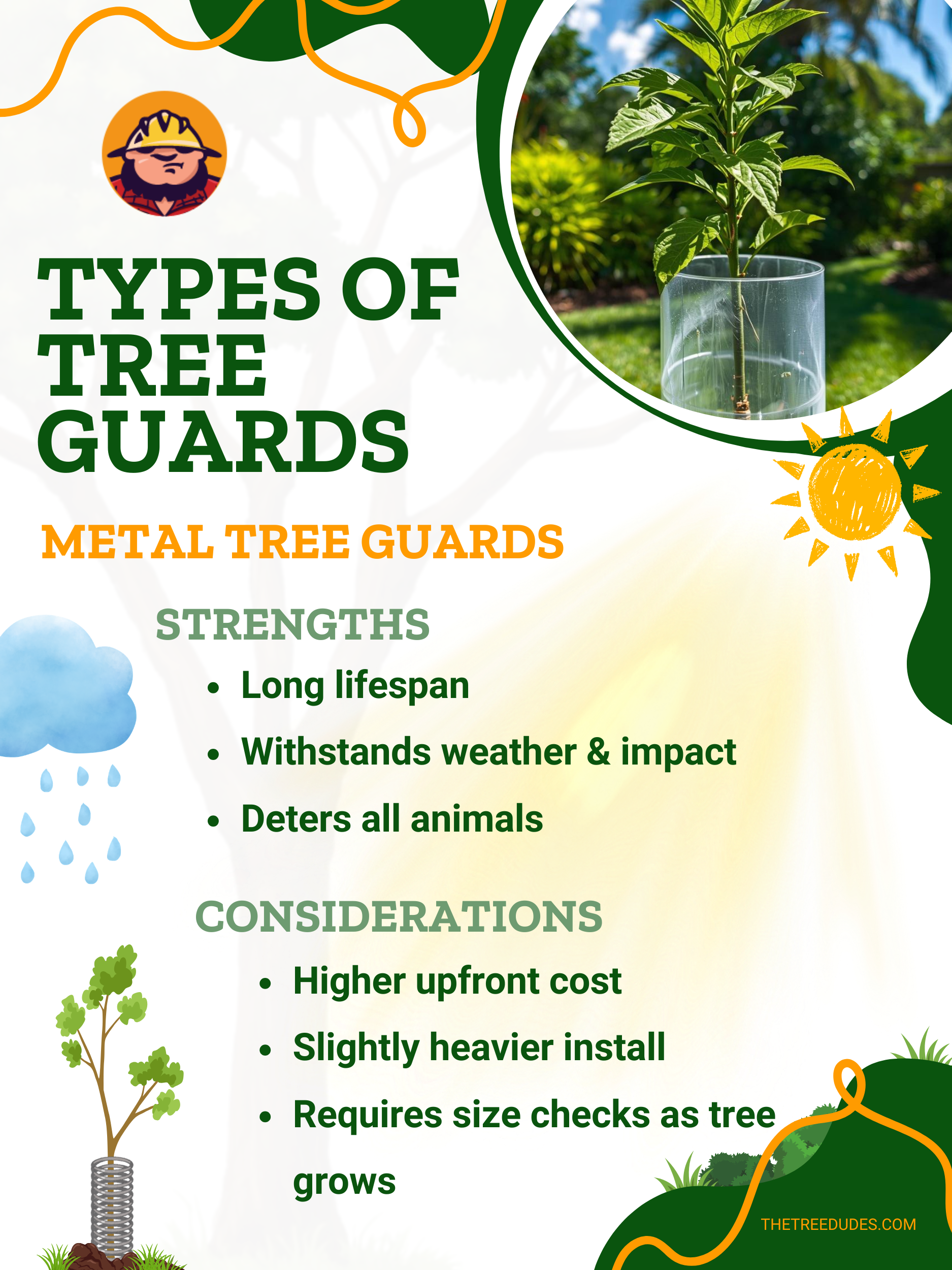
- UV-Resistant: Unlike plastic guards that can become brittle after prolonged exposure to the sun, high-quality metal guards are coated or treated to resist UV damage, maintaining their strength and effectiveness for years.
- Rust and Corrosion Protection: Many guards are galvanized or powder-coated to prevent rust, making them ideal for humid and rainy environments. Some high-end models come with weatherproof coatings that extend their lifespan to 20+ years with minimal maintenance.
- High Impact Resistance: Guards can handle external forces, like a stray lawnmower blade, string trimmer, or strong winds better than mesh or plastic alternatives.
Diseñado para protección de alta resistencia
For orchards, urban tree plantings, and gardens where long-term tree health is super important, tree guards offer unmatched structural integrity. This is why they are the preferred choice of city planners, professional landscapers, and commercial orchards looking to protect trees in high-traffic areas.
- Rodent and Animal Deterrence: Small mammals such as rabbits, voles, and deer are known to chew on young bark, leading to girdling (a condition that can kill a tree by cutting off its nutrient supply). Guards create a physical barrier that animals cannot chew through or squeeze past.
- Baffles to Stop Climbing Animals: Baffles (guard attachments with a flared or smooth shape) are especially useful in stopping squirrels, raccoons, and cats from climbing up the trunk. Unlike straight guards, baffles create a wide, slippery obstacle that these climbers cannot get their paws around, effectively blocking their ascent. This is ideal if you’re protecting bird nests or fruit higher in the tree. Standard tree guards made of plastic or mesh generally won’t stop a determined climber. A squirrel might still scramble up a narrow guard. This is why the wide umbrella-like design of baffles is so important for climbing animals.
- Temperature Regulation: Unlike black plastic guards that can absorb and retain excessive heat, leading to bark damage, guards with reflective surfaces help regulate temperature, reducing the risk of heat stress on young trees.
- Shielding from Mechanical Injury: Tree guards protect against accidental damage from lawn mowers, string trimmers, and other machinery. For example, a plastic or metal guard will take the hit from a weed trimmer line instead of your tree’s bark, preventing cuts and scars. This is important because even a single strip of bark removed by a mower can weaken a young tree or invite disease.
- Reducing Environmental Stress: Certain guards can buffer the trunk from sunscald and temperature extremes. In winter, a guard helps insulate the lower trunk and can prevent frost cracks. In summer, light-colored guards, often white or reflective, keep excess sun off the bark, avoiding overheating and sunburn.
Una inversión a largo plazo para productores serios
Si bien es posible que sea necesario reemplazar los protectores de plástico cada pocos años, un protector de metal bien instalado puede durar décadas, protegiendo sus árboles temporada tras temporada con poco mantenimiento.
- Una sola protección de metal galvanizado de alta calidad puede durar hasta 25 años en el campo, mientras que las alternativas de plástico pueden necesitar reemplazo cada 5 a 7 años, lo que genera costos más altos a lo largo del tiempo.
- Muchos programas de silvicultura urbana y viveros comerciales utilizan protectores de árboles de metal porque reducen los costos de mano de obra y eliminan la necesidad de reemplazos frecuentes.
- Los protectores de metal pueden crecer hasta 25% más rápido que los que no están protegidos, ya que sufren menos daños por parte de los herbívoros, los equipos de césped y las duras condiciones climáticas.
How to Choose and Install Your Tree Guard
A estas alturas, probablemente estés pensando: “Muy bien, estoy convencido de proteger mis árboles jóvenes con protectores de metal de primera calidad, resistentes y elegantes. Pero, ¿por dónde empiezo?”. Repasemos los pasos:
Evalúe su entorno
Piense en las condiciones que rodean a su árbol joven. ¿Está expuesto al sol intenso, a vientos fuertes o a mucha actividad animal? ¿Corta el césped o corta la maleza con frecuencia? Identificar estos factores primero le ayudará a seleccionar el deflector de metal adecuado, ya sea un protector de pared sólido, un protector de malla o un protector resistente para cortadora de césped o recortadora.
Mide tu retoño
Mida el diámetro del tronco de su árbol joven para asegurarse de que calce cómodamente. Los protectores de metal suelen adaptarse al crecimiento, pero si sabe el tamaño que ya tiene su tronco (y la rapidez con la que probablemente se expanda), se asegurará de no tener que reemplazar el protector demasiado pronto.
Seleccione su material
While plastics and nets are out there, we already established they suck and now your eyes are set on metal for its durability and reliability. If the environment is extremely tough, go for thicker steel or galvanized options. A lighter metal with anti-rust treatment might suffice if it is moderately challenging.
Preparar el arbolito
Los árboles jóvenes crecen mejor en un entorno limpio y sin obstáculos. Las malas hierbas y el césped crecido pueden retener el exceso de humedad, lo que puede provocar el crecimiento de hongos o atraer insectos no deseados.
Utilice guantes o un rastrillo pequeño para quitar el pasto, las malas hierbas, las hojas o las ramitas de la base del árbol joven. Si es necesario, aplique mantillo alrededor de la base, pero manténgalo a unos centímetros del tronco para evitar que el exceso de humedad provoque la pudrición.
Si nota rasguños, marcas de mordidas o decoloración, esto podría indicar actividad animal previa. En tales casos, es posible que deba aplicar un vendaje para heridas de árboles o una envoltura protectora antes de instalar la protección.
Envuelva o asegure la protección
Depending on the design, you will either wrap the guard around the trunk or slide it into place. Some guards come in sections that clasp or bolt together. Make sure it is snug but not constrictive. Your sapling needs room to breathe and grow.
Inspeccionar regularmente
Incluso el mejor y más resistente deflector de metal puede necesitar un ajuste ocasional. Revise el protector cada pocas semanas para ver si presenta signos de desgaste, óxido o si el árbol joven ha superado el espacio que ocupa. Ajústelo o actualícelo según sea necesario.
Y así, te habrás asegurado de que tu nuevo árbol tenga el mejor comienzo posible.
Mitos y conceptos erróneos comunes
Ahora que está en camino de convertirse en un conocedor de protectores de árboles, es posible que se haya topado con algunos mitos en el camino.
- Los protectores de árboles de metal sobrecalentarán el tronco. Si bien el metal puede absorber y conducir el calor, la mayoría de los protectores de metal de calidad están diseñados con ventilación o superficies revestidas para reflejar la luz solar. Están fabricados para proteger el tejido de la corteza, no para quemarlo. Un protector de metal bien diseñado ayuda a estabilizar la temperatura alrededor del tronco.
- Guards stunt the tree’s growth. Esto ocurre únicamente si el protector está demasiado ajustado o nunca se ajusta a medida que el árbol crece. En realidad, un protector instalado correctamente puede ayudar al árbol a invertir más energía en el crecimiento hacia arriba al evitar daños en la corteza.
- All mesh guards are the same. La malla de plástico puede degradarse o romperse fácilmente. La malla de metal de alta calidad es mucho más duradera. No las agrupe solo porque se parecen a simple vista.
Desmentir estos mitos le ayudará a evitar cuestionar su decisión.
Por qué es realmente importante proteger los árboles
In a world where deforestation and environmental degradation are common topics of concern, it can sometimes feel overwhelming to think about making a difference. But planting a tree and ensuring it survives is a concrete action that holds long-term benefits. You don’t have to transform into an eco-warrior overnight; simply Tome medidas para proteger los árboles que plantaCada retoño que madura y se convierte en un árbol adulto puede compensar las emisiones de carbono, estabilizar el suelo e incluso mejorar la biodiversidad local.