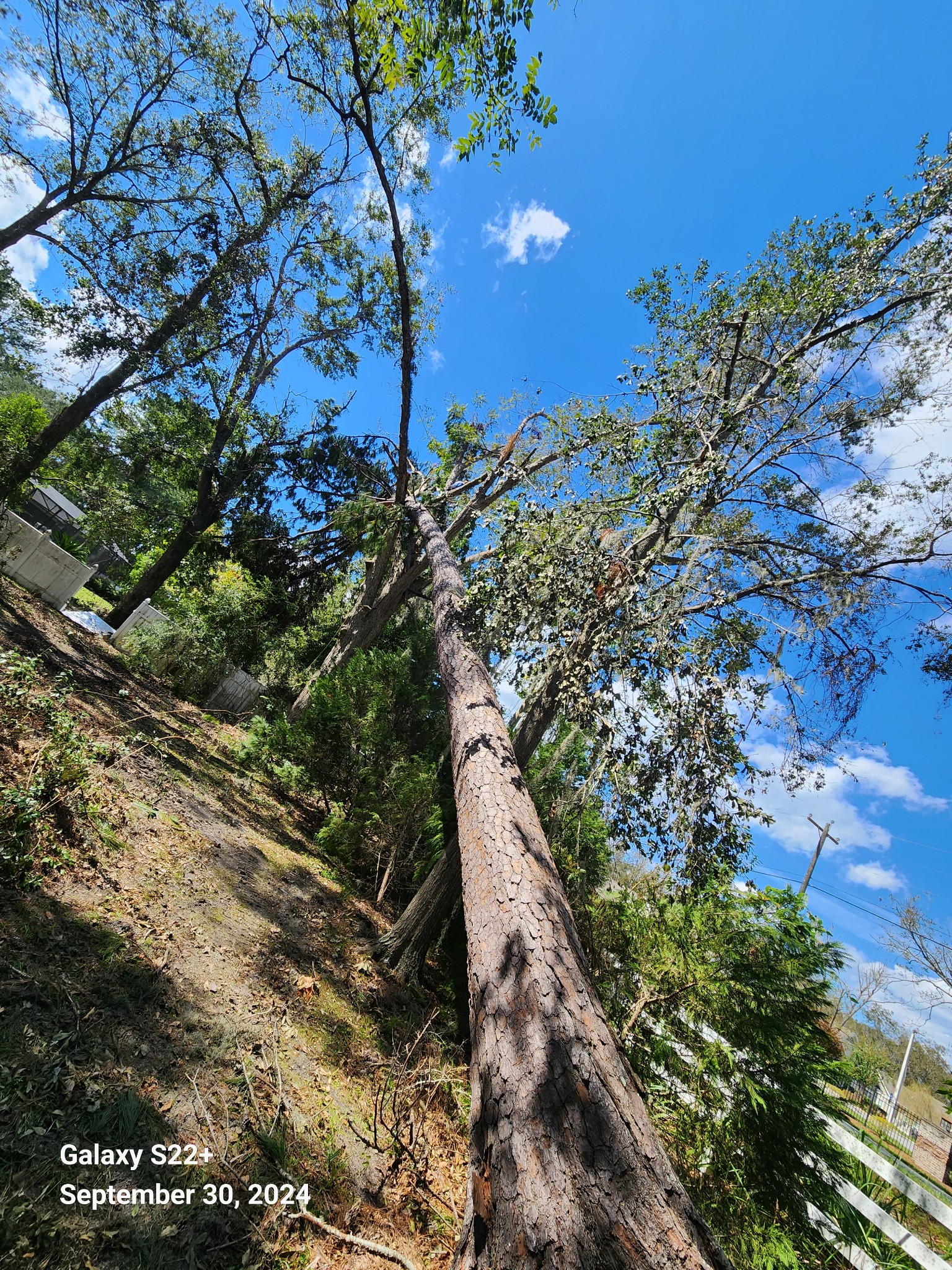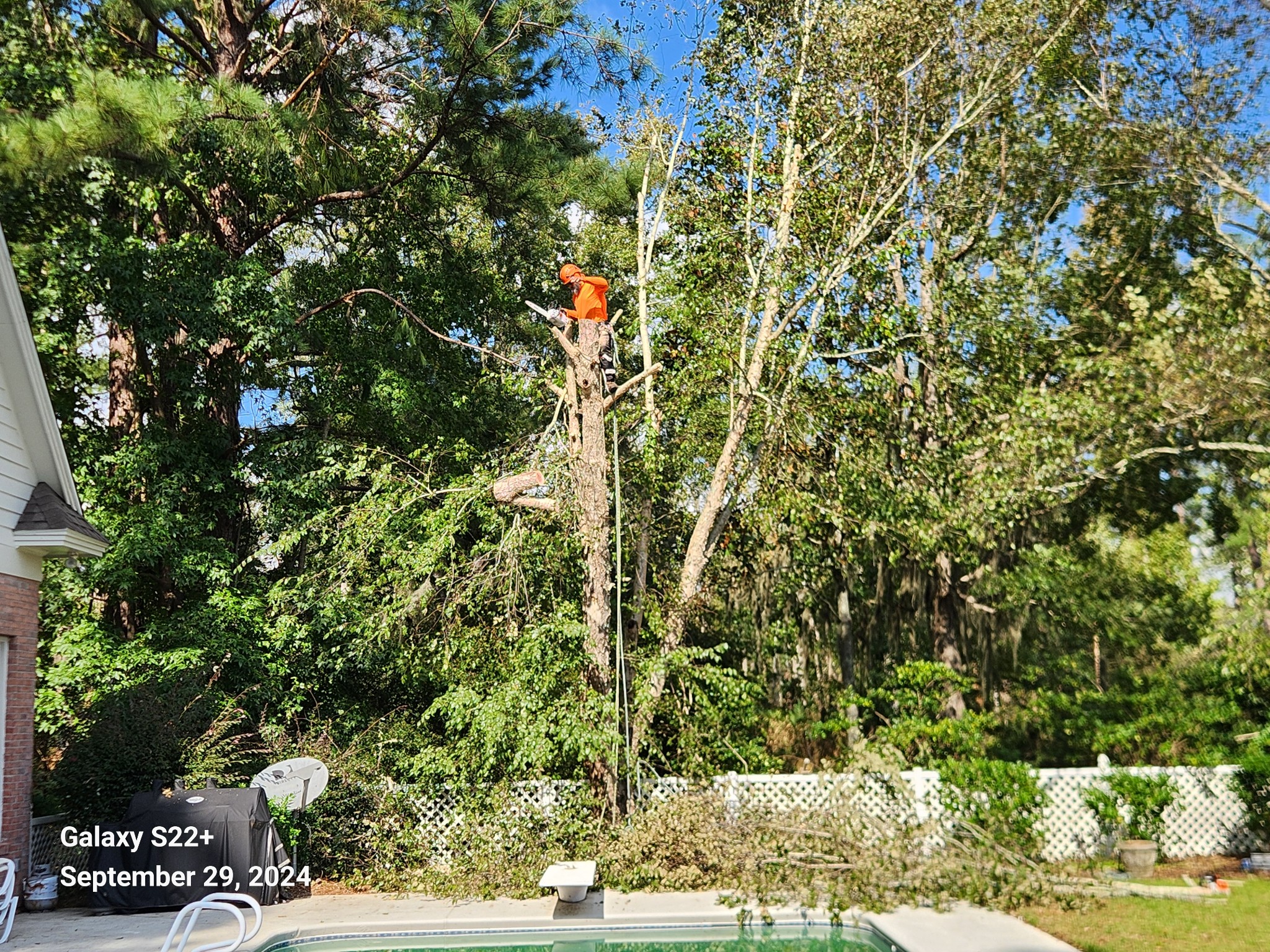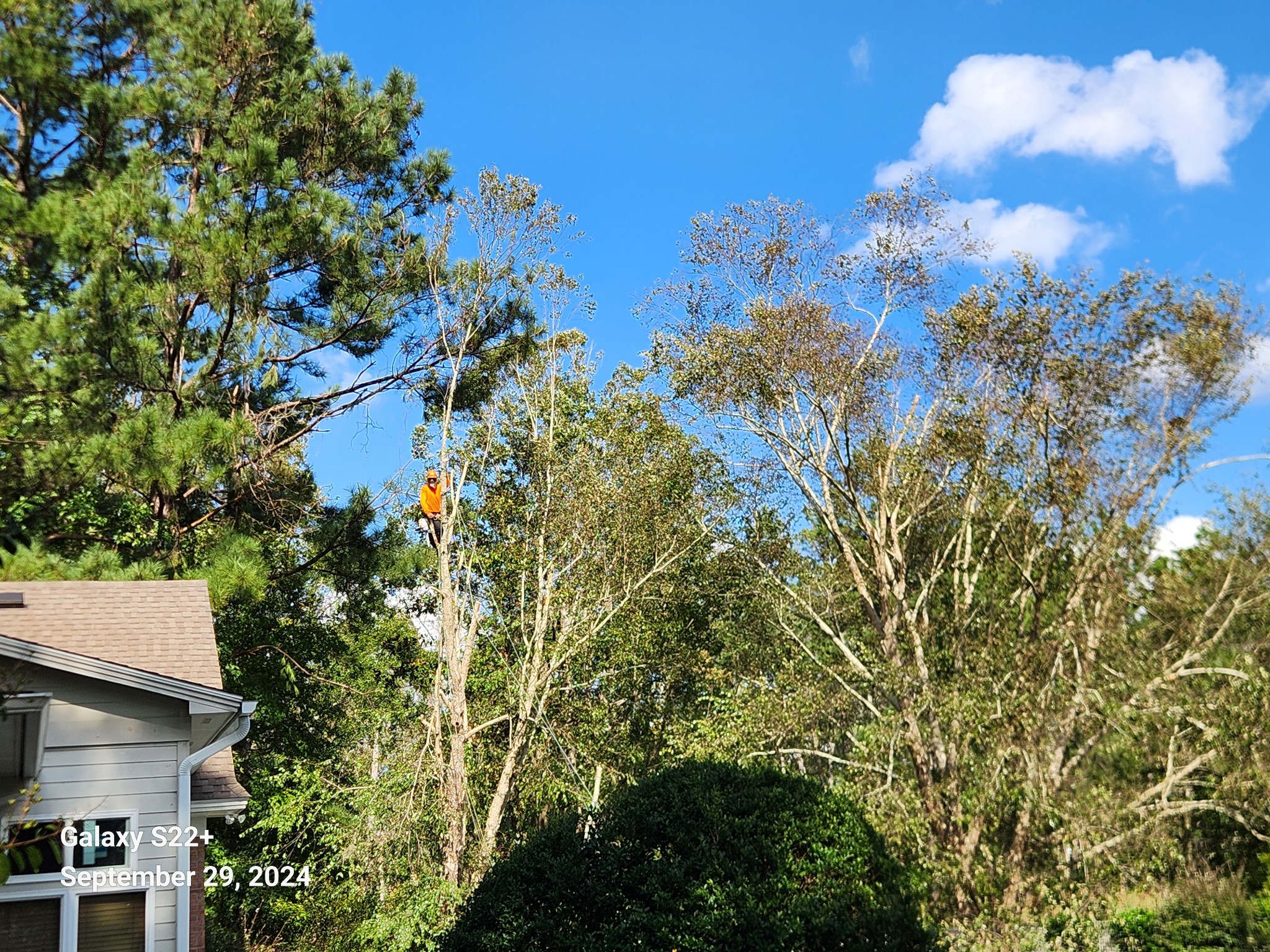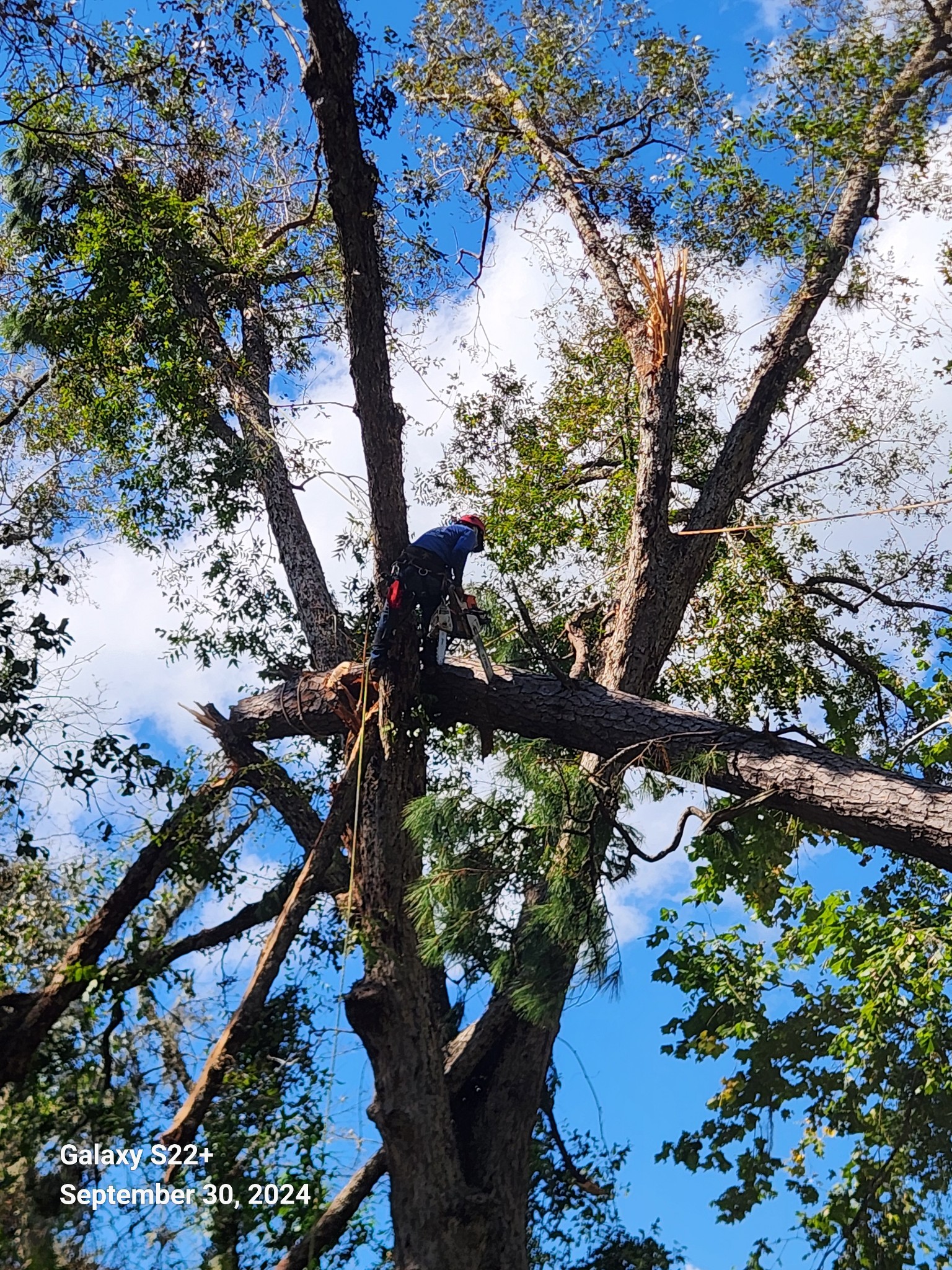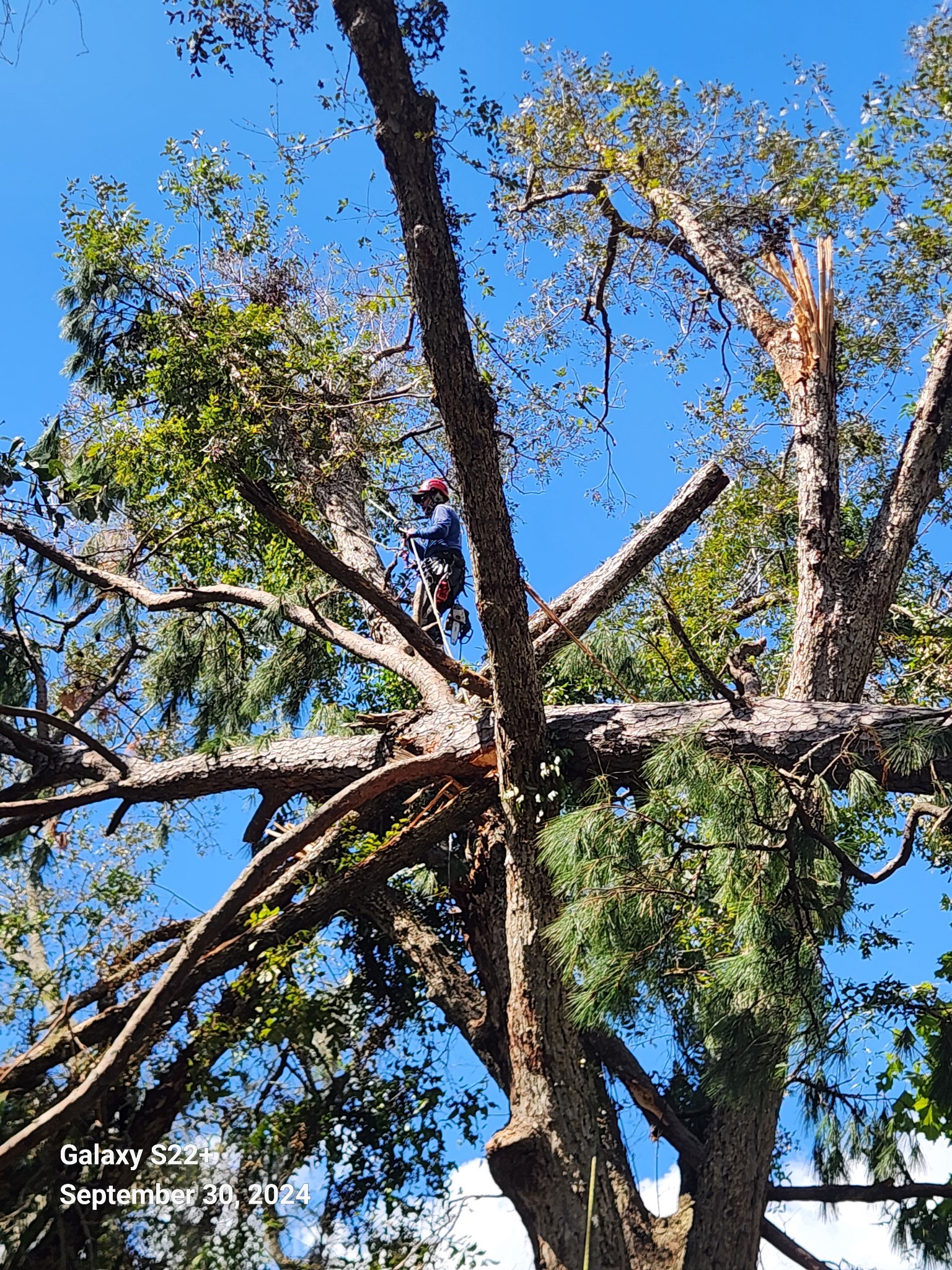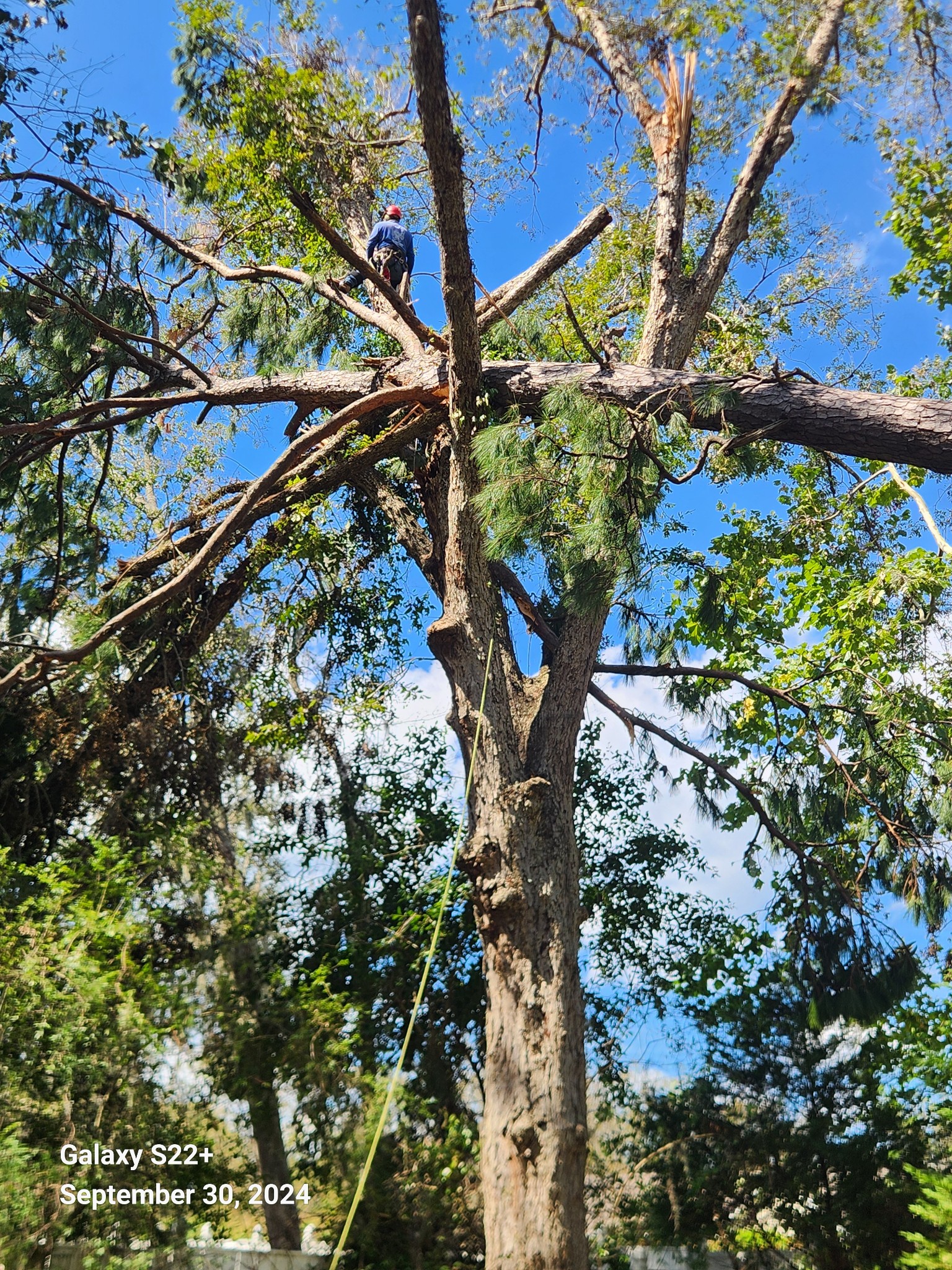




Storms in Florida can harshly influence the environment, especially trees. During a hazardous storm, the healthiest trees have the most chance of survival. But if any tree has natural imperfections, previous damage, or any other type of flaw (bark and trunk cracks or weak V-shaped unions), it may suffer damage which will probably require storm cleanup.
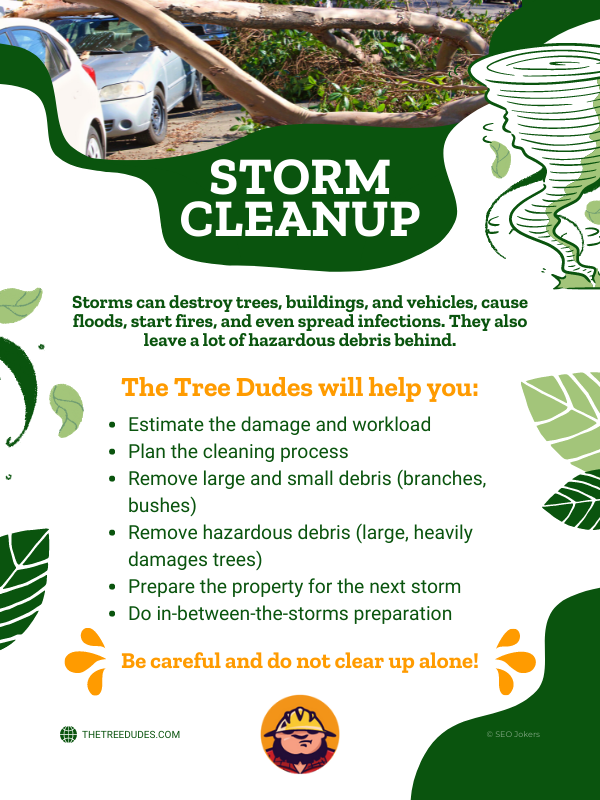
Storms have several consequences: they leave massive floods, start fires, cause structural damage to buildings, leave significant wind damage, and cause landslides. All this damage could result in mold infections, building instability, and trees that endanger human lives.
Removing storm hazards can be dangerous, too, if you decide to do it yourself. But luckily, our team is always ready to help you return your property’s pre-storm shine.
There are several things we can do to get your property all nice and clean after the storm:
The weather in Florida can shift from sunny and calm to stormy and dangerous in a matter of minutes. At one moment, you are sunbathing, and next thing you know, you are grabbing your things and hiding from the rain and wind.
Unfortunately, unlike you, your trees cannot hide inside. To help them stand strong despite the devastating power of Florida storms, make sure you prepare them in time. Timely pruning, trimming, cabling, or hazardous removal, done by professional arborists, will help you reduce the damage and keep your property safe. Do not forget about trees on your commercial property as well!
Yes, our team is available 24/7, 365 days a year for all tree emergencies and hazardous removals. You can call us, write us a message on WhatsApp, or send an SMS.
Once a fire reaches a tree, it first hits the bark. Since the bark is the tree’s natural protection, it can hold up to a certain temperature, but any stronger fire will easily burn through it and reach the area under the bark, which is far more sensitive. Once the tubes that are carrying water and minerals get damaged, the water from the tree starts to evaporate and the carbon (tree-building material) combines with oxygen from the air, releasing CO2 to the atmosphere and turning organic matter into minerals-rich ash that will feed the soil it spreads on.
Any dead tree, not just palms, can eventually fall. The risk is especially high for trees exposed to heavy winds, frequent storms, or unstable soil conditions. Imagine transforming your property into a safe and vibrant space! By conducting regular inspections and promptly taking down dead or damaged trees, you can dramatically lower the chances of property damage or injury. Don’t let hidden hazards linger, let’s keep your surroundings safe and beautiful!
Absolutely. When a tree falls on your property, it can result in extensive damage, especially if it impacts your home, car, or utility lines. Florida’s frequent storms amplify the risk. Tree roots can mess up foundations, sidewalks, and driveways. Emergency tree services jump into action to tackle these dangers fast, reducing any damage and helping you feel safe and relaxed again.
In Florida, storms and hurricanes are the primary causes of tree emergencies. Intense winds and rain can destabilize tree roots, leading to uprooting or large branches snapping off. Other factors include age, disease, and proximity to buildings or structures, which may create hazardous conditions over time, even outside the storm season.
A tree is considered too close if its branches or roots are 10-20 feet from your home. This proximity can increase the likelihood of damage during a storm and may result in blocked gutters, foundation issues, or even mold growth on your exterior walls due to trapped warm moisture. If you’re not sure about your tree, we can check out where it’s at and how it’s growing to see if it might be a hazard.
Dead palm trees pose a risk of falling, especially during Florida’s frequent storms and high winds. When a palm tree dies, it becomes weak and wobbly, which means it can easily tip over or break. If you notice signs of decay, such as browning fronds, sagging trunks, or holes from pests, it’s crucial to remove the tree to prevent accidents.
A high-risk or hazardous tree is a tree that suffered irreversible damage and therefore must be removed. The following trees can qualify for an emergency tree service: fallen trees, leaning trees, uprooted trees that cannot be replanted back, trees with a snapped trunk, trees suffering an incurable infection or pest infestation, and dead trees.
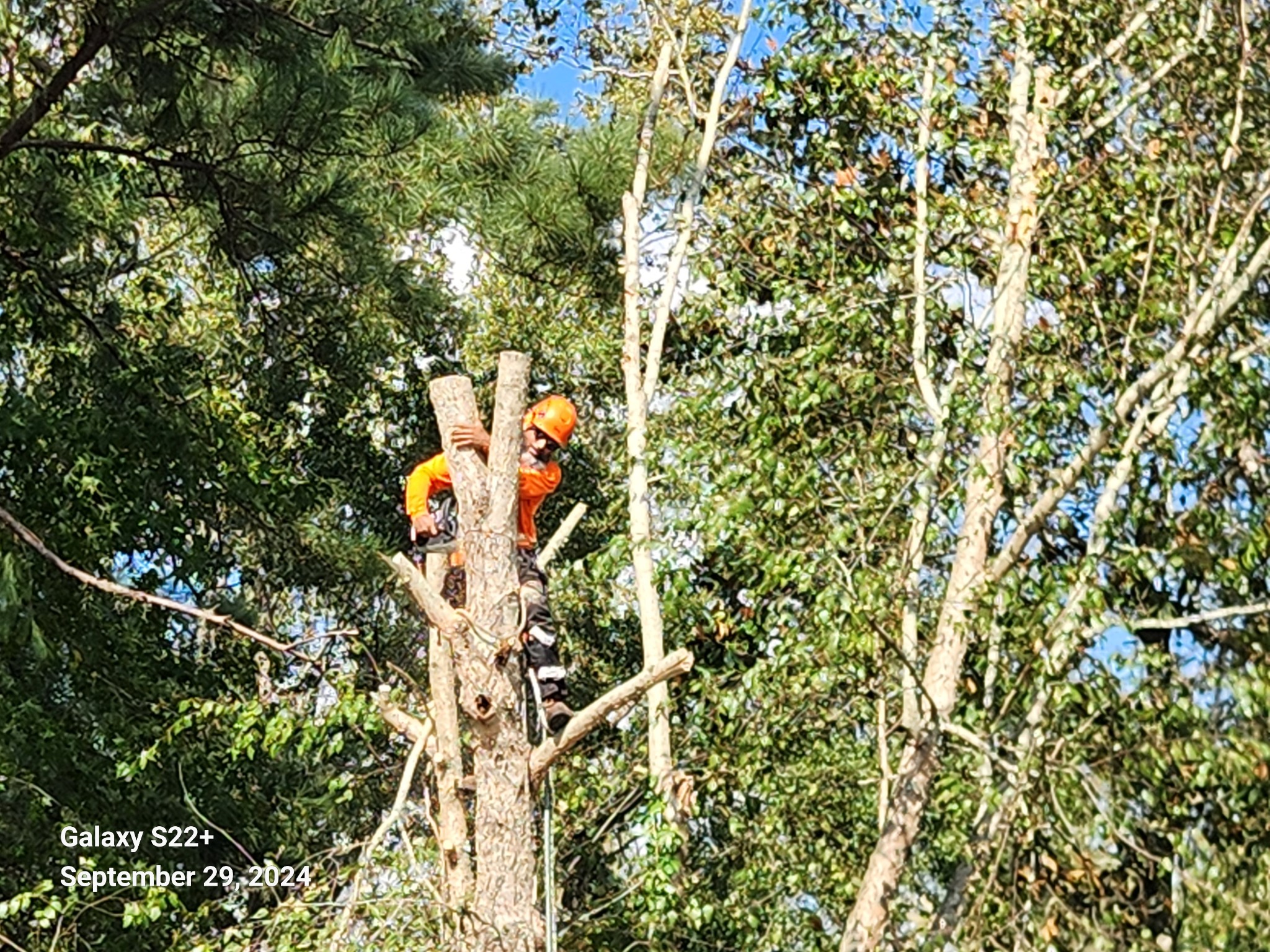
The safest way to remove a hazardous tree is to let the professionals take over, especially if a tree has already fallen and damaged your property. The process is intricate and requires a high level of expertise, as you don’t want to cause more damage than it already did. Therefore, call a licensed tree service for an estimate and let them figure out the best way to deal with the problem at hand. They will remove a hazardous tree safely without causing additional damage.
When a tree looks dead, severely infected with mold, the trunk looks hollow inside, has deep cracks and splits or large limbs have multiple cracks and splits and look like they are about to snap, then you can be sure that the tree is hazardous.
In some cases you can save a hazardous tree. For example, if a tree lost only some of the outer limbs or lost one main branch but still has most left intact, you will be able to save it after a professional tree service removes a broken branch. If the tree suffered a harsh pest attack or disease infection, and the damage is beyond repair, then removing it is the only option. If the tree trunk has cracked or split in half, you will have to remove that tree as well.
While it might not seem that way, even small palm trees can cause serious damage to your property. For example, smaller palm trees can rise sidewalks, even foundations, despite their roots being shallow. Large palm trees can do the same thing, and additionally damage buildings and vehicles, because their trunk is taller. Even dry palm tree fronds can leave a dent in your car or destroy a fence. Fronds can also get caught in power lines. If you have a palm tree that has already caused damage to your property, contact a professional tree service right away and let them handle the issue safely, without causing any more damage.
There are several ways of removing damaged palm trees, and all of them include contacting a tree removal service. The removal technique tey will use will mostly depend upon the condition of the. Experienced arborists will be equipped with good safety gear and heavy machinery needed to remove larger palms. They will also secure the palm tree trunk, so it doesn’t fall in an unexpected trajectory and make sure that non of the surrounding area is damaged in the process.
Palm trees will start showing different signs that will help you recognize if it is time to remove them. For example, the fronds will turn yellow and start falling off. If a palm tree trunk is damaged or tilted, it might also be a sign to remove it. The safest and most reliable estimate will make a professional tree service, which is why you should not wait for even a minute. Contact them and schedule an appointment.
While it might not seem that way, even small palm trees can cause serious damage to your property. For example, smaller palm trees can rise sidewalks, even foundations, despite their roots being shallow. Large palm trees can do the same thing, and additionally damage buildings and vehicles, because their trunk is taller. Even dry palm tree fronds can leave a dent in your car or destroy a fence. Fronds can also get caught in power lines. If you have a palm tree that has already caused damage to your property, contact a professional tree service right away and let them handle the issue safely, without causing any more damage.
Yes, coconut removal is often considered a hazardous or emergency removal, so we make sure to treat it as such, especially when storms or hurricanes are near. Coconuts are heavy and can cause serious damage once they start falling down, so make sure you remove them in time. Contact us to do it for you!