





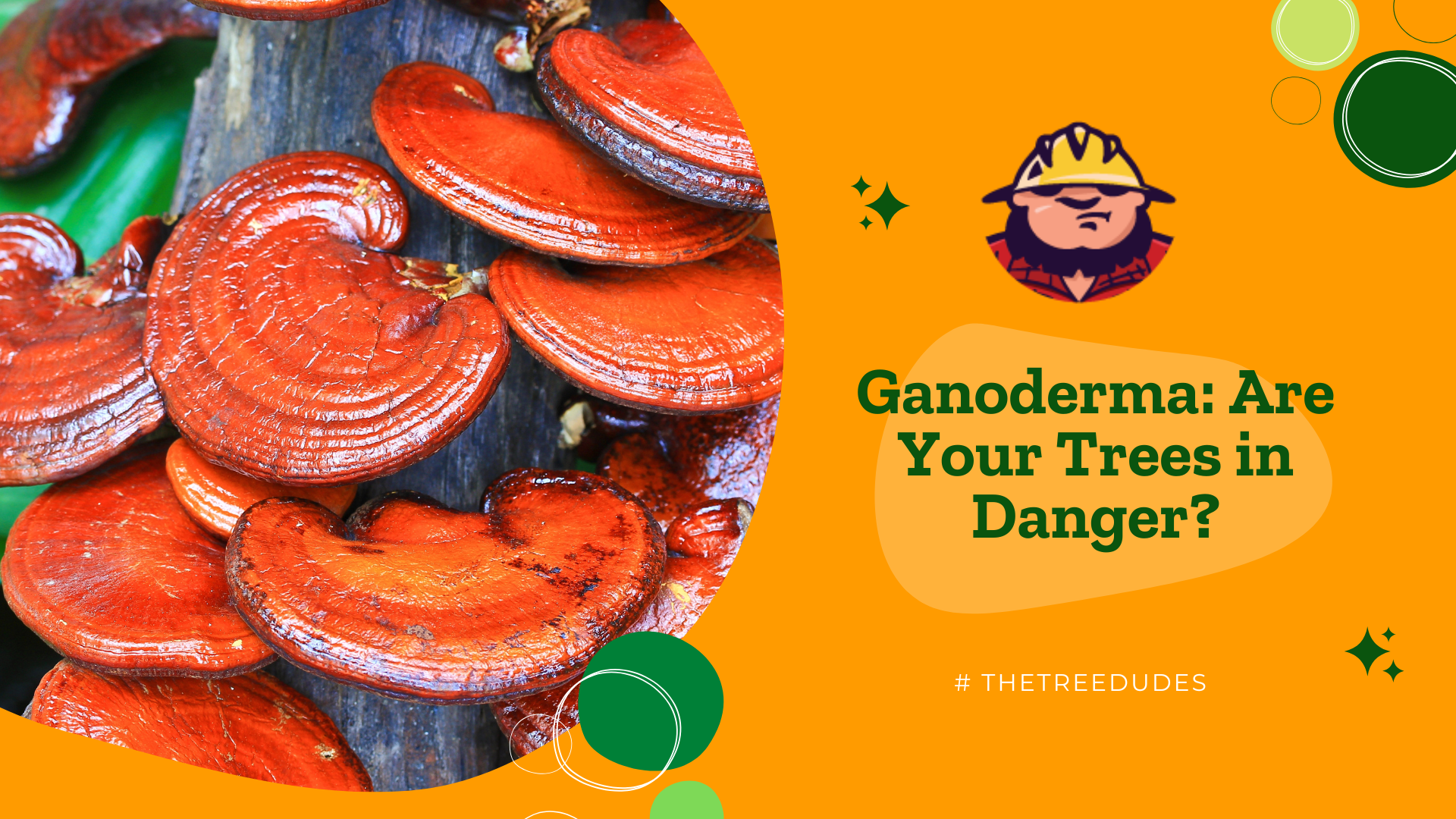
You’ve seen the postcards, Florida’s all sunshine and smiles. But there’s a darker side to this paradise. Have you ever heard of Ganoderma? It’s the naughty little fungus ruining Florida’s good time. Let’s peel back the layers of this fungal enigma, step into its eerie world, and uncover the suffering trees undergo as they fall victim to its embrace.
The Mushroom With a Malevolent Purpose
You’ve probably seen those weird, fan-shaped mushrooms hanging out on trees like they own the place. Little do you know, they’re not just freeloaders, they’re troublemakers. Their smooth, inviting surfaces are hard to resist. But looks can be deceiving. These mushrooms are potential hazards.
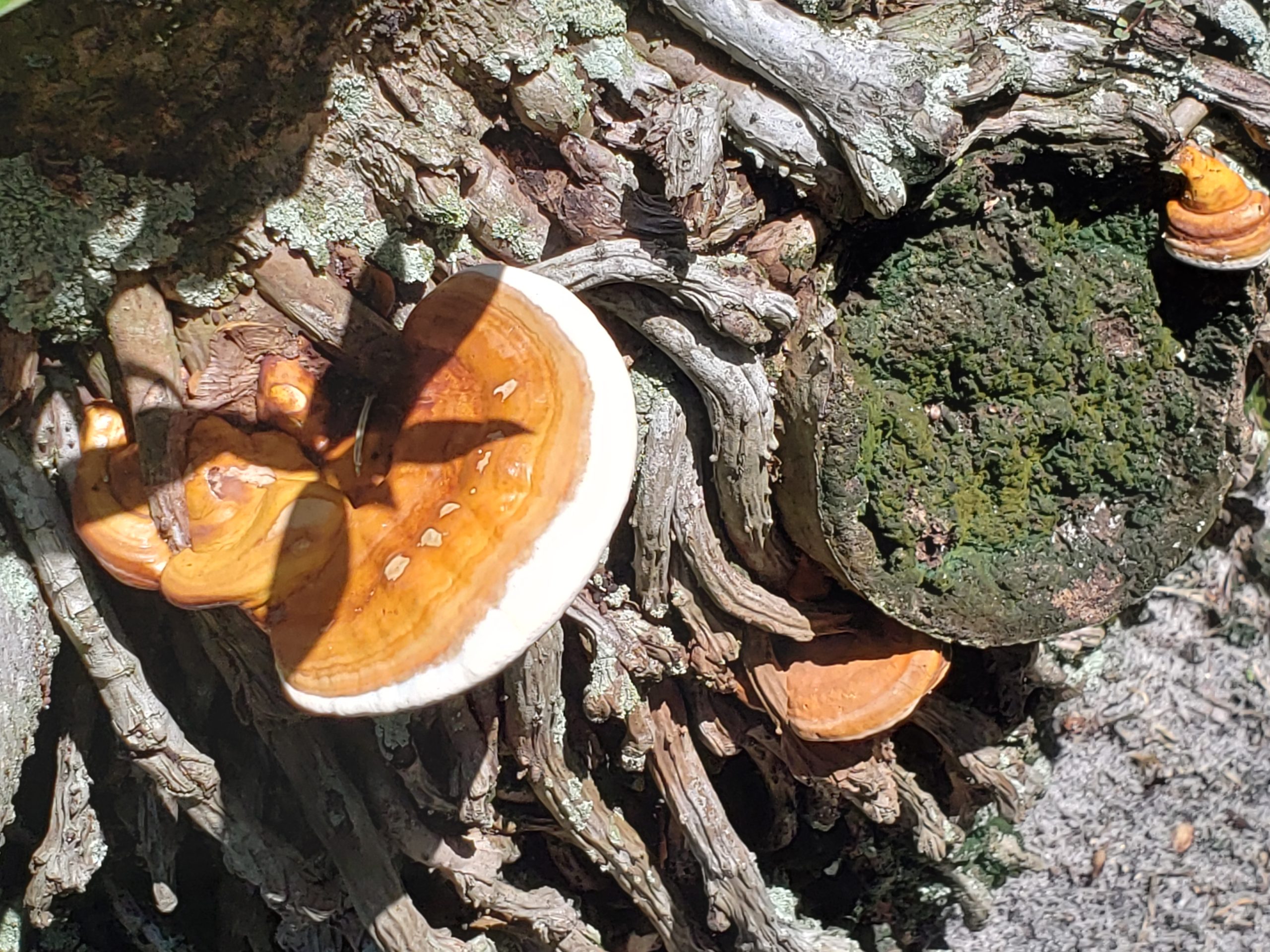
Ganoderma, particularly Ganoderma sessile, is a wood-decay fungus whose appetite for destruction knows no bounds. Think of it as a parasite with a master plan: infiltrating trees’ vascular systems and consuming their lifeblood from the inside out. It all begins with a quiet takeover before becoming obvious signs, like a trunk that’s lost its strength, bark that’s peeling off, and eventually, a breakdown.
How Ganoderma Operates
Picture this: the sturdy roots of a huge oak tree, holding it down in the ground, somehow turn into a way for an uninvited guest to sneak in. Ganoderma spores are tiny but powerful. They can get into trees through little cuts or natural gaps.
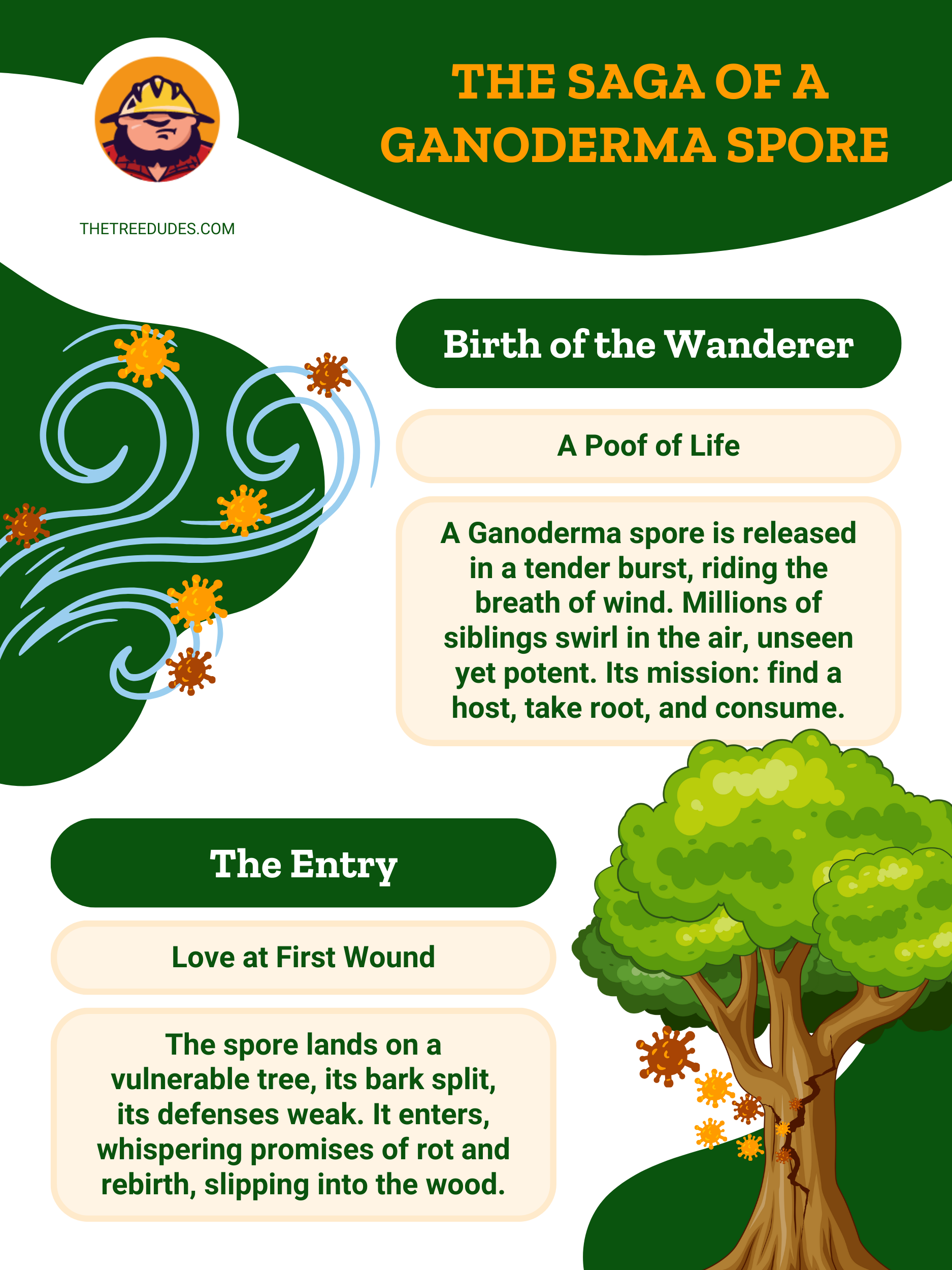
From here, the fungus begins its covert operation, weaving a network of mycelium infiltrating the tree’s interior.
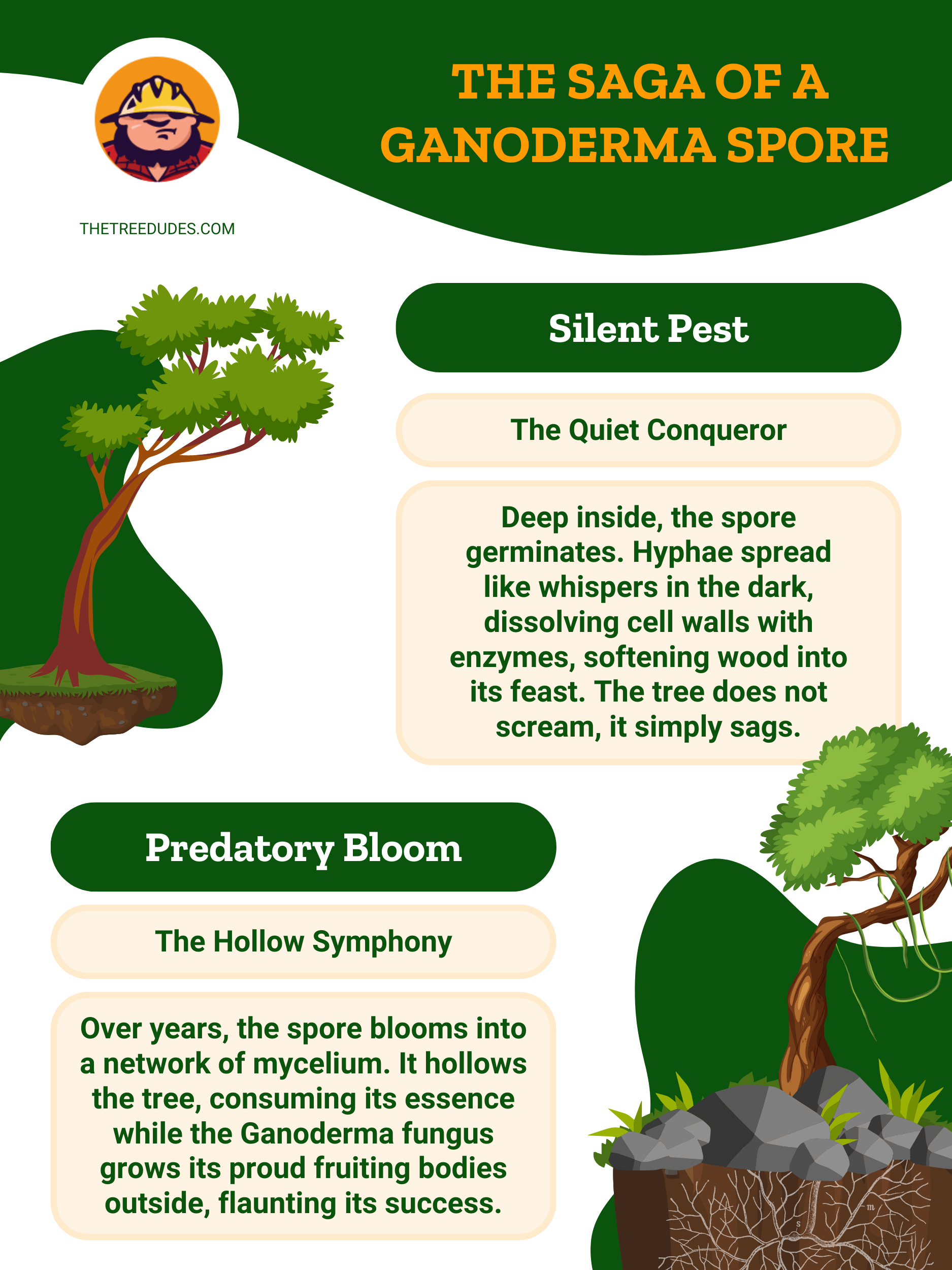
The fungus munches on lignin, the stuff that makes wood strong. Little by little, the tree turns into a hollow version of what it used to be, still standing, but feeling pretty defenseless.
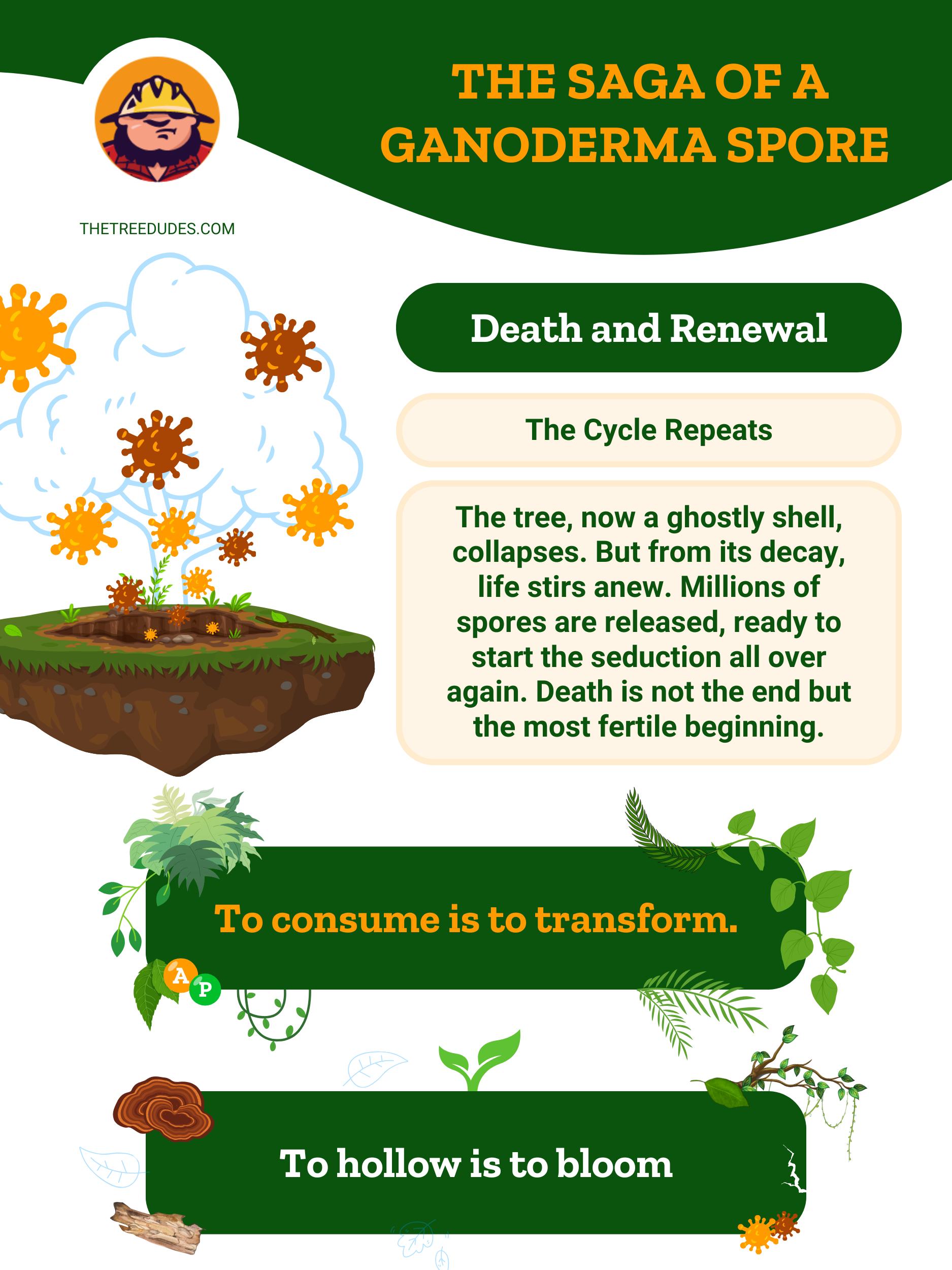
Root and Butt Rot by Ganoderma
The term Root and Butt Rot might sound almost playful, but its implications are anything but. This fungal disease is like a secret crisis happening in your trees, and it can lead to some pretty serious problems.
What Is Root and Butt Rot?
Root and Butt Rot, often caused by fungal pathogens like Ganoderma, is one of the most insidious diseases affecting trees worldwide. The very foundation of the tree, its roots, and base, are attacked by these organisms, leading to slow but inevitable decay.
The soil, usually a nurturing companion, becomes the medium through which the fungus infiltrates, turning the relationship toxic. The disease primarily manifests in:
- Roots: The primary entry points for fungal spores.
- Butt (Base): The lower trunk where visible signs like fungal conks often appear.
How to Recognize Root and Butt Rot
Figuring out Root and Butt Rot is kind of like solving a mystery. The signs can be pretty sneaky at first, but they start to show up more clearly as the disease gets worse. Here are some things to keep an eye out for:
- Fungal Conks: These are shelf-like mushrooms sprouting at the tree’s base. Their presence is a late-stage warning.
- Declining Canopy: Thinning leaves, smaller foliage, and dead branches signal internal distress.
- Leaning or Weak Structure: A tree that suddenly lists to one side or feels unstable.
- Root Damage: While not visible, roots infected by fungi lose their ability to anchor the tree or absorb nutrients effectively.
Ganoderma’s Hosts
A tiny spore, so small you can’t see it, lands on a hurt spot of a tree. It could be a maple, with its branches reaching confidently up into the Florida sky, or maybe it’s a tall palm standing proud. The tree has no idea, but this little encounter is about to change everything.
Ganoderma doesn’t play favorites. It’s a fungal equalizer that’s set to take down oaks, ashes, and even the most impressive conifers in Florida. If trees could chat, they’d share tales about one infection spreading to another, with roots giving up and trunks getting all hollowed out.
A Climate That Welcomes the Predator
Think of Florida as a 24/7 buffet for Ganoderma. The state’s subtropical and tropical climate provides all the warmth, humidity, and moisture the fungus craves.
The cycle starts with these tiny spores, like dust, but super persistent, floating around until they find a vulnerable tree. Maybe a storm has left a gash in the bark, or the roots have taken a hit from some construction work or compacted soil. No matter how it happens, Ganoderma sneaks in without anyone noticing and gets to work.
Don’t get the idea that this is only a Florida issue. Sure, the Sunshine State has the perfect setup for it, but Ganoderma doesn’t stop there. It goes after trees everywhere, taking advantage of both temperate and tropical areas around the globe.
Which Trees Are Most at Risk of Ganoderma?
Ganoderma isn’t picky regarding trees, but some seem to catch its eye more than others. If you’re hanging out in Florida, keep an eye on maples, oaks, and honey locusts, they’re the most at risk. Even though trees like conifers, ashes, and elms can get hit, it’s good to stay alert if you own any of those.
Palms are known for their beautiful shapes and are a staple in tropical settings, but they’re not immune to problems. One common issue caused by Ganoderma is when it hits their root systems and leads to a problem called Ganoderma butt rot.
Picture a palm tree looking strong and healthy up top. But underground, there’s this fungus munching away at the roots, slowly hollowing them out. Eventually, the whole tree just gives in and falls over.
Why Is a Tree Service Your Best Bet
If trees could dial 911, tree service would be on speed dial. Our guys aren’t just your average tree experts; they’re a whole vibe. They mix science and skill with some style to take on the pesky Ganoderma like pros.
Do you ever get that sense something’s not quite right? Like when your palm tree’s fronds start turning yellow or the trunk looks weird? That’s your sign to hit up a tree service. They’ve got this amazing eye for spotting Ganoderma before it becomes a big problem.
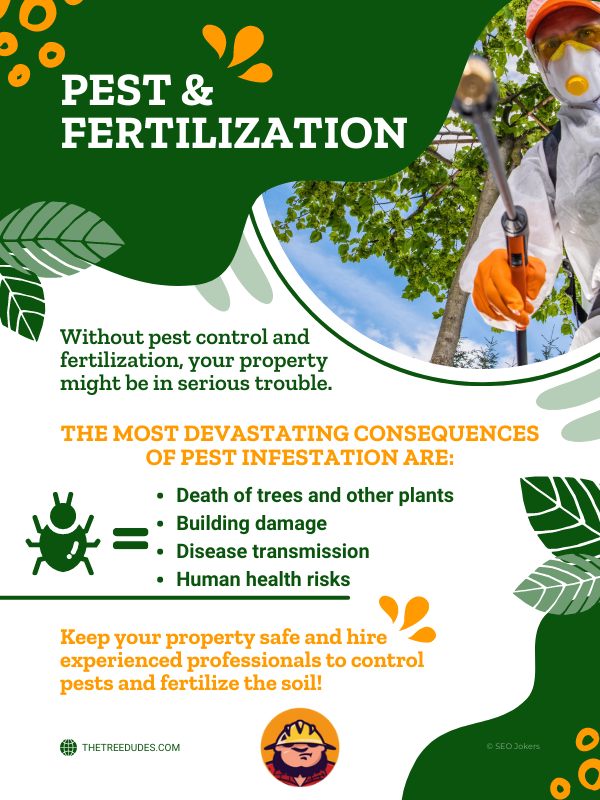
Losing a tree can feel like losing a piece of yourself. But sometimes you’ve got to make the tough call to keep the rest of your yard healthy. When a tree can’t be saved, a tree service comes in to handle the removal safely and smoothly. They don’t just hack it down and leave, they take the time to check out the area, making sure your other trees stay safe from any damage.
How Can a Tree Service Prevent a Ganoderma Takeover
Imagine your yard as a battleground. Tree services are your generals, strategizing every move to outsmart the fungal foe.
Ganoderma thrives in poor soil conditions. We know how to rejuvenate the ground, balance pH levels, improve drainage, and enrich nutrients. Think of it as giving your soil a spa day.
When you take out a sick tree, you can’t just toss in a new one without thinking. We are here to help you pick out tree species that are less likely to get hit by Ganoderma, so your yard can stay healthy and lively for a long time.