Give your trees a protective edge!
Florida has a very specific climate that is classified as subtropical in the northern parts and tropical in the south. This means that winters here rarely get very cold, like in some other parts of the United States, but temperatures can still drop during the night or in different seasons. Your trees and shrubs can feel this change and, depending on the species, have a negative reaction to it.
Why You Should Wrap Your Trees
Weather conditions are the first and most obvious reason to wrap your trees. In Florida, the constant change from strong daytime sun to cool night air can cause bark damage, especially in younger trees, so wrapping them is almost a must because the wrap serves as both sunscreen and temperature buffer.
Some trees and shrubs that usually live in very warm climates can have a more negative reaction that includes yellow or completely withered leaves, dry branches, and structural cracks in the bark and trunk.
But weather conditions are not the only reason why you might want to get your trees wrapped.
Tree wrapping can help prevent pest infestations as well. It creates a physical barrier during critical periods of vulnerability, which helps trees get stronger and survive longer. It deters squirrels, rabbits, rats, mice, and all sorts of insects.
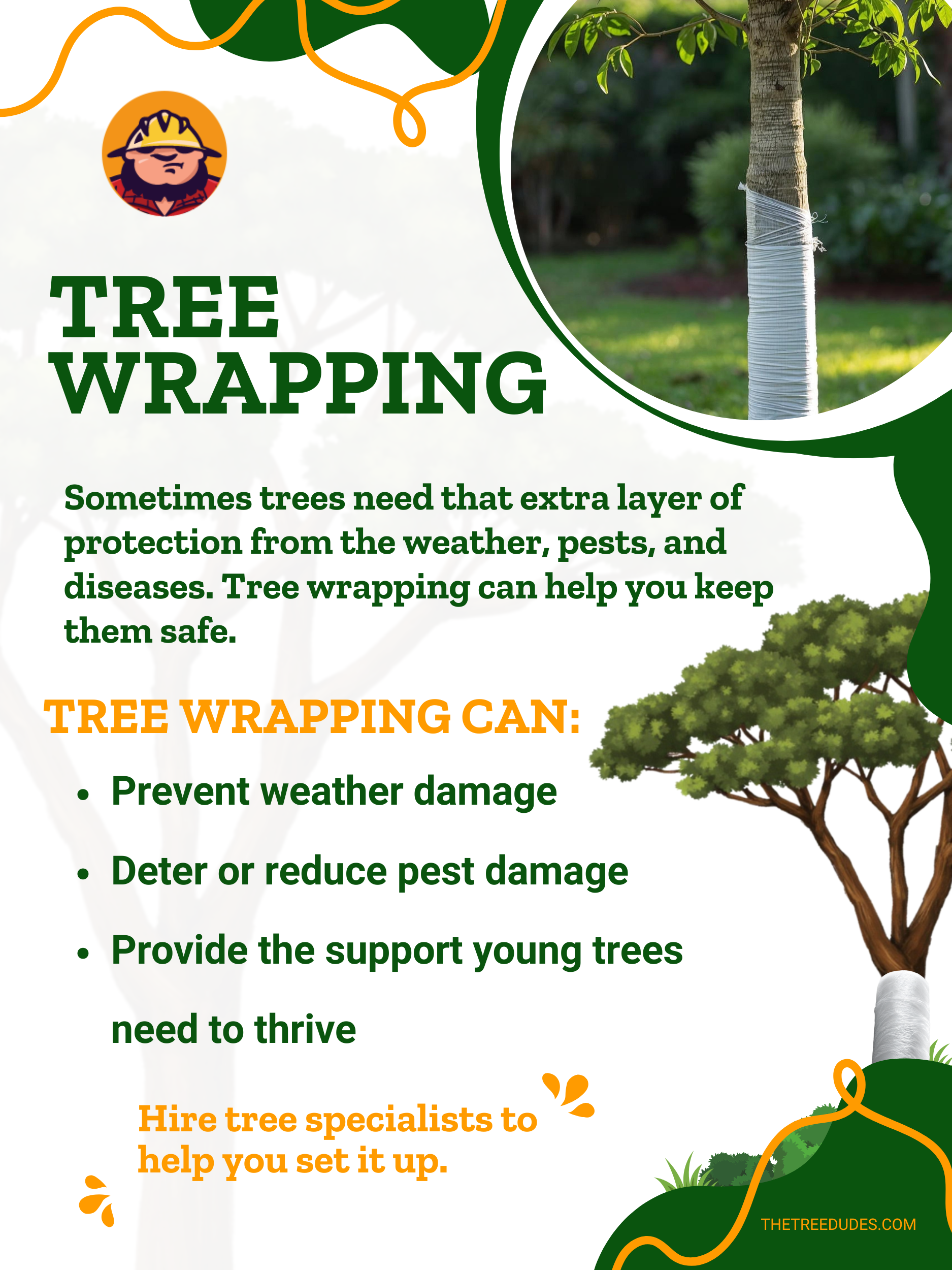
So, to summarize, tree wrapping can:
- Prevent weather damage
- Deter or reduce pest damage
- Provide the support young trees need to thrive
What Trees You Should Protect
In most cases, young, newly planted trees require more protection because they are more sensitive to temperature fluctuations than mature trees. In some cases, you might need to protect their trunk only, while in others, you might need to protect their canopy as well.
Trees that have very thin bark, like some citrus trees, birch, plum, peach, as well as some ornamental varieties, also require extra protection, especially during winter.
Trees that suffered some type of mechanical damage to the bark should also be protected. For example, if your mower damaged the lower part of the tree trunk, you should wrap it up to prevent pest infestation, diseases, or further physical damage.
Tree Wrapping Materials and Process
There are several different types of materials that can be used for tree wrapping. They include specialized paper, corrugated cardboard, and different types of frost cloths like burlap or synthetic materials like polypropylene fabric. Each material has its advantages, which mostly depend on the type of tree, season, and overall tree wrapping goals.
If you decide to wrap your trees, following the right steps can prevent tree or shrub damage. It usually includes:
- Estimate – determining what your tree actually needs to thrive.
- Material selection – deciding which material will help you achieve the best results.
- Application – applying the wrap around the trunk or entire tree.
- Maintenance – making sure that the wrap is still standing and that it is not causing any damage to the tree.
- Removal – removing the wrap safely.
If you have trees that need wrapping, contact us for a free estimate and let our team take care of your trees and shrubs.
If you are looking for other forms of protection for your trees, then consider hiring our tree guard setup service.