






Storms, seasonal leaf drop, and even those good-intentioned weekend yard work sessions have one annoying thing in common: they never clean up after themselves. A light breeze could drop a few twigs that you hardly even see. And when a strong midsummer wind comes through, it might snap a branch and leave it hanging over your fence.
Have you ever wondered why this happens all the time? It is because trees drop their stuff. Some trees do it more intensely than others, like eucalyptus, cypress, pecan, or pine. Their idea of keeping things up is just getting rid of the old stuff, and suddenly your yard turns into the setting for this ongoing show.
When Debris Becomes Hazardous
The problem is when debris crosses from “a few sticks” to “a solid pile.” Damp leaves and twigs create moist, shaded micro-environments, perfect habitats for termites, beetles, ants, and opportunistic pests.
Those dead branches and crispy palm fronds can turn into hidden fire starters on the dry side of things. Even a small stray ember, a grill spark, or an unexpected lightning strike right on top of your house can turn a neglected pile of debris into a major fire risk. Vegetation fires caused by debris like this account for a significant portion of outdoor blazes every year in Florida and nearby states.
Fire authorities consistently warn homeowners about the risks posed by uncleared yard debris left by trees, especially in drought-prone areas or regions affected by seasonal winds. All of this can evolve in less than a week. What started as a modest pile of debris intended for “next Saturday” cleanup quietly transforms into a genuine safety issue.
It Is Not Just Yard Work
The sooner debris is cleared, the lower the risk of:
- Pest infestation
- Lawn damage
- Fire hazards
- Injury
- HOA violations
- Lost property value
Why Quick Removal Matters
It is easy to think of yard debris as just part of the natural rhythm of outdoor spaces, something you can get to eventually. But the reality is that debris piles do not just sit there quietly waiting for attention. They grow and create complications. After some time, the debris stops being a simple matter of aesthetics and becomes a real issue, for your safety, your property’s health, and even your peace of mind.
Some leaves may turn into a damp mess tomorrow. A fallen branch becomes a nest for pests. A dry pile of debris can easily turn into a fire hazard. Junk does not just sit there, it grows and spreads slowly without warning.
Safety First
After a storm or seasonal change, your yard can turn into a total mess. And we are not just talking figuratively here.
Basic yard cleanup after storms requires protective gear, such as long pants, gloves, goggles, and durable footwear. Why? Because seemingly harmless piles can conceal sharp metal fragments, rusty nails, glass shards, or partially buried branches just waiting to roll underfoot. Overhead, broken limbs that have not fully detached can fall days after the storm that created them. And on the ground, even a single fallen branch tangled in a power line poses a serious electrocution risk.
The faster debris is removed, the less time these hazards have to cause real harm. Taking off the debris quickly can help avoid getting a twisted ankle, needing a trip to the ER, or even worse.
Fire Prevention
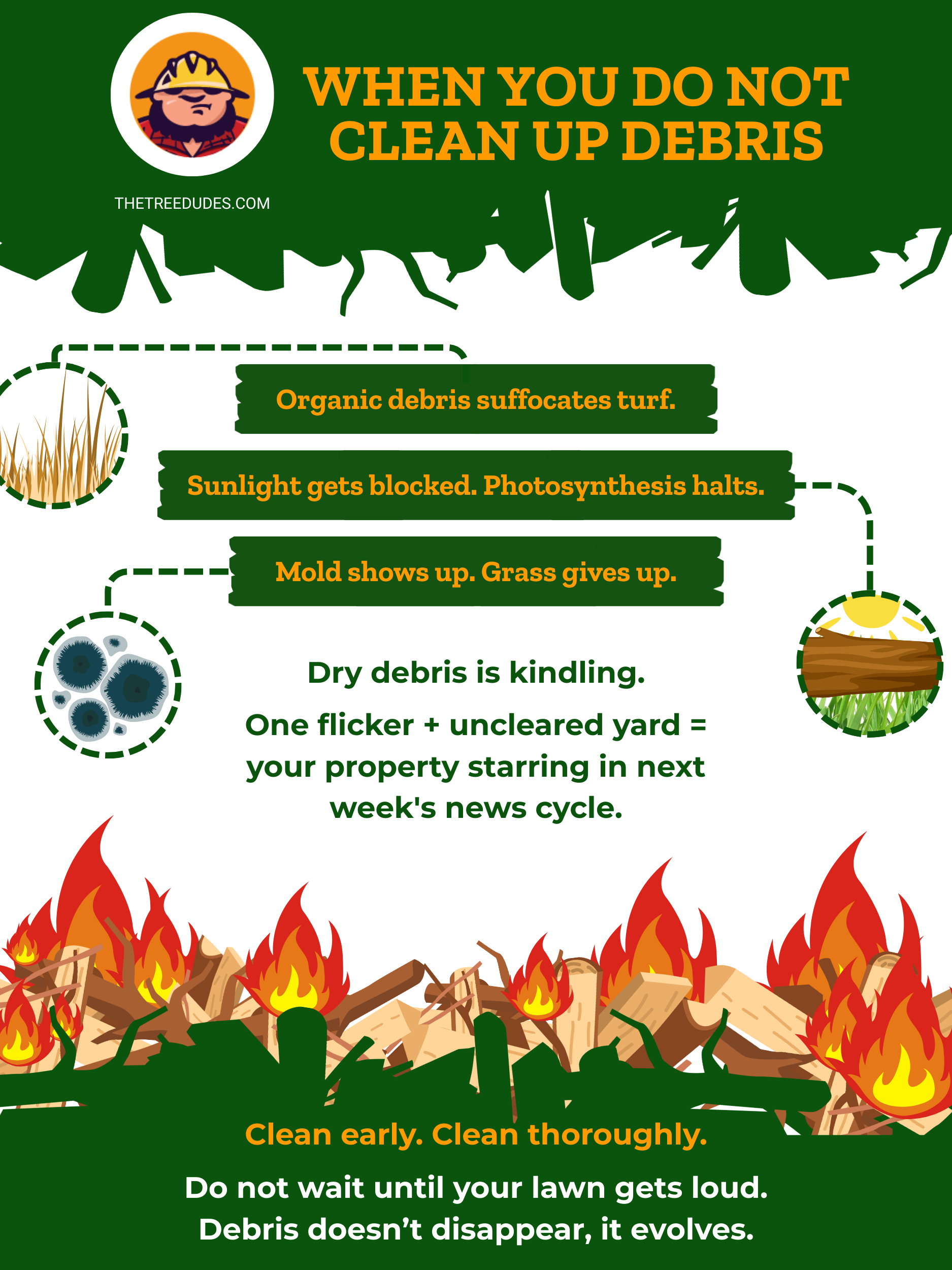
In many parts of the country, especially in areas prone to drought, fallen branches and dry leaf piles are more than a mess, they are a tinderbox. The U.S. Fire Administration and numerous environmental watchdog groups have consistently emphasized the role of yard waste in contributing to vegetation fires. Over 80% of wildfires begin with human activity, and improperly stored or burned debris is often the culprit.
A single ember from a backyard fire pit, a stray cigarette, or even heat-reflective surfaces can spark flames in overly dry yard waste. Once it gets going, that stack of branches can catch fire fast, especially if it is near some dry grass or bushes.
Pest Control
Yard debris does not just appeal to insects, it invites them. And when left for too long, it extends the welcome mat to more persistent and problematic guests. Moist, sheltered piles of leaves and wood are the ideal breeding ground for termites, carpenter ants, and beetles. Rodents like rats and mice look for thick, untouched, full bushes to set up their nests. Even raccoons or snakes might take up residence if the pile is large enough and close to shelter.
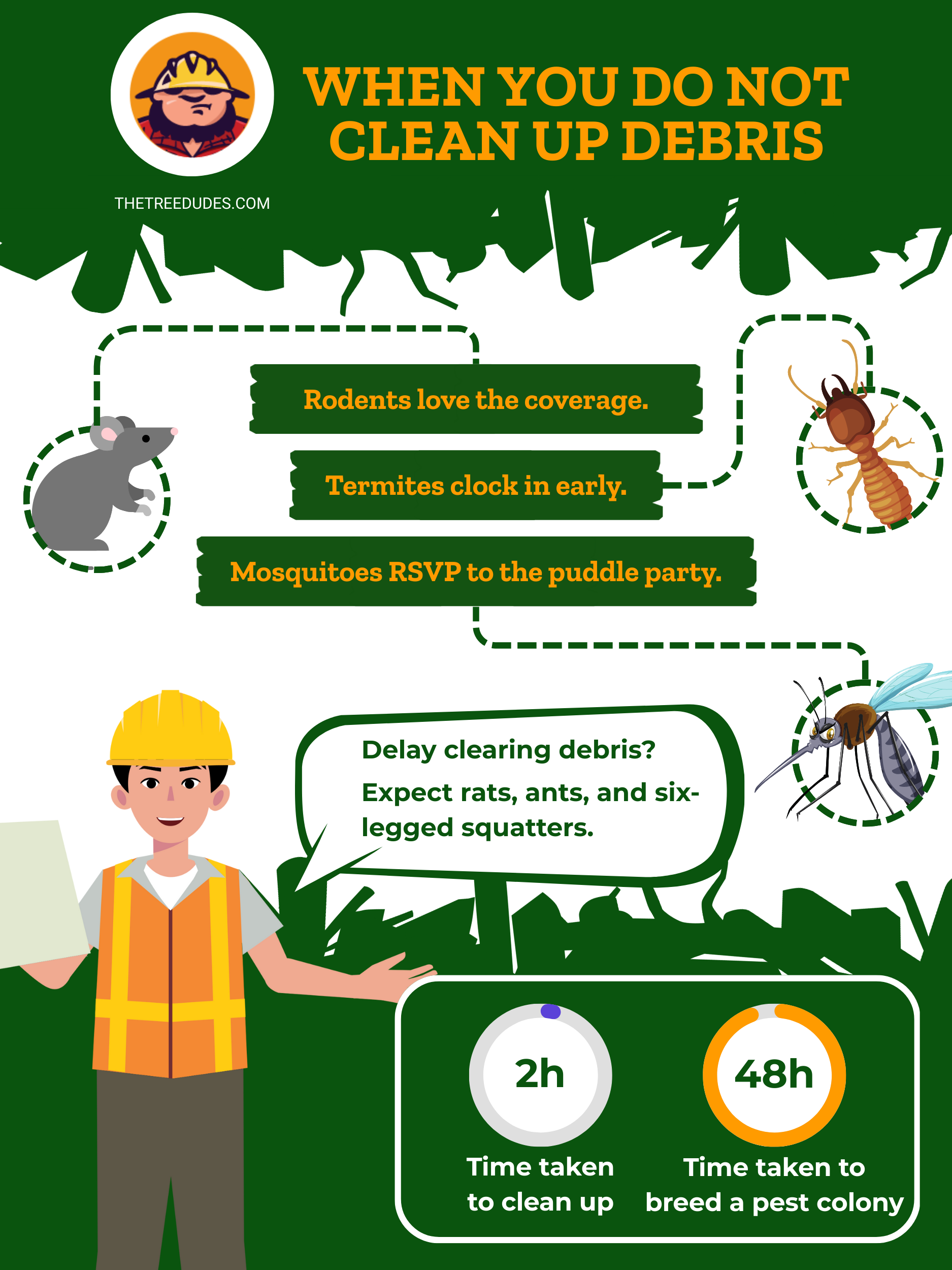
While chemical treatments can address some infestations, the most effective (and eco-friendly) pest control starts with denying pests the habitat they want. This is particularly important if you are planning future landscaping or gardening. Nothing messes up a raised bed or fresh lawn quicker than a bunch of termites lurking underground nearby.
Lawn Longevity
Your yard is a living, breathing system. And like all living things, it needs space, sunlight, and airflow to thrive. A thick carpet of leaves or a few shaded logs can quickly begin to suffocate the grass below.
Debris blocks light. It traps moisture. It smothers air circulation. And when left in place too long, it begins to promote mold, fungus, and disease. Some grass types can recover after a few days of shading, but others will yellow, thin out, or die entirely, leaving patchy areas that are slow and costly to repair.
Property Value
You may be preparing to sell, welcoming guests, or simply taking pride in where you live. How your property looks from the curb affects how it is perceived. Real estate professionals agree that a well-kept exterior boosts perceived and actual property value. Studies suggest that strategic landscaping and good outdoor maintenance can increase home value by up to 10%.
That pile of limbs and leaves might not seem like a big deal today, but to a potential buyer, an appraiser, or even a Homeowners Association inspector, it can signal neglect. It might even delay sales processes or create violations in managed communities.
Peace of Mind
Living in a cluttered outdoor environment creates low-level mental stress. You may not notice it at first, but every time you glance out the window and see a messy corner or a fallen limb, your brain logs it as a task you have not yet completed. Over time, these micro-stressors compound.
By removing that visual and practical clutter, you are giving yourself room to breathe. You are reclaiming mental space. And that translates into a quieter mind, a more enjoyable weekend, and a greater sense of control over your surroundings.
DIY vs. Professional Removal
On the surface, doing it yourself feels efficient, even noble. But once you are on your fifth trip hauling a tarp to the curb or struggling to fix that wood chipper you rented, it is easy to lose interest.
The truth is, not every debris pile requires a crew in matching uniforms and a fleet of trucks. But many do. Figuring out when to ditch the DIY enthusiasm and call in the pros can save you time, cash, and a good amount of stress you would be putting in your body for no sound reasons, maybe to appear more masculine to your wife, but it is not worth it.
Doing It Yourself
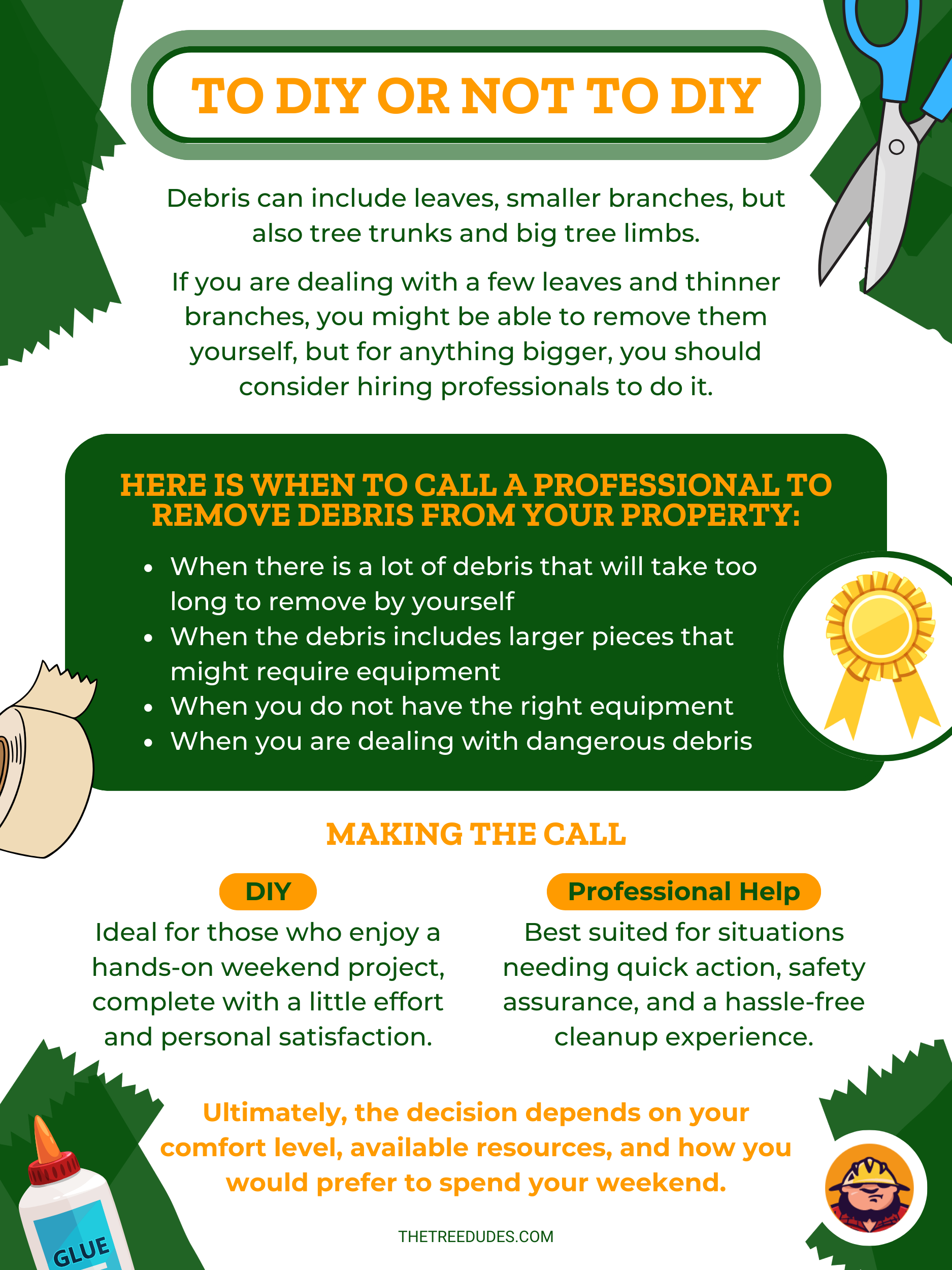
If your debris pile is modest, say, a few manageable branches, some leaf piles, and no logs heavier than your dog, it is entirely reasonable to handle the cleanup on your own. There is a unique satisfaction in tidying your own outdoor space, seeing progress in real-time, and knowing that you did the work yourself.
You can set your schedule, decide exactly where the mulch goes, and work while listening to your playlist. No need to coordinate calendars or wait for a crew. For many homeowners, that kind of autonomy feels empowering. But the moment you start up trying to lift heavy pieces of debris, the work becomes less of a backyard chore and more of a logistical challenge.
Even if you are reasonably fit, debris removal is heavy-duty work. Lifting logs, operating tools, and hauling loads back and forth is taxing, especially when done in full sun, with insects as your audience. Lifting or moving big, awkward pieces of wood can put you at risk for back strains, pulled muscles, cuts, and even some serious injuries. This is especially true if you are not used to handling tools like saws, chippers, or chainsaws.
Just little mistakes, like tripping over a branch you did not see or lifting something the wrong way, can throw you off your game. And unlike professionals, most homeowners do not have insurance coverage if something goes wrong. That makes each task a little riskier than it might initially appear.
Why Professionals Might Be the Better Investment
There is a reason you see crews cleaning up storm debris, hauling tree limbs, and clearing lots in a fraction of the time it might take one person over a weekend: they are trained, equipped, and efficient. A reputable debris removal service arrives with everything needed, industrial chippers, chainsaws, trucks, cranes if necessary, and a team that knows how to work safely, cleanly, and quickly. What might take you two full days, they can often complete in a few focused hours.
A professional crew can handle the mess while you’re at work, running errands, or relaxing indoors. Many clients find that by outsourcing debris removal, they can enjoy their weekends and keep their focus on other priorities.
When DIY Works and When It Is Time to Call In Help
Not every messy situation needs extra help. Sometimes, all you need is a pair of gloves and a few hours to spare. Other times, the job quietly escalates, turning into a project that requires more time, tools, or muscle than you expected. Knowing where that line is can save you more than just effort, it can save your weekend, your safety, and potentially your landscaping. Here is how to tell the difference.
DIY may be the right choice if:
- The volume of debris is small and manageable.
- You have experience using landscaping tools.
- You own a truck or trailer for hauling waste.
- Your schedule allows a full weekend to work.
- You enjoy the process and want to keep the mulch.
Hiring a professional is likely better when:
- Debris involves large trunks, limbs, or storm-damaged trees.
- You lack the tools, time, or desire to do it yourself.
- Safety is a big deal because of the steep hills, sharp tools, and possible pests around.
- You would prefer a clean, same-day solution without the hassle.
Professional Debris Removal: Step by Step
For a lot of homeowners, the idea of bringing in a pro for debris removal can seem a bit confusing. You know a team shows up and the mess disappears, but what happens in between?
If you have ever wondered how trained crews manage to turn a post-storm disaster into a clean, level yard in just a few hours, here is a closer look at how the magic happens.
Step 1: Inspection
Every removal job begins with a walkthrough. But it is more than just a casual glance. The team arrives and surveys the entire property with practiced eyes. They assess what is on the ground and what is still hanging overhead. They identify large limbs that need to be sectioned, locate any tree debris that is leaning dangerously or partially suspended, and take note of what is touching structures, fences, or electrical lines.
This first inspection is also when the team identifies anything that may require special care, flower beds, irrigation lines, or newly planted trees, and ensures those areas are flagged and protected before any equipment is moved in. They will also note access points, loadout paths, and parking logistics to keep things smooth from start to finish.
Step 2: Equipment Roll-Out
Once the plan is in place, the crew brings in the gear, often the kind of equipment most homeowners do not have sitting in the garage. Expect to see chainsaws, pole saws, heavy-duty wood chippers, stump grinders, wheelbarrows, and in some cases, cranes or log loaders for handling oversized trunks. These tools are designed for power, precision, and safety.
The crew also uses protective mats, barriers, and spotting techniques to avoid damage to your driveway, lawn, and garden beds. Safety is never an afterthought, it is built into every movement.
Step 3: Segregation
Not all trash is the same, and this is where you can tell the difference that comes from professional training. Crews separate materials into appropriate categories: pure wood, green waste, and non-organic items like plastic, metal, or any objects that may have become entangled during a storm. This includes fence bits, some wiring, or maybe a lawn ornament that got left behind. Hazardous or treated wood is flagged for specialized disposal.
The crews make sure to sort through everything so that each kind of waste gets thrown away the right way. Clean wood can often be recycled into mulch. Contaminated or hazardous materials go to designated facilities. This keeps your yard clean and ensures environmental compliance and community safety.
Step 4: Reduction
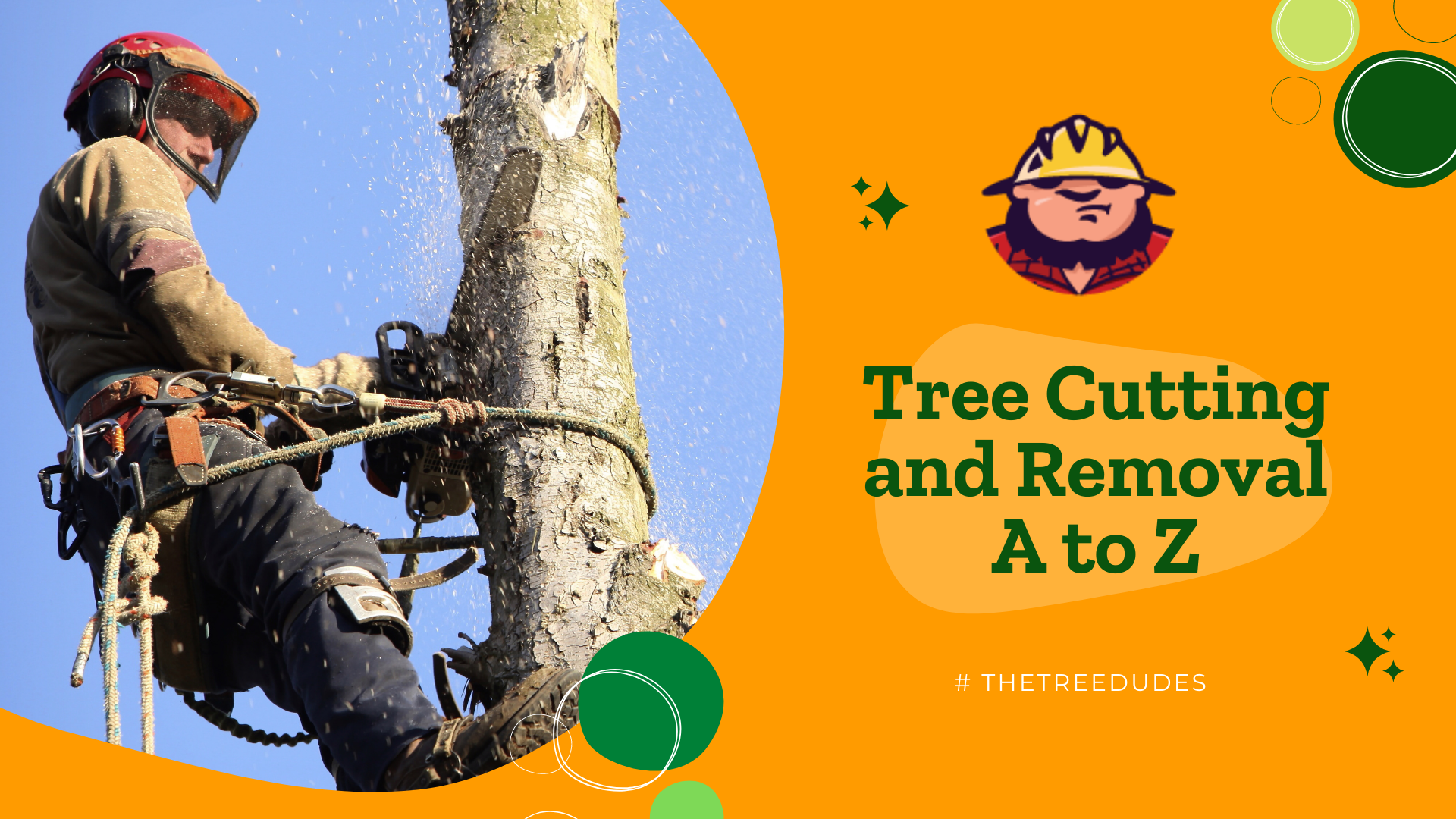
The process is fast, precise, and handled only by trained professionals. For oversized logs and large branches, the team uses chainsaws to section them down into manageable pieces, often called “cookies.” These chunks can be used for firewood, repurposed for furniture, or loaded into the truck for disposal.
If there are overhead hazards, such as partially detached limbs suspended above structures, these are rigged and gently lowered using ropes, pulleys, or cranes. It is slow, calculated work, performed with an emphasis on both safety and control.
Step 5: Load-Out and Laundering
The remaining logs, wood chips, and bagged debris are transferred to trucks or trailers. This step is where the property truly begins to reveal itself again. Your outdoor space begins to look like it did before or perhaps even better.
But the work does not end there. You will see some raking, blowing leaves, and cleaning up the walkways, patios, and driveways. Any protective materials placed earlier are removed, and the final sweep ensures your property is left in clean, polished condition.
Step 6: Mulch
The wood chipped on-site does not have to be hauled away. Many clients choose to keep a portion of the mulch produced during the removal. This freshly made, organic stuff is great for spreading around your garden beds, keeping weeds at bay, or putting down on walking paths and tree rings to help with moisture retention.
What You Are Paying For
One word: experience. And no amount of YouTube tutorials or rented equipment can replicate that. These crews have worked in every kind of yard, with every type of debris, under all sorts of conditions. They know how to remove a downed limb without damaging your irrigation line, how to chip wood without showering your garden in sawdust, and how to leave your yard looking like they were never there, except cleaner.
And then there is efficiency. What might take a full weekend of your time can often be completed in just a few hours. No last-minute trips to the hardware store. Just a streamlined process that respects your time, your property, and your energy.
But maybe most importantly, you are paying for relief, that moment when you step outside and the piles are gone, the space is clear, and the grass can breathe again, and you did not have to lift a finger or risk an injury.
Looking to get your outdoor space back in shape? Check out our awesome services for stuff like debris removal, storm cleanups, clearing sites, removing coconuts, and handling any hazardous materials.
Get in touch with us today and let our awesome team handle everything from there.