





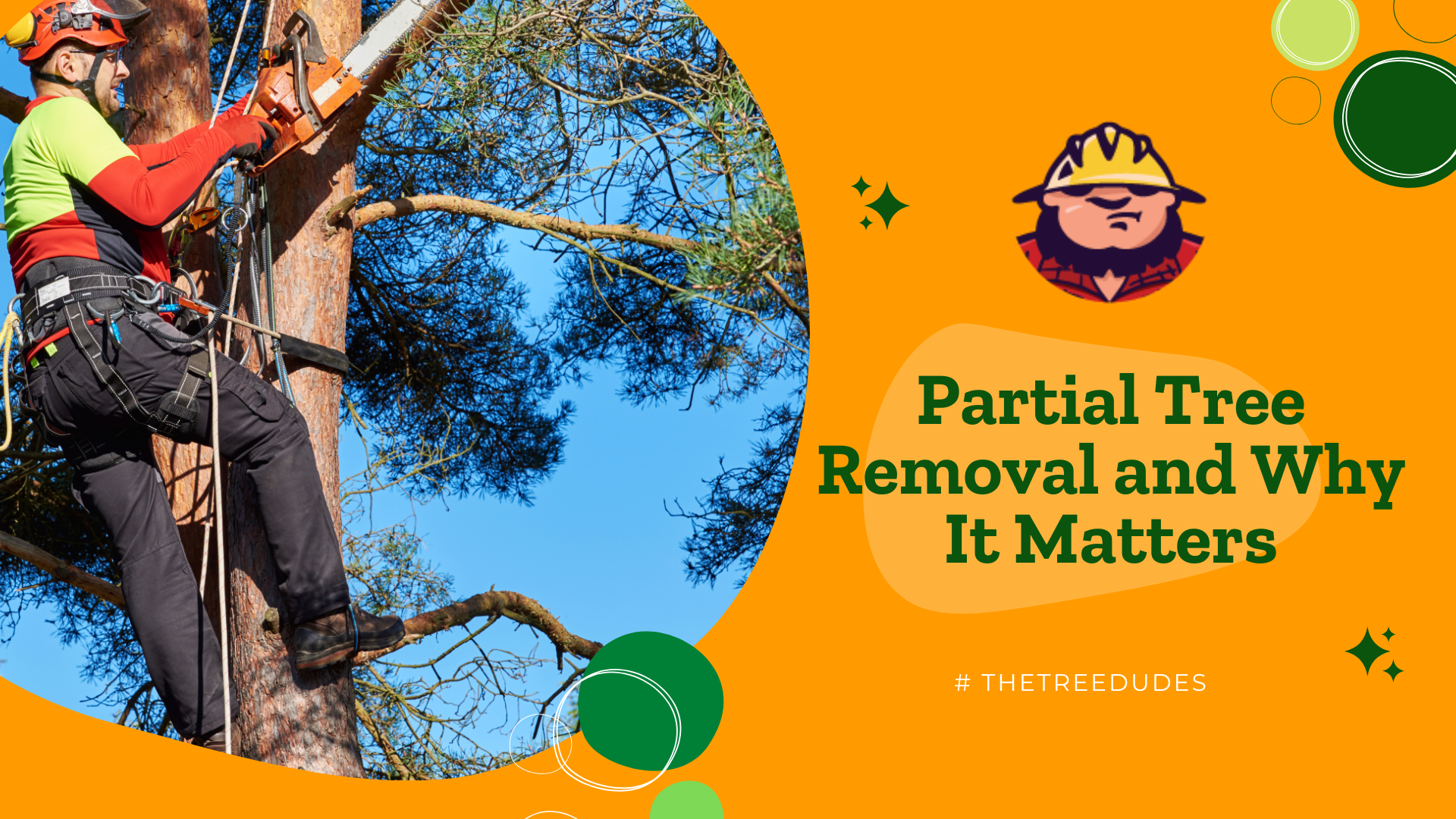
Have you ever stood in your backyard, gazing up at your tree, and thought, “Wow, I love this giant… except for that one branch that is messing with my power lines?” You are not alone in this dilemma. Trees, just like us, can grow in corrupt ways and end up needing more than just a friendly trim if they are damaged or become a safety hazard for other people and pets. Yet removing the entire tree can feel too extreme. But we have a magical middle ground: partial tree removal.
Partial tree removal is doing just enough to protect and preserve what is intact, without throwing the whole thing out. It is about being selective, removing only the trouble spots, and giving your tree a chance to recover, adapt, and continue gracing your yard for years to come. If you are ready to make an informed decision that balances safety, aesthetics, and your tree’s health, let’s dive together into this wonderful world of mindful tree care.
Why Partial Tree Removal Can Be Your Best Friend
You cannot help but notice that huge oak tree by the fence. It is still standing tall, but there is a big branch hanging down that looks like it is about to fall. Maybe last week’s storm took a toll on it, and now it seems a bit sad rather than strong. Do you call a tree service and say, “Take the whole thing down,” losing the shade, the nest of birds calling it home, and the entire enchanting vibe it brings? Or do you cross your fingers and hope that limb won’t come crashing down on your roof, your car, something, or someone dear to you?
That is where partial tree removal comes into play. Rather than removing the entire tree, you focus on snipping away just the portions that are damaged, diseased, or dangerously looming over your rooftop. Think of it like giving your tree a targeted haircut: you are trimming away the split ends while preserving the overall luscious mane. This approach might involve:
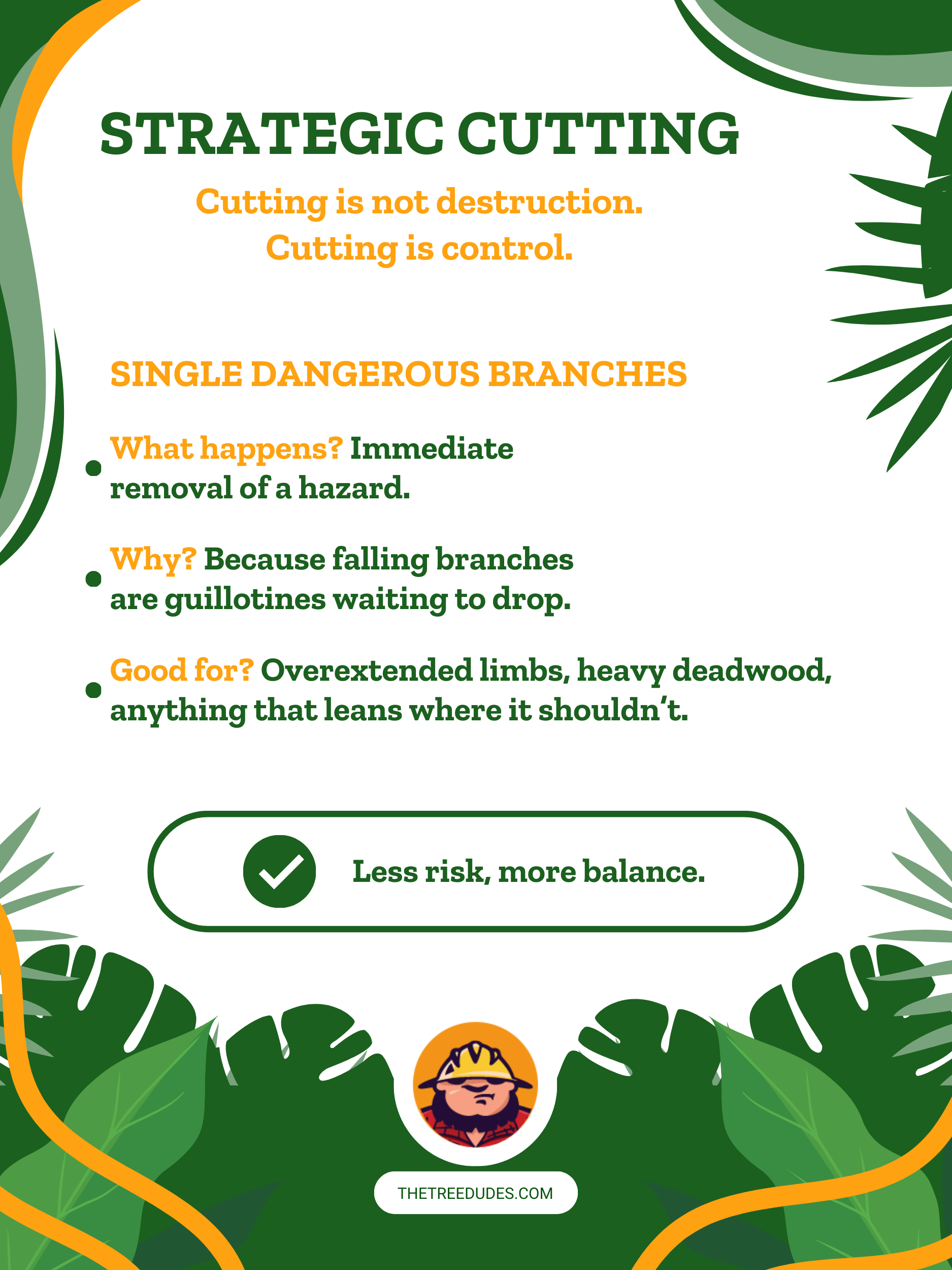
- Removing a single dangerous branch that has been groaning in the wind.
- Cutting off the top part of a tree trunk if lightning or a storm damaged it, so the rest of the tree can still stay upright.
- Pruning dense upper branches to reduce weight and lower the risk of breakage, especially if they are overshadowing your yard.
When done right, partial removal can give your tree a second chance at life, still tall, still majestic, but safer and healthier.
Common Reasons a Tree Looks Damaged and Needs Partial Removal
It is rarely an overnight decision. You are not sitting on your sofa, sipping iced tea, when you suddenly decide to remove part of a tree for the thrill of it. Something usually triggers the thought. Often, it is a combination of storms, pests, disease, or just your practical side reminding you that you do not want a giant limb crashing through the roof.
Sometimes, the damage on your tree sneaks up slowly, barely noticeable until one day you look up and realize something is… off. Other times, it hits all at once, like a swarm of hungry little invaders. Either way, figuring out what went wrong can help you understand why partial tree removal is the best choice.
So, what could have brought your poor tree to this point? Let’s go down the list:
Lightning Strikes: Nature’s Sudden Shock
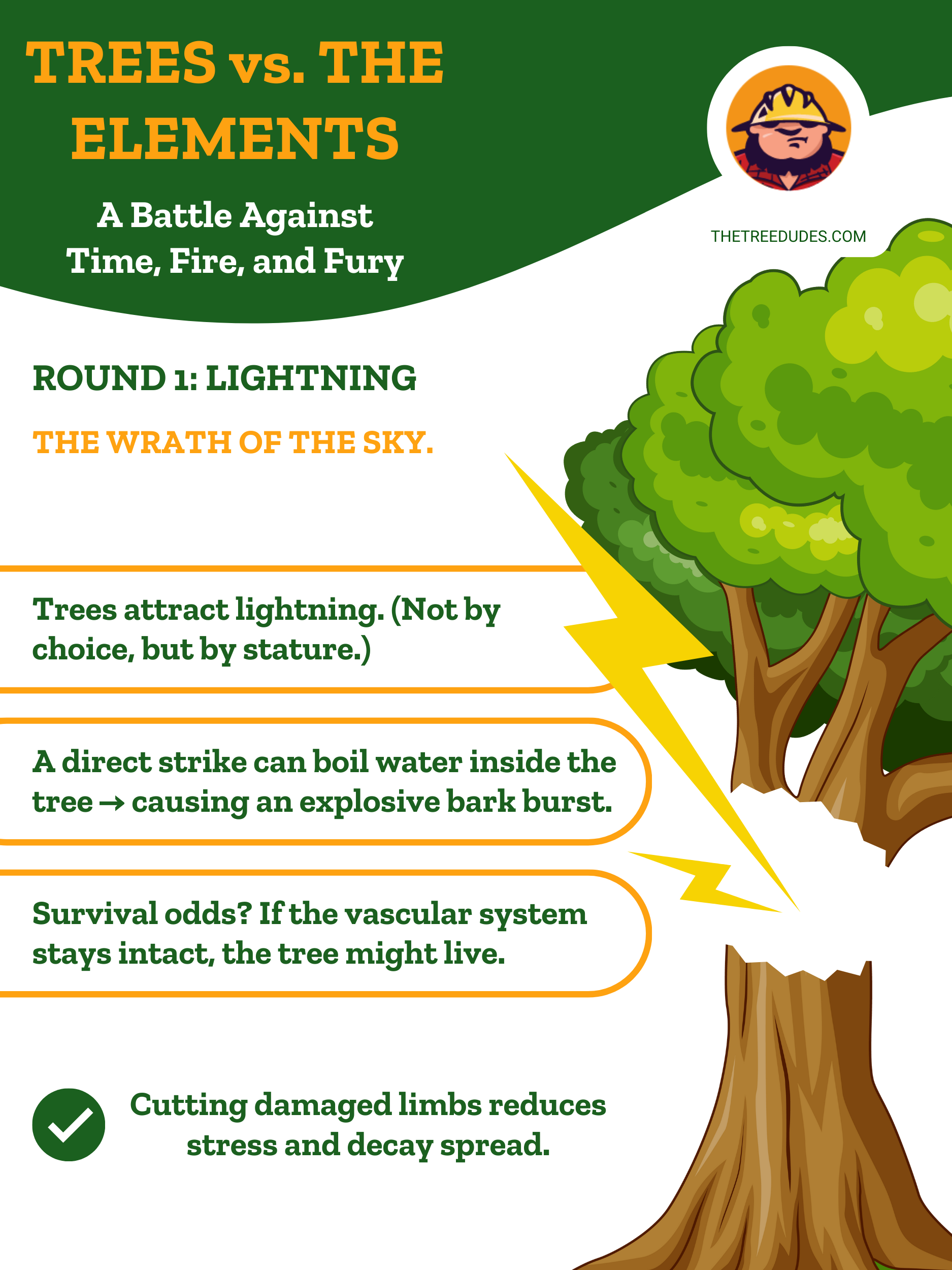
Lightning is nature’s dramatic stage effect, a bright flash announcing formidable power. When it targets your tree, it is not just a surface wound. Lightning can peel the bark off trees in crazy patterns, scorch the wood beneath, and even turn the tree’s moisture into steam. You might notice a twisty crack running down the tree, patches of bark that are gone, or areas that look burnt or scorched. While some trees recover from minor lightning wounds, a direct hit can be catastrophic, damaging the internal vascular system that keeps the tree alive.
Root Damage
Sometimes, the real danger is underground, where your tree’s roots can get messed up by things like changes in the environment, construction work, or shifting soil. A tree with compromised roots has trouble anchoring itself. It might start to lean precariously or show slow, stunted growth.
Storm Damage
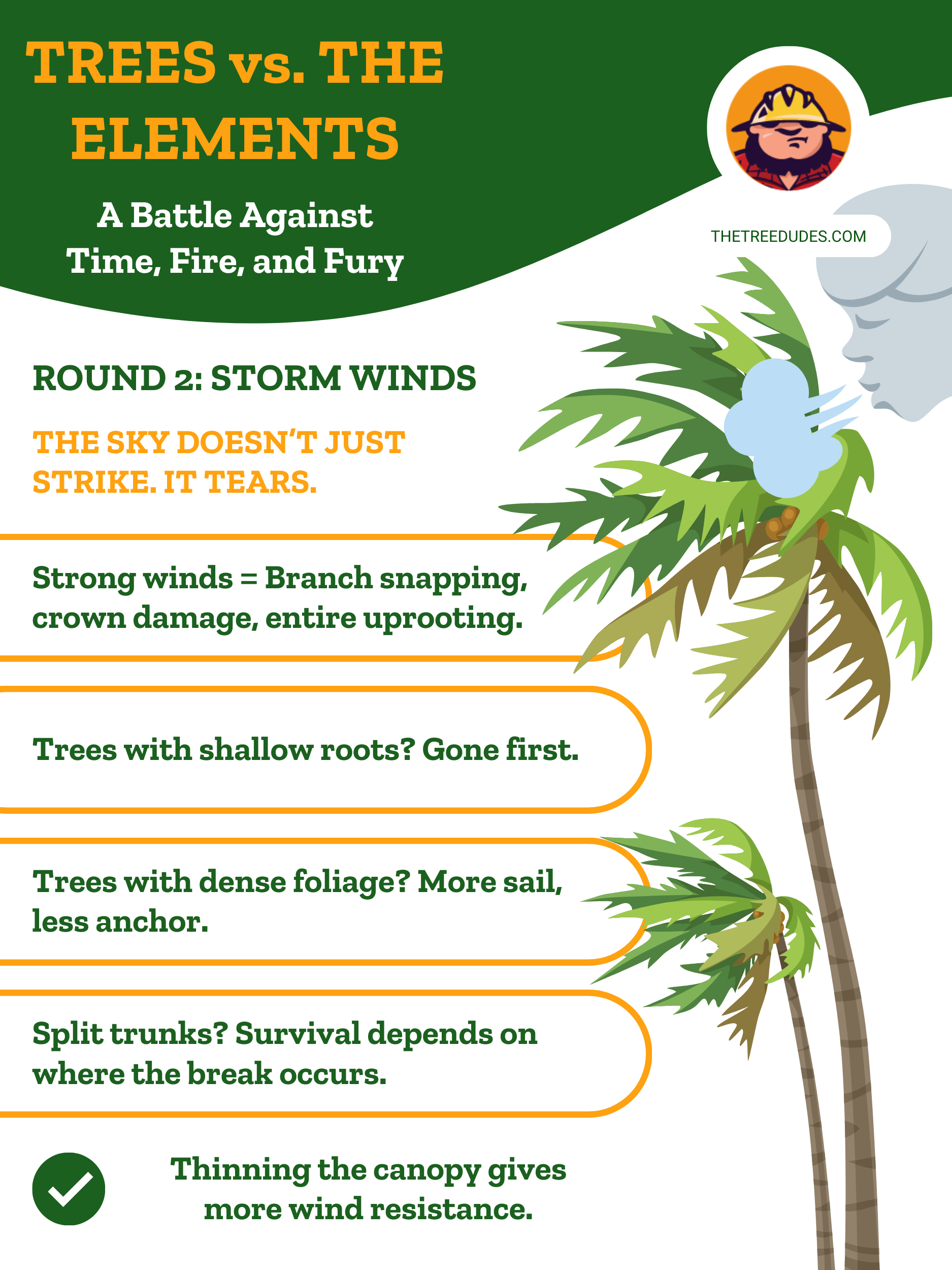
We have all witnessed storms that blow in like they are auditioning for a horror movie, ominous clouds, howling winds, and maybe a big, dramatic thunderclap or two. Your trees, with roots anchored deep in the ground, might stand strong for a while. But sometimes, the wind or lightning decides to get personal, snapping off limbs and tearing bark.
If the storm only damaged certain branches, partial removal helps you carefully clip away the broken sections. This way, you are not forced to say goodbye to the rest of your tree companions. Some storms leave behind cracks that might not be obvious at first glance. An arborist can identify these sneaky fractures and remove just what is compromised, saving your tree while preventing future heartbreak when the wind picks up again.
Fire
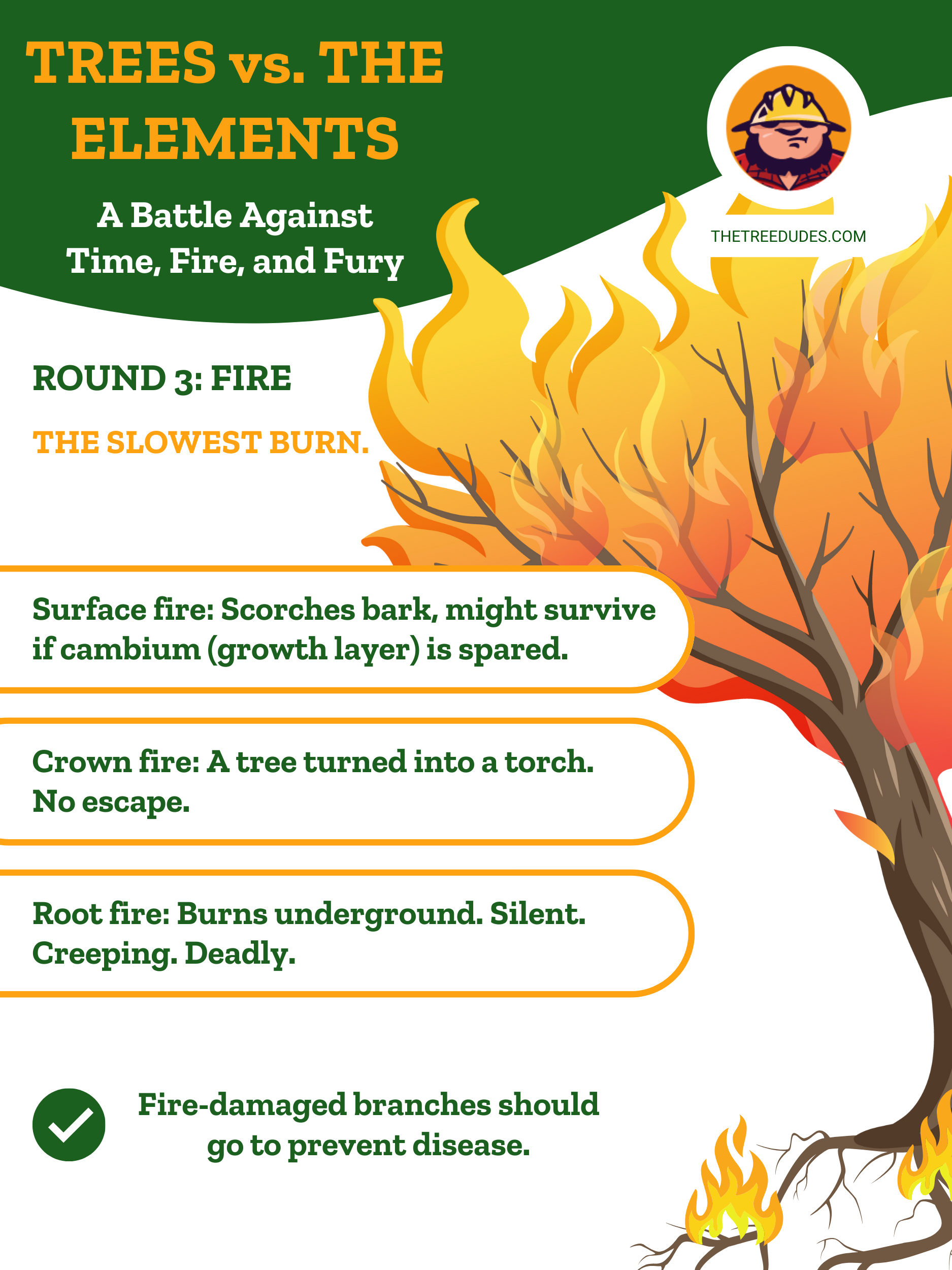
Fire damage can be visually unmistakable: blackened bark, ash residue, or entire sections of wood seared away. But fire’s devastation goes deeper. Heat can compromise the water-carrying vessels, as well as the cells that help the tree heal. Even if only a portion of the trunk is charred, the shock from extreme temperatures can cause the rest of the tree to die slowly.
Overhanging Weight and Structural Instability
Trees can grow in unexpected ways, with heavy branches leaning over your driveway, and trunk angles that shift precariously as the tree stretches for sunlight. You might not always notice the incremental shift in weight distribution. But if insects, rot, or storms exacerbate an already top-heavy structure, the tree’s entire framework can become unbalanced. You might see large branches crossing and rubbing, or an uneven canopy that looks suspiciously lopsided.
Cases Partial Tree Removal Becomes Truly Necessary
Do you ever wish you could hit pause? What if, just for a moment, right before that lightning struck and turned your tree into a sad pile of ashes, or before those sneaky termites turned it into their buffet? Let’s see cases where partial tree removal is not only an option but a necessity.
Safety Concerns
Is not it nerve-wracking when your tree’s limbs loom over your bedroom window, or perhaps they are dangerously close to overhead power lines? One big gusty day, and you are stuck dealing with a world of regret.
By removing only the limbs or branches threatening your home, you preserve the bulk of your tree’s structure and that sweet summer shade it provides. Extended limbs over roofs can break and puncture your home. Limbs near power lines are a shock hazard waiting to happen. Partial removal can eliminate these pressing dangers without sacrificing all the green goodness.
Disease or Pest Infestation in a Limited Area
Your tree might be hosting a sneaky invasion by pests like termites, or a fungal infection creeping through a section of the trunk. Do not panic and order the entire tree to be taken down just yet.
If the infestation or disease is confined to a certain branch or trunk section, partial removal can isolate the problem. By cutting away the infected parts, you give the remaining healthy structure a better chance at resisting further spread. A certified arborist can guide you in figuring out if partial removal is enough, or if the disease runs too deep to save the tree. You will want an expert eye here because it is easy to underestimate how far hidden rot can go.
Aesthetics and Property Value
Let’s say you have a mature maple tree that is the talk of the neighborhood. You love it, your neighbors love it, and squirrels love it. But one side is a bit too dense and blocks out the sun from your blossoming rose garden. Or maybe a random limb grows all weird and ends up looking like silly hair poking out of a fancy hairstyle.
Instead of removing the entire, glorious maple, you can selectively shape it by removing only the parts that hamper aesthetics or create an unbalanced look. Balancing out your tree’s canopy can let more light into your yard, potentially boosting your property’s overall appearance and value.
Hidden Rot and Decay
“Oh, but it looks fine,” you tell yourself, running your fingers over the bark, hoping for the best. But deep inside? That tree might be rotting away, turning into a cozy little hideout for things you do not want hanging around, fungus creeping through cracks, stormwater soaking in just enough to keep decay happy, termites and ants tunneling like they are building a whole secret city. By the time you notice, those little invaders could have already hollowed out the structure.
The Domino Effect of Weak Limbs
Branches are not independent. They are anchored, fed, and supported by the trunk. If your trunk is feeble, the branches, no matter how healthy they appear, could drop like dominoes when the wind picks up. Partial removal rarely addresses the fundamental trunk issue, thereby leaving any remaining branches an accident waiting to happen.
Which Parts Can Be Partially Removed?
Partial tree removal might sound simple, just cut a branch or two. But there is more nuance here, and each case can be as unique as the shape of your tree’s canopy. Understanding which parts are prime candidates for partial removal helps you and your arborist make strategic cuts. Here is a quick breakdown:
Individual Branches
Sometimes, you will have that one rogue branch that stretches too far, maybe over your fence, or into your neighbor’s yard. Or it might be diseased or broken, and you know it is a hazard waiting to happen. When you prune or remove a single limb, you are focusing on a localized area without disturbing the overall structure.
Tree Canopy
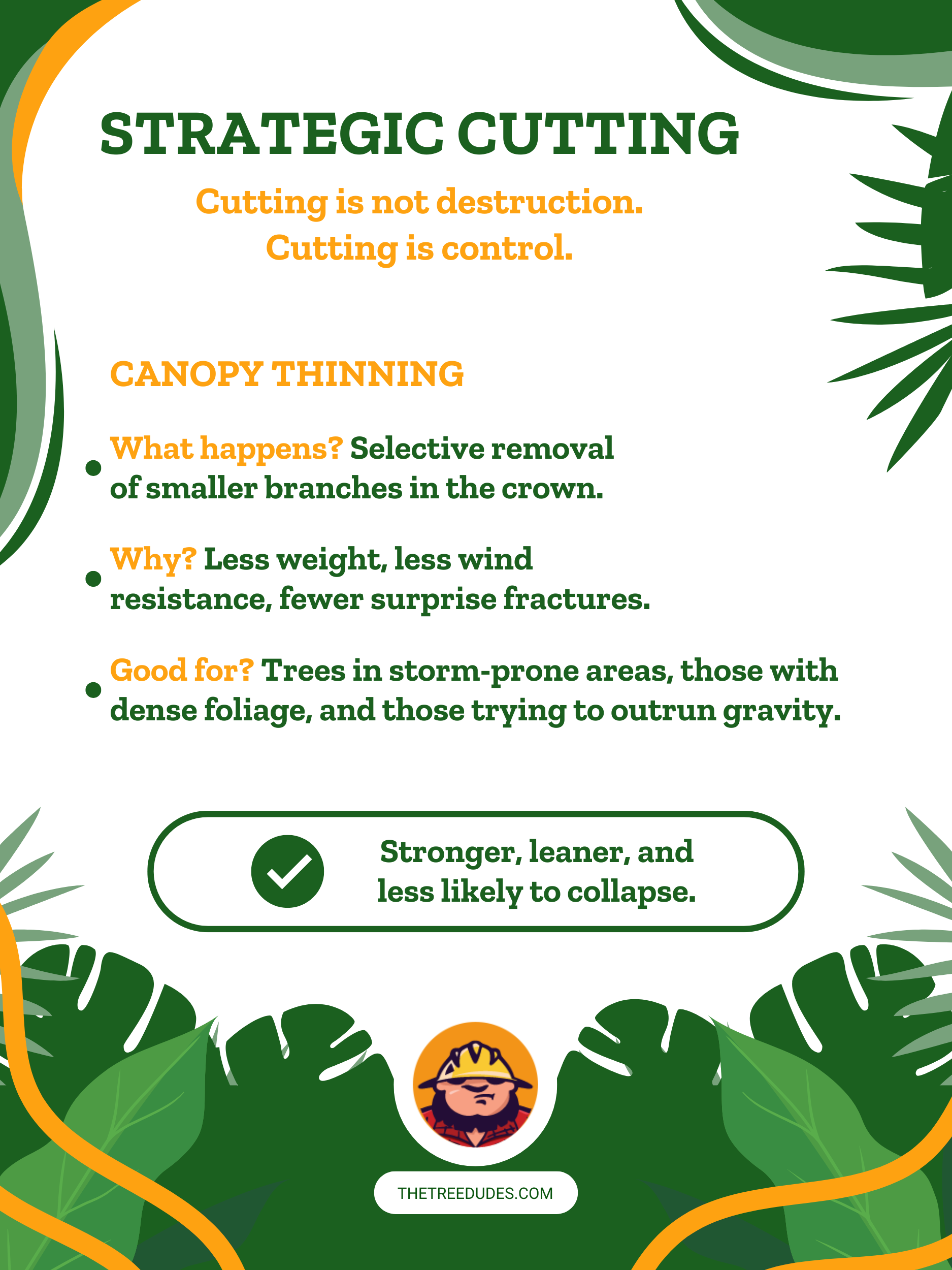
Some trees grow dense and heavy up top. Having a big tree for shade is nice, but it can also catch the wind like a sail, which makes it more likely to fall over. Selectively thinning the canopy by removing branches from the upper sections can reduce wind resistance and lighten the load.
Upper Portion of the Trunk
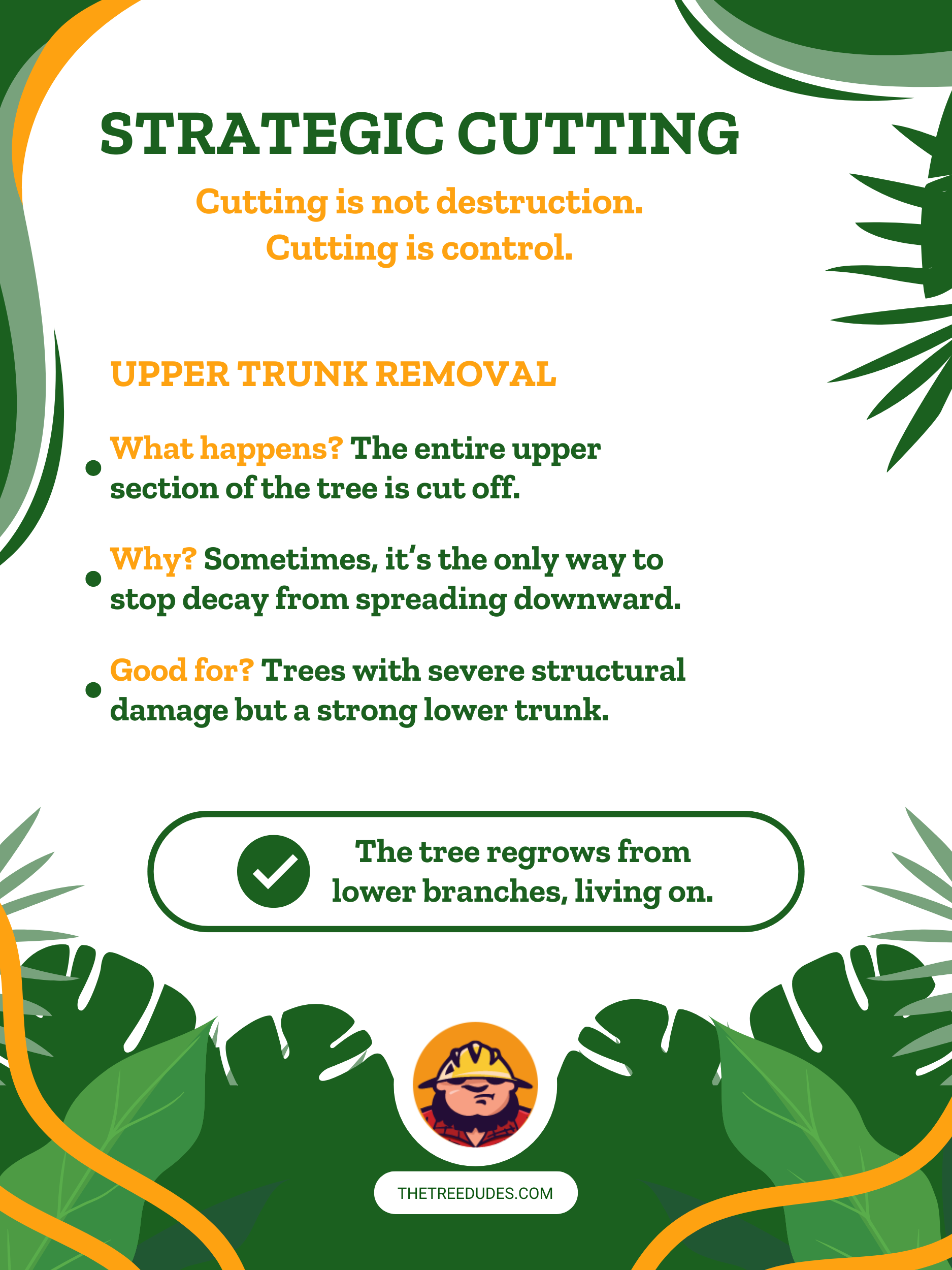
This is a little bit more drastic. If the top portion of the trunk is split, severely diseased, or hollowed out, an arborist might consider removing that upper trunk. It is a way of trimming things down but keeping the bottom part as is, like giving your tree a super intense haircut.
Deadwood and Dangerous Limbs
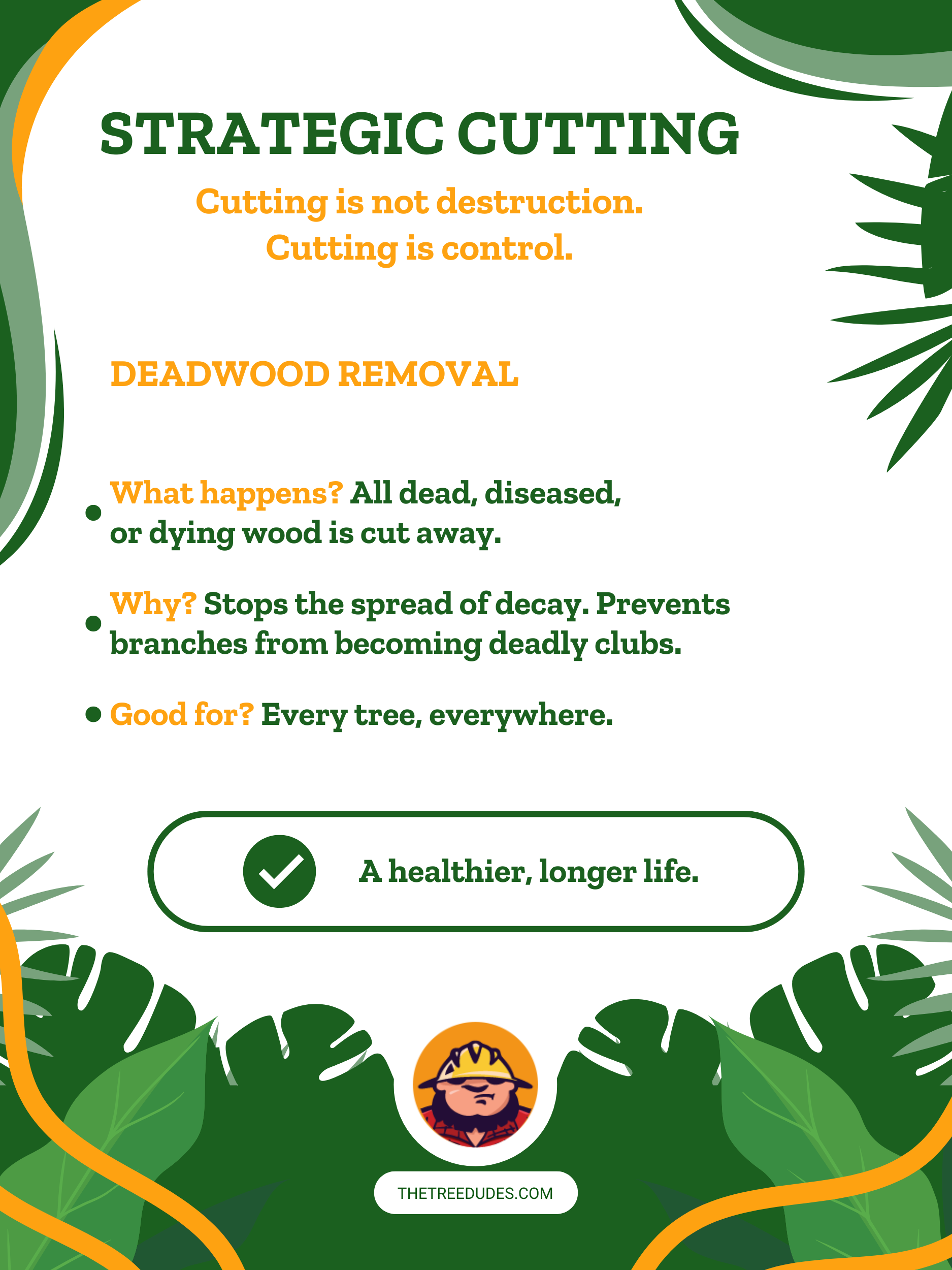
Dead branches are not just ugly, they can be dangerous during a storm. So, it is usually a good idea to remove them right away. Once those branches are out of the way, you can check if the rest of the tree is healthy enough to stay.
How Is Partial Tree Removal Done?
Have you ever watched a hairstylist dissect your hair, snipping carefully while explaining each step? Imagine a similar process, but on a larger scale, and with the possibility of major property damage if it goes wrong. That is why partial tree removal usually calls for an experienced professional, often a certified arborist. Let’s break down the process they follow:
Professional Assessment
Your first step is to call in someone who knows their stuff, someone who sees that trunk and knows exactly how branches shift and how roots behave. An arborist will:
- Inspect the tree’s overall health: They will examine leaves, bark, trunk, and roots.
- Check for hidden decay: Since rot can be lurking inside the wood, they might check it out with a sounding test or other special tools to see if it is still sturdy.
- Determine feasibility: If taking out just a bit is not safe or is not gonna last (like if the rot goes way too deep), they might suggest going for a bigger level of removal.
Safety Preparations
The work zone is delineated to keep curious onlookers and pets away. Safety always comes first. You will see the arborist in gloves, helmets, and harnesses if the work is high up. They might bring out specialized rigging ropes, a crane for large branches, and a variety of saws.
Strategic Cuts
The certified arborist will cut in a way that guides how a large branch falls, minimizing chaos. If a branch is massive, they might lower it piece by piece using ropes to protect your roof, fence, or garden. The cuts are made near the trunk or a healthy lateral branch, following the branch collar to encourage proper healing.
Cleanup and Debris Management
Wood chips everywhere, heavy logs, stray branches, sawdust, etc. After partial removal, the arborist and crew clear the mess. You can choose to keep the wood chips for mulching or have everything hauled away. Some folks even love repurposing the wood for DIY crafts or firewood, though diseased wood might not be the best for that.
Aftercare and Monitoring
Removing large limbs or an upper trunk portion can change the tree’s weight distribution dramatically. Sometimes, cables or braces are installed to stabilize what remains. A certified arborist might schedule follow-ups to ensure pests, fungi, or further decay do not creep in through the pruning cuts.
How Can Partial Tree Removal Affect the Tree?
No major decision comes without consequences, right? This is especially true for partial tree removal. On one hand, you spare your tree from a total takedown. On the other, you have changed its shape, its canopy density, and maybe even how it sways in the wind. Here is a quick rundown of the potential ripple effects:
Healing and Compartmentalization
Trees do not “heal” wounds the way our bodies do, they compartmentalize. That means they grow wood around a wound, effectively walling off the damaged area. A precise, clean cut helps the tree do this efficiently. If your arborist has done a stellar job, the tree can block off rot or pests, preserving the healthy tissue.
Changes in Weight Distribution
If you take off big chunks from the top, you are cutting down on the wind sail effect, which helps keep the tree steadier when strong gusts hit. However, if the cuts are uneven or if the trunk is already compromised, the tree might develop new weak points. Finding a good balance is super important.
Potential for Regrowth
Some plants come back strong, sprouting fresh shoots and new branches right where they were cut. It might look a bit odd at first, but with time and proper care, the new growth can blend in nicely, giving your tree a renewed fullness.
Risk of Shock or Decline
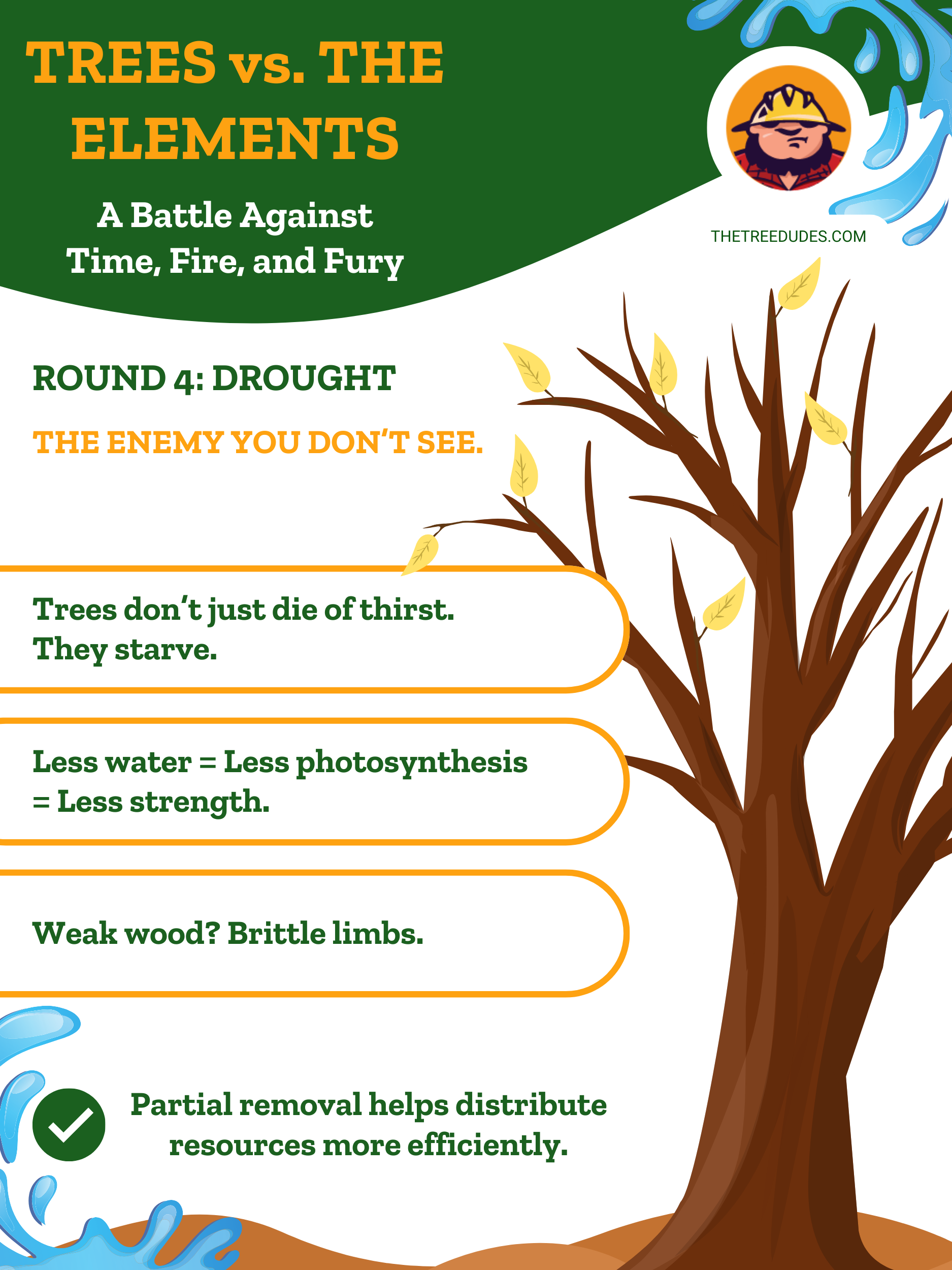
Take off too much greenery or remove an important part of the trunk, and you might send your tree into stress city. Leaves convert sunlight into energy, so drastically reducing them can slow the tree’s growth. A severely compromised trunk can struggle to transport water and nutrients. A certified arborist’s expertise helps ensure you remove just enough without pushing your tree over the edge.
Ongoing Maintenance
Once you have committed to partial removal, you might need a bit more vigilance. Pests love preying on weakened plants, and fungi often find new openings to sneak in. Routine check-ups can catch these problems before they escalate, helping your tree stay healthy over the long haul.
A Balanced Perspective on Partial Tree Removal
So, partial tree removal might seem like an easy way to handle things, a nice compromise between chopping down the whole tree and hoping it will bounce back on its own. And sometimes, it truly is the best option. It can extend a beloved tree’s life, preserve your property’s beauty, and spare you the emotional blow of total removal.
But remember: it requires a delicate blend of arborist expertise, meticulous planning, and ongoing care. If your tree’s trunk is rotting, or if the roots are giving way beneath your feet, no amount of partial pruning can fix what is fundamentally broken. Safety should always come before sentiment, always.
When you do proceed with partial removal, make it a thoughtful act. Watch, learn, and engage with certified professionals. Understand that your tree will change, but change is part of nature, too. If you handle it well, your backyard could still capture the sounds of swaying leaves, sharing the tale of how you gave that big tree a fresh start, just snipping the problem areas, and creating a balance between working with it and keeping it around.