








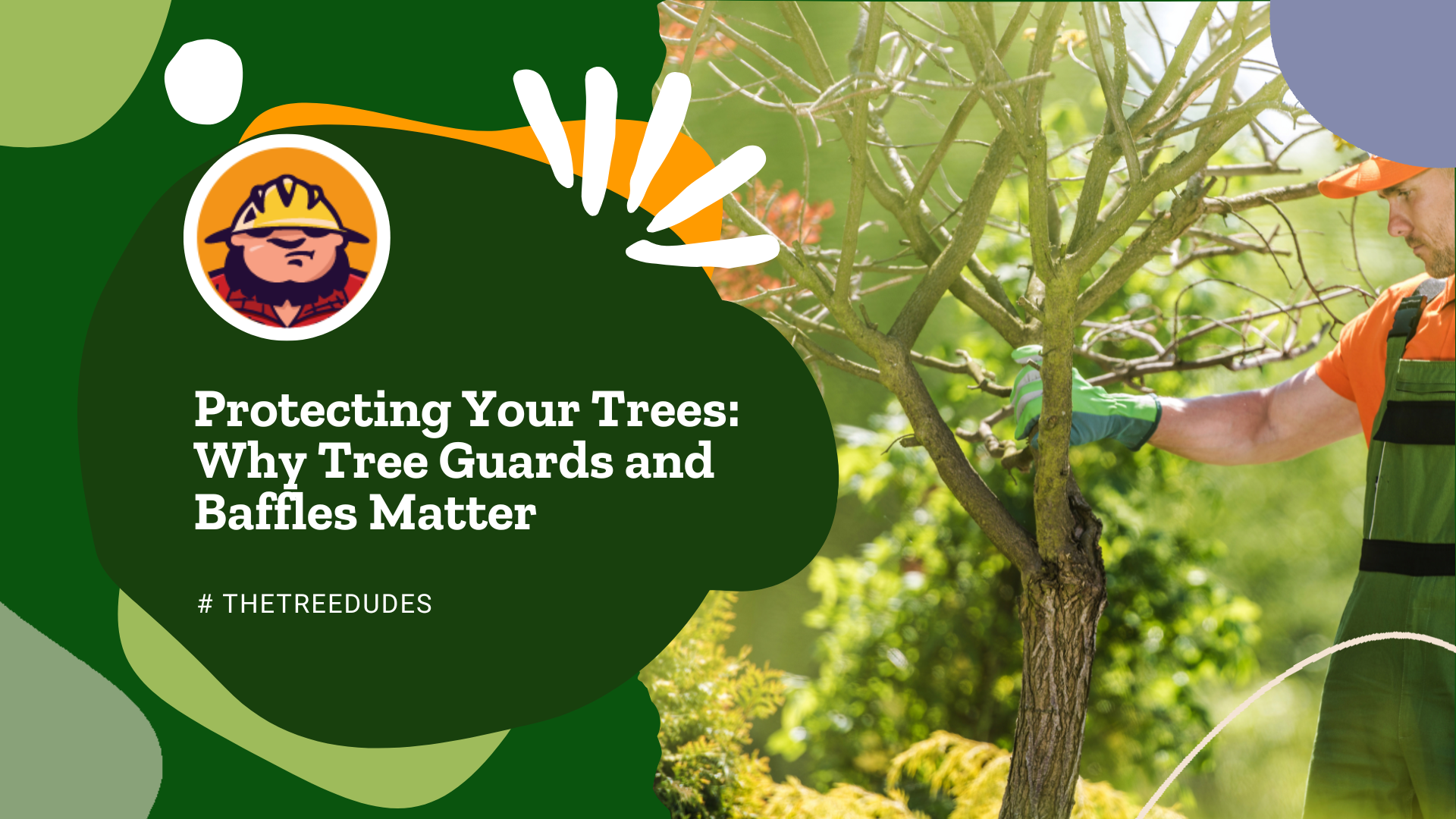
Tree guards and baffles are essential tools to safeguard your young trees from harm. These protective wraps and shields, whether made of sturdy metal or durable plastic, defend your tree’s vulnerable bark from gnawing critters, harsh lawn equipment, and even extreme weather. By encircling the lower trunk, a tree guard can prevent hungry rabbits or voles from chewing the bark and stop deer from rubbing their antlers.
At the same time, guards protect against “misguided” weed whackers and lawn mowers that might scar the trunk, and they even shield against environmental stress like scorching sun and frost. In short, using a tree guard is a simple, proactive step to help your trees grow strong and healthy for the long run.
You would not leave a toddler alone in a busy street without some sort of protective measure, so why leave a young tree unguarded, exposed to an array of potential dangers? You might be wondering, “Are all tree guards the same?” The truth is, while many varieties of guards exist, not all are created equal.
What Exactly Are Tree Guards and Baffles?
Tree guards are protective barriers placed around a tree’s trunk to prevent damage. They can be made of metal, plastic, mesh, or other materials, and they typically form a cylinder or wrap around the trunk. Tree baffles, on the other hand, are a type of guard, often a widened or flared shield, designed specifically to stop animals from climbing up the trunk.
In other words, a baffle is usually a smooth, disk-like or cone-shaped guard that animals like squirrels or raccoons can not get past.
Understanding the Core Function of Tree Guards
A well-designed tree guard offers shelter, security, and the freedom to thrive without hindrance. But why do young trees need protection in the first place?

Picture a newborn in a bustling world: It is not that the world intends to harm them, but there are countless inadvertent threats, such as people moving around, objects falling, harsh weather conditions, and malicious animals.
For trees, hazards might include gnawing rodents, passing lawnmowers, a misapplied weed spray, or the scorching sun.

When you explore tree guards, you enter a world of shapes, materials, and designs. Some are made of simple plastic tubes, others are mesh-based, and a growing number are now made of robust metal, which is the best kind.
A Quick Look at Different Tree Guard Types
Before diving into why metal tree guards reign supreme, let’s take a moment to explore the different types available. From lightweight plastic nets to durable, impact-resistant metal baffles, each option has its strengths and limitations. Understanding these distinctions will help you make the best choice for your growing trees.
Basic Nets or Plastics
These are convenient, easy to put on, and they get the job done. Many come in tube form: you just slide them around the trunk, and voilà, you have a rudimentary shield. They can protect against small critters like rabbits or voles and can help reduce damage from minor weed control processes. However, these guards can sometimes feel like they offer some coverage, but you might not feel entirely confident they’re providing the protection you need.

Plastic can degrade under intense sunlight, becoming brittle over time. Nets may let in too much of certain external elements or get torn by aggressive animals. If your environment is relatively gentle and you are primarily concerned about the occasional nibbling rodent, these can be fine. But if you live in a place where you have lawnmowers prowling the yard, weed trimmers buzzing around, or harsh weather extremes, you might find that these simpler options leave your sapling vulnerable.

Metal Tree Guards and Baffles
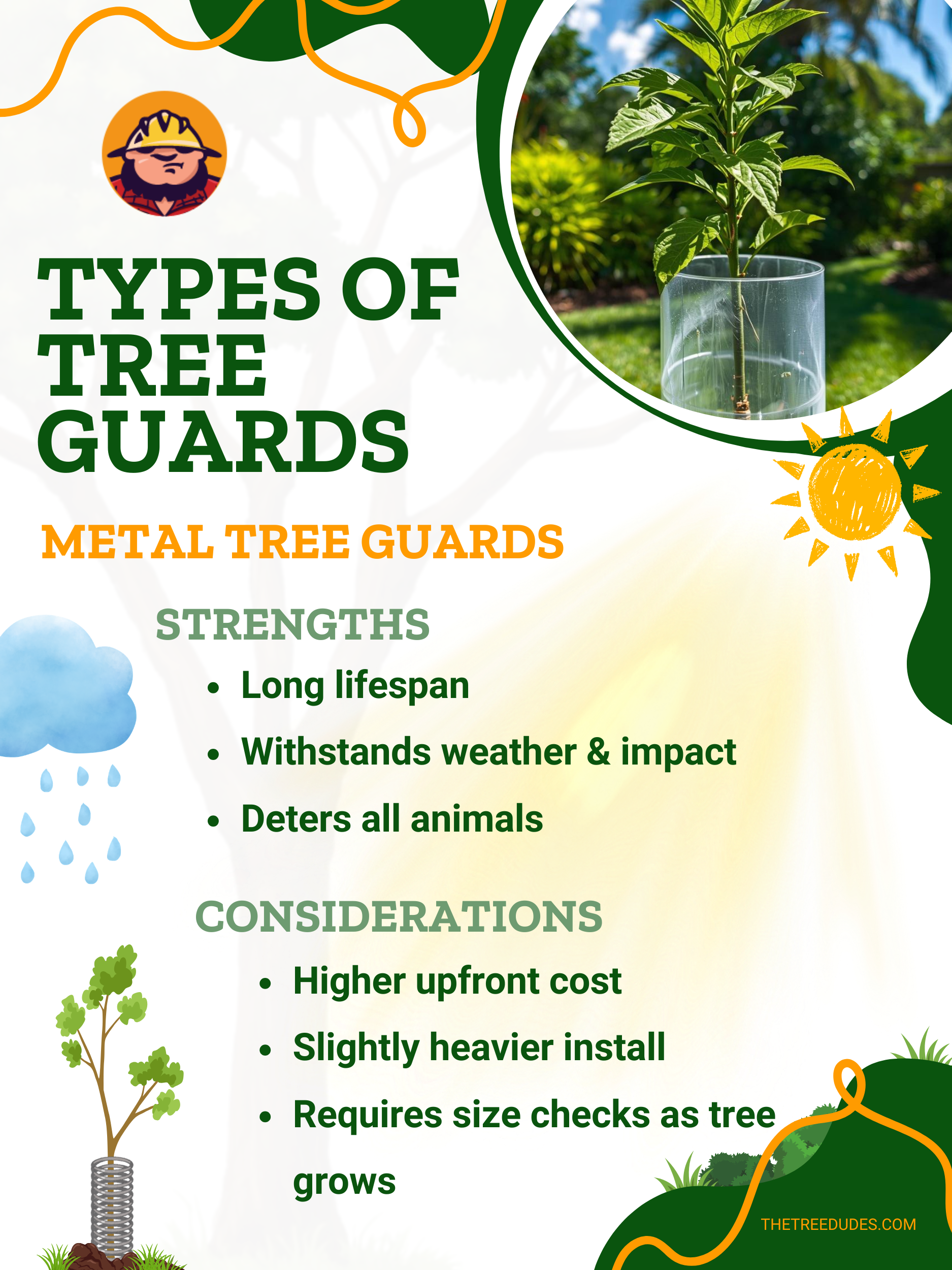
Metal tree guards typically come in the form of cylinders or baffles (designed to deter climbing animals like raccoons or squirrels). Their robust nature means they won’t crack under pressure or degrade under harsh sunlight. Some are engineered with special coatings to withstand rust or corrosion, making them last significantly longer than their plastic counterparts.
If you have ever dreamed of planting an orchard and ensuring each tree stands the test of time, you will appreciate the investment in a metal guard. In short, while simpler materials may be sufficient for some contexts, metal stands out as the champion for broader or more demanding environments.

And if you’re a perfectionist at heart, you will love how these guards align with your desire for permanence and real, tangible security.
Built to Withstand Time and the Elements
- UV-Resistant: Unlike plastic guards that can become brittle after prolonged exposure to the sun, high-quality metal guards are coated or treated to resist UV damage, maintaining their strength and effectiveness for years.
- Rust and Corrosion Protection: Many guards are galvanized or powder-coated to prevent rust, making them ideal for humid and rainy environments. Some high-end models come with weatherproof coatings that extend their lifespan to 20+ years with minimal maintenance.
- High Impact Resistance: Guards can handle external forces, like a stray lawnmower blade, string trimmer, or strong winds better than mesh or plastic alternatives.
Designed for Heavy-Duty Protection
For orchards, urban tree plantings, and gardens where long-term tree health is super important, tree guards offer unmatched structural integrity. This is why they are the preferred choice of city planners, professional landscapers, and commercial orchards looking to protect trees in high-traffic areas.
- Rodent and Animal Deterrence: Small mammals such as rabbits, voles, and deer are known to chew on young bark, leading to girdling (a condition that can kill a tree by cutting off its nutrient supply). Guards create a physical barrier that animals cannot chew through or squeeze past.
- Baffles to Stop Climbing Animals: Baffles (guard attachments with a flared or smooth shape) are especially useful in stopping squirrels, raccoons, and cats from climbing up the trunk. Unlike straight guards, baffles create a wide, slippery obstacle that these climbers cannot get their paws around, effectively blocking their ascent. This is ideal if you’re protecting bird nests or fruit higher in the tree. Standard tree guards made of plastic or mesh generally won’t stop a determined climber. A squirrel might still scramble up a narrow guard. This is why the wide umbrella-like design of baffles is so important for climbing animals.
- Temperature Regulation: Unlike black plastic guards that can absorb and retain excessive heat, leading to bark damage, guards with reflective surfaces help regulate temperature, reducing the risk of heat stress on young trees.
- Shielding from Mechanical Injury: Tree guards protect against accidental damage from lawn mowers, string trimmers, and other machinery. For example, a plastic or metal guard will take the hit from a weed trimmer line instead of your tree’s bark, preventing cuts and scars. This is important because even a single strip of bark removed by a mower can weaken a young tree or invite disease.
- Reducing Environmental Stress: Certain guards can buffer the trunk from sunscald and temperature extremes. In winter, a guard helps insulate the lower trunk and can prevent frost cracks. In summer, light-colored guards, often white or reflective, keep excess sun off the bark, avoiding overheating and sunburn.
A Long-Term Investment for Serious Growers
While plastic guards may need replacing every few years, a well-installed metal guard can last decades, protecting your trees season after season with little maintenance.
- A single high-quality galvanized metal guard can last up to 25 years in the field, whereas plastic alternatives may need replacement every 5-7 years, leading to higher costs over time.
- Many urban forestry programs and commercial nurseries use metal tree guards because they reduce labor costs and eliminate the need for frequent replacements.
- Metal guards can grow up to 25% faster than unprotected ones, as they suffer less damage from herbivores, lawn equipment, and harsh weather conditions.
How to Choose and Install Your Tree Guard
By this point, you are probably thinking, “Alright, I am sold on protecting my saplings with top-notch, sturdy, and stylish metal guards. But where do I begin?” Let’s walk through the steps:
Assess Your Environment
Think about the conditions around your sapling. Is it prone to harsh sun, strong winds, or lots of animal activity? Do you have frequent lawn mowing or weed trimming sessions? Identifying these factors first will help you select the right metal baffle, be it a solid wall guard, a mesh guard, or a heavy-duty mower-trimmer guard.
Measure Your Sapling
Measure your sapling’s trunk diameter to ensure a comfortable fit. Metal guards can often accommodate growth, but knowing how large your trunk already is (and how quickly it is likely to expand) ensures you will not have to replace the guard too soon.
Select Your Material
While plastics and nets are out there, we already established they suck and now your eyes are set on metal for its durability and reliability. If the environment is extremely tough, go for thicker steel or galvanized options. A lighter metal with anti-rust treatment might suffice if it is moderately challenging.
Prepare the Sapling
Young trees thrive best in a clean and unobstructed environment. Weeds and overgrown grass can trap excess moisture, which may lead to fungal growth or attract unwanted insects.
Use gloves or a small rake to remove any grass, weeds, leaves, or twigs from the base of the sapling. If necessary, apply mulch around the base, but keep it a few inches away from the trunk to prevent excess moisture from causing rot.
If you notice scratches, chew marks, or discoloration, it could indicate prior animal activity. In such cases, you may need to apply a tree wound dressing or a protective wrap before installing the guard.
Wrap or Secure the Guard
Depending on the design, you will either wrap the guard around the trunk or slide it into place. Some guards come in sections that clasp or bolt together. Make sure it is snug but not constrictive. Your sapling needs room to breathe and grow.
Inspect Regularly
Even the best, most sturdy, metal baffle can need an occasional adjustment. Check your guard every few weeks for signs of wear, rust, or if the sapling has outgrown its space. Adjust or upgrade as needed.
And just like that, you’ve ensured your new tree has the best start possible.
Common Myths and Misconceptions
Now that you are well on your way to becoming a tree guard connoisseur, you might have come across a few myths along the way.
- Metal tree guards will overheat the trunk. While metal can absorb and conduct heat, most quality metal guards are designed with ventilation or coated surfaces to reflect sunlight. They’re built to protect bark tissue, not burn it. A well-designed metal guard helps stabilize the temperature around the trunk.
- Guards stunt the tree’s growth. This happens only if the guard is too tight or never adjusted as the tree grows. In reality, a properly installed guard can help the tree put more energy into upward growth by preventing damage to the bark.
- All mesh guards are the same. Plastic mesh can degrade or get easily torn. High-quality metal mesh is far more durable. Don’t lump them all together just because they look similar at a glance.
Debunking these myths helps free you from second-guessing your decision.
Why Protecting Trees Truly Matters
In a world where deforestation and environmental degradation are common topics of concern, it can sometimes feel overwhelming to think about making a difference. But planting a tree and ensuring it survives is a concrete action that holds long-term benefits. You don’t have to transform into an eco-warrior overnight; simply take steps to protect the trees you plant. Each sapling that matures into a full-grown tree can offset carbon emissions, stabilize soil, and even improve local biodiversity.