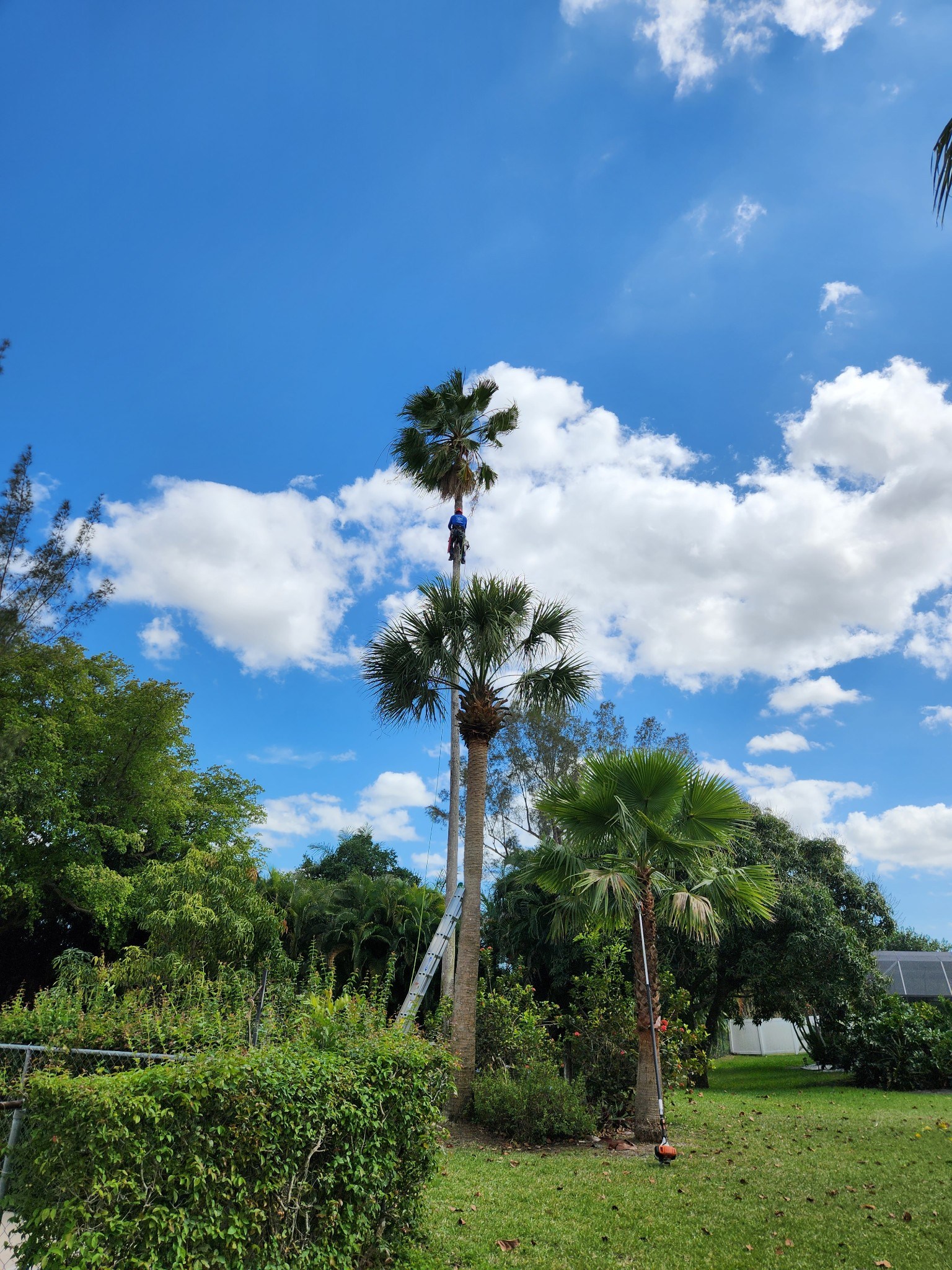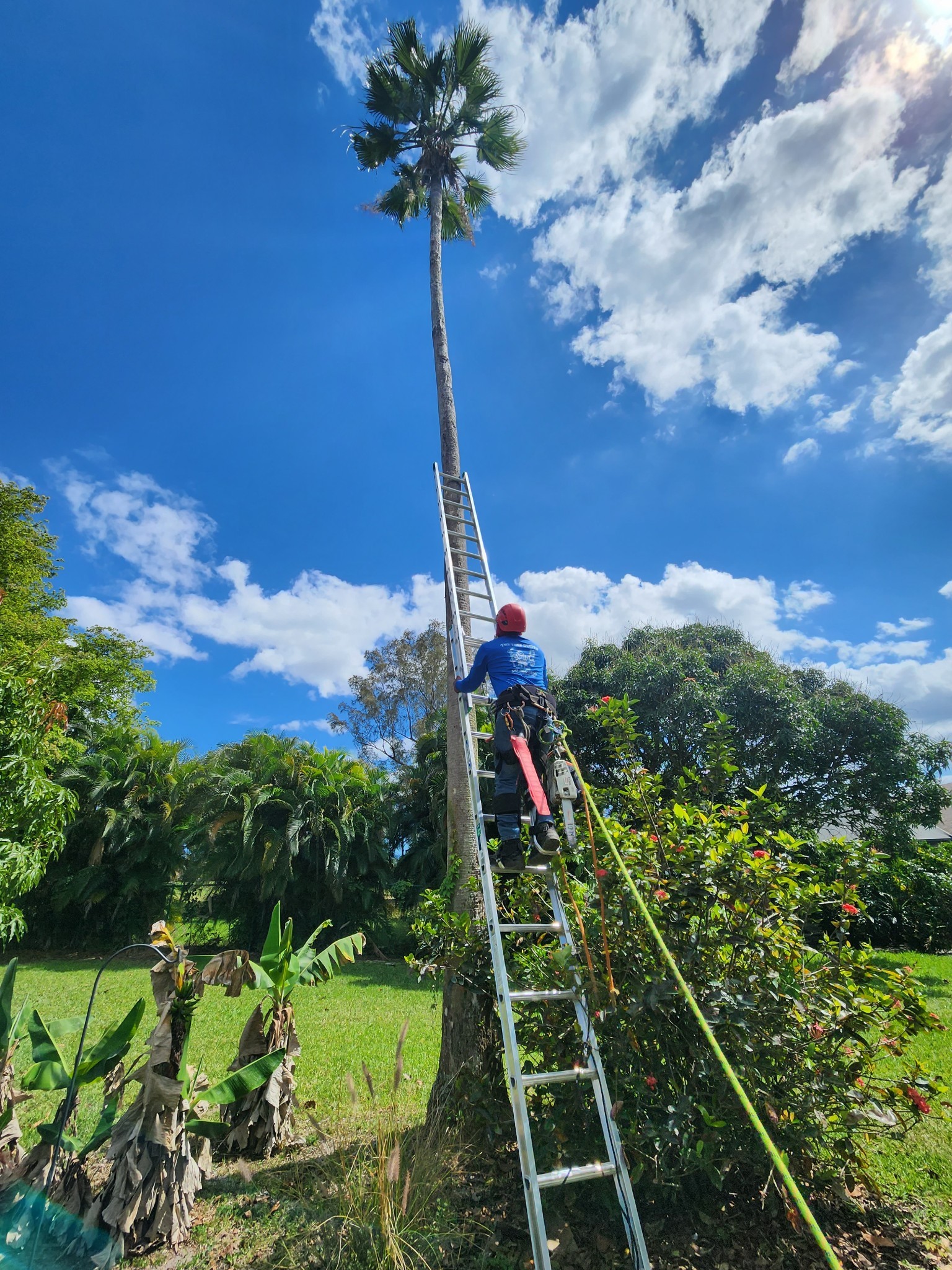





Palm trees are a staple of warm weather and remind us of good times during vacations to sunny Florida or the Caribbean. They are also very beautiful and perfectly suitable for the tropical climate with its frequent heavy rains and strong winds. There is a good reason why 60% of Miami’s landscape consists of palm trees. They are resilient to hurricanes thanks to their flexible trunks and don’t need much soil, due to the fibrous root system that does not penetrate deep. Even though palm trees do not provide much shade, they require a lot of water, which helps to regulate the amount of water in the soil after a heavy tropical rain. Nevertheless, despite all the resilience a palm tree has, even its seven lives eventually run out and at some point it has to be removed. However, removing a large palm tree can be a dangerous and demanding job. Many specimens grow way above 60 feet and trying to cut it down without proper knowledge, experience and equipment can become a very risky venture. Furthermore, don’t be fooled by its slim appearance, a large palm tree is very heavy and when it falls can easily destroy whatever is in its falling zone. Removing fronds is equally menacing – heavy branches falling from up high, just by the sheer speed, gain destructive power with every foot that brings them closer to the ground and can badly injure anyone not fast enough to move out of the way or damage parked vehicles and nearby structures. As you can see, a simple job still has its perks. Therefore, it is best to hire professionals that have an entire team specializing in palm tree removal! They will get the job done quickly and safely, without unnecessary worries and troubles!
Our prices are also based on the size of trees/palms and where they are located on the property. Basically, if our trucks and dudes can reach them safely.
While palm trees aren’t universally protected, certain species, particularly those that are rare or endangered, may have restrictions on removal. It’s a good idea to check with a local arborist to determine if your property’s palm trees are protected. They can help you follow any guidelines and ensure you comply with local regulations.
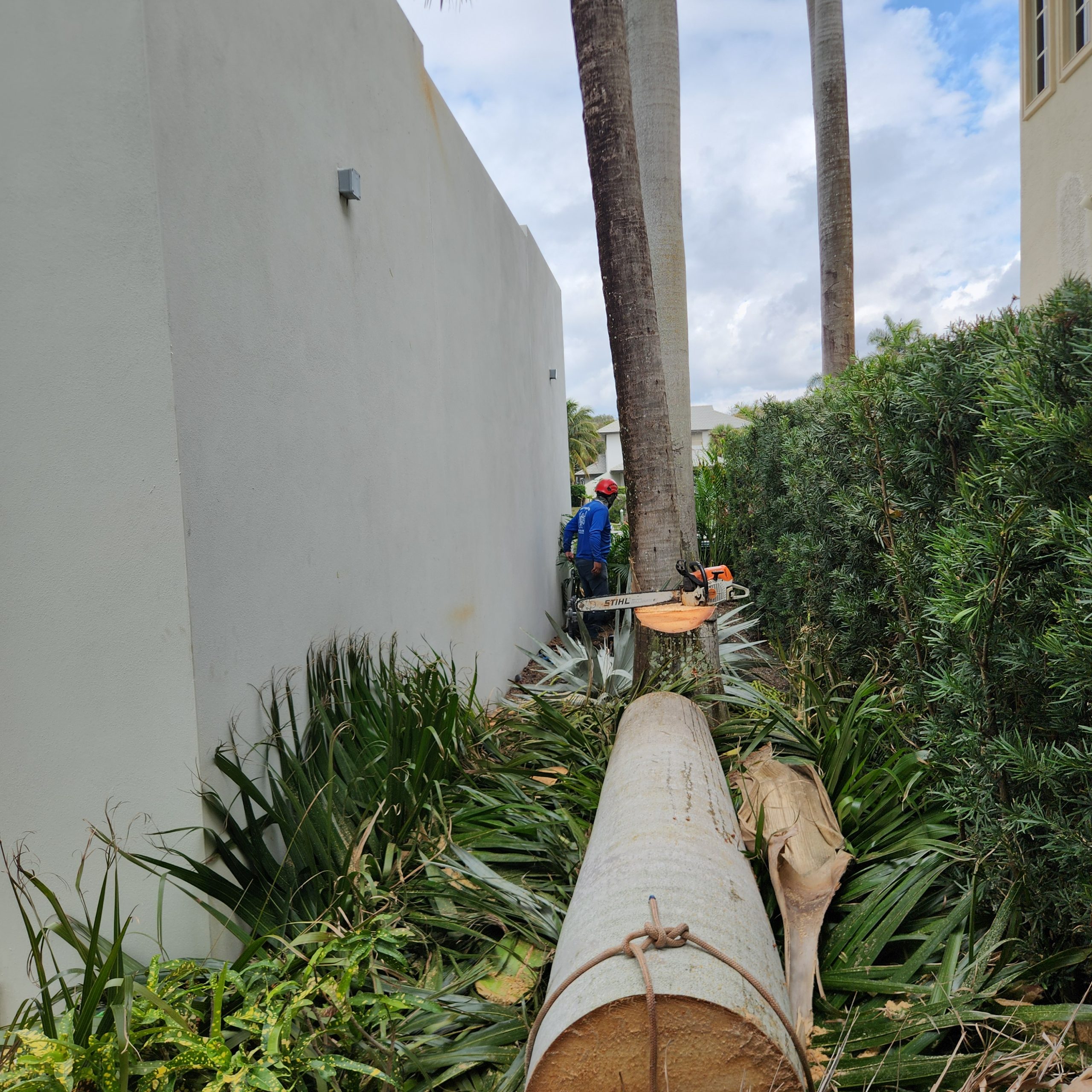
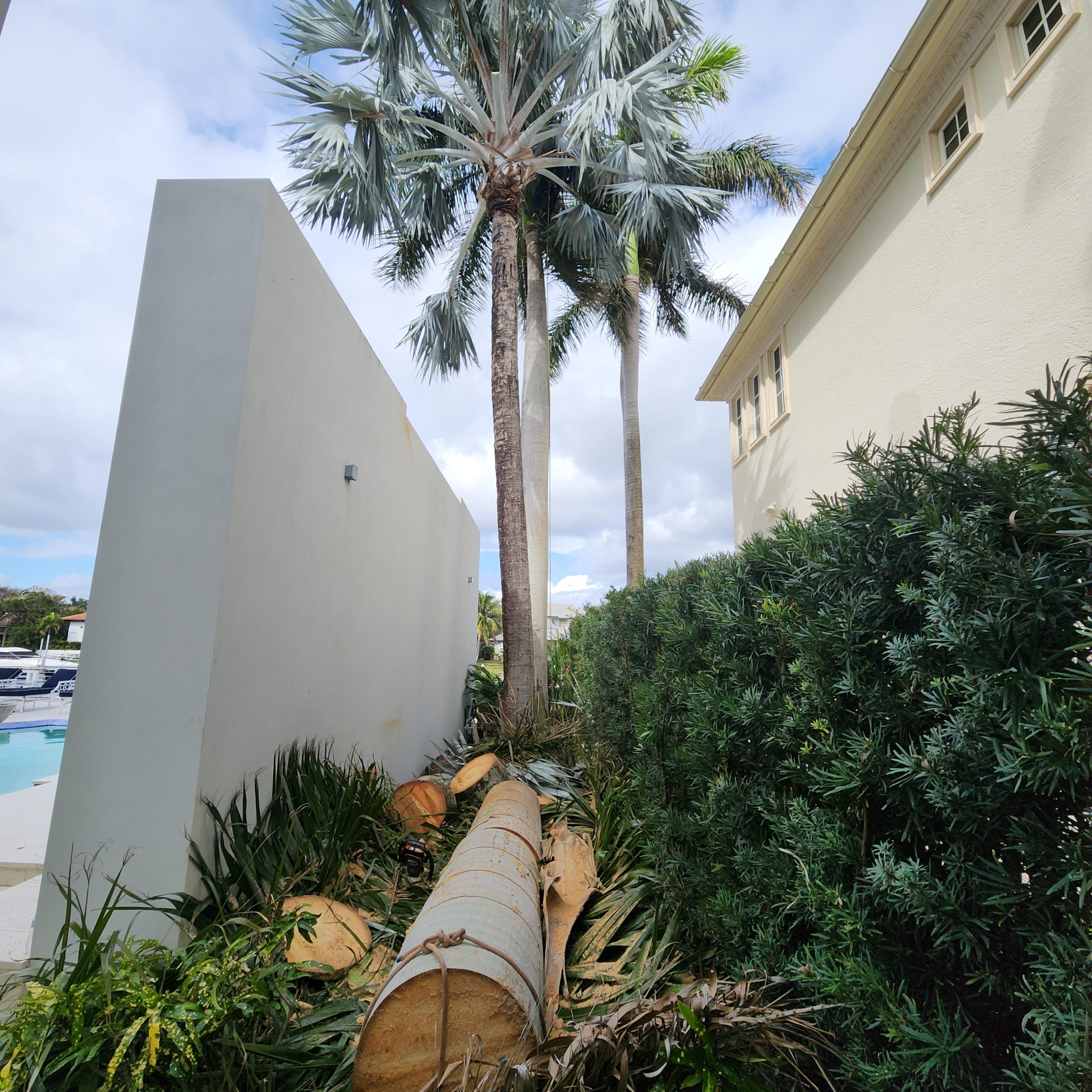
Palm trees have thick, hard trunks, and you will need some heavy machinery to remove them. Depending on the size, you might need to secure the tree’s fall trajectory or remove it in smaller pieces. In any case, removing a palm tree is not an easy task, and the safest way to remove it is by hiring a professional tree removal service.
Palm trees will start showing different signs that will help you recognize if it is time to remove them. For example, the fronds will turn yellow and start falling off. If a palm tree trunk is damaged or tilted, it might also be a sign to remove it. The safest and most reliable estimate will make a professional tree service, which is why you should not wait for even a minute. Contact them and schedule an appointment.
You don’t need a permit to cut down trees on private property in Florida. However, local laws and regulations can vary significantly depending on the county or municipality, and some species are indeed protected. Cutting down a protected tree without the proper permits can lead to fines or legal repercussions. It’s a good idea to check in with your local authorities or talk to an expert arborist before you jump into anything. That way, you’ll know exactly what to do!
You can remove a palm tree alone, but what is the price of it? Since palm trees have thick and heavy trunks and large fronds, removing them alone could destroy everything in the fall zone. We advise you to put your safety first and contact a professional palm tree removal service.
The easiest way to remove a palm tree is to contact a professional tree removal service. They will estimate the tree and remove it safely from your property.
The only way a single-stem palm tree will grow back is if you cut it at the crownshaft. But you have to cut carefully because if you damage it, the palm will not grow back. Multi-stem palm trees will grow back even if you cut the trunk.
Yes! Removing a large palm tree is impossible to do alone. Because of their size, they can destroy nearby building structures and vehicles, so hire professional tree service.
Palm trees, surprisingly, have quite shallow roots. They go not more than 5 ft into the ground and have multiple little vessels, that make palm trees more similar to grass than to other types of trees.
Yes, you can pull out a palm tree, but because of safety issues, do not do it alone. Hire a professional tree service that will dig up the palm and remove it without damaging the fronds, trunk, or root.
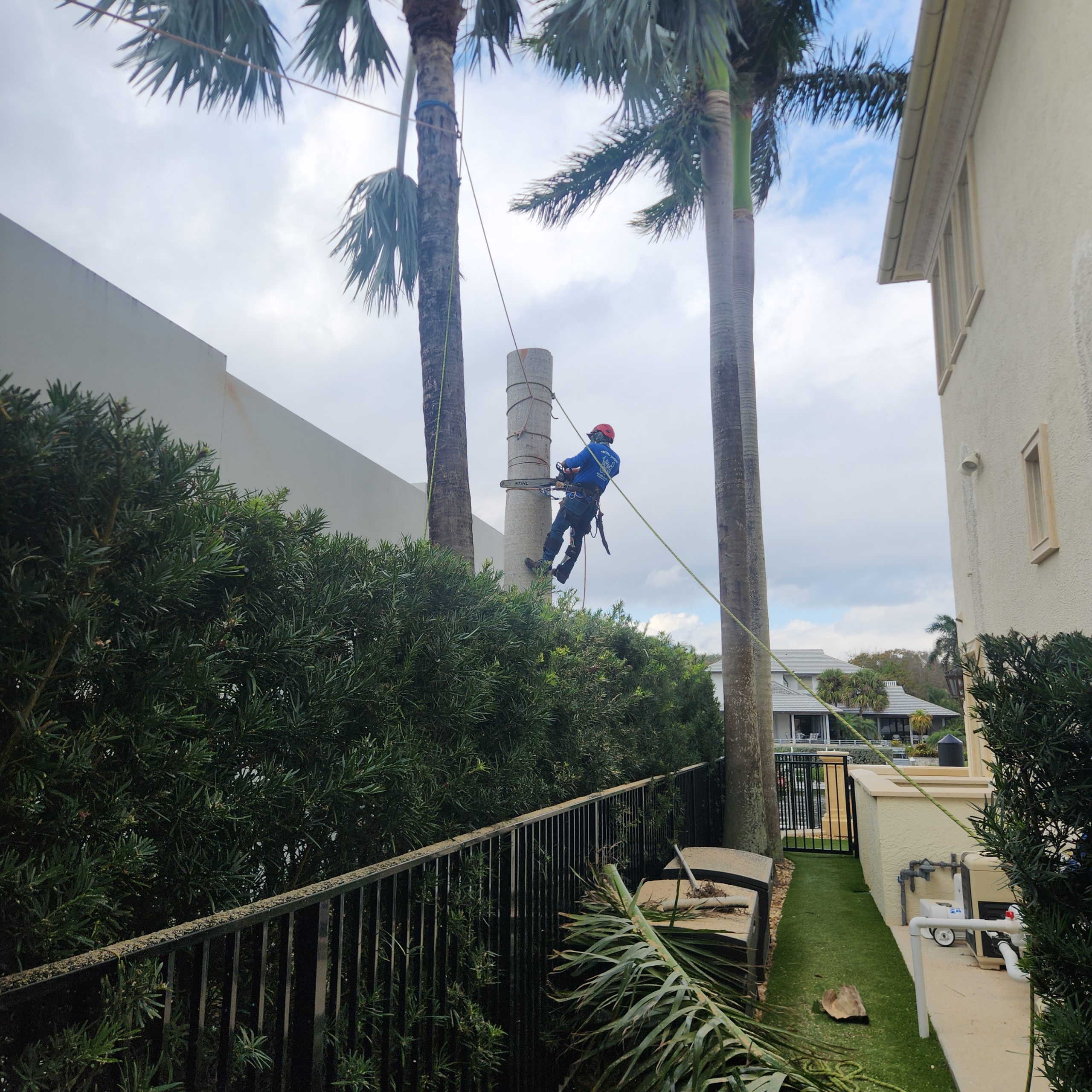
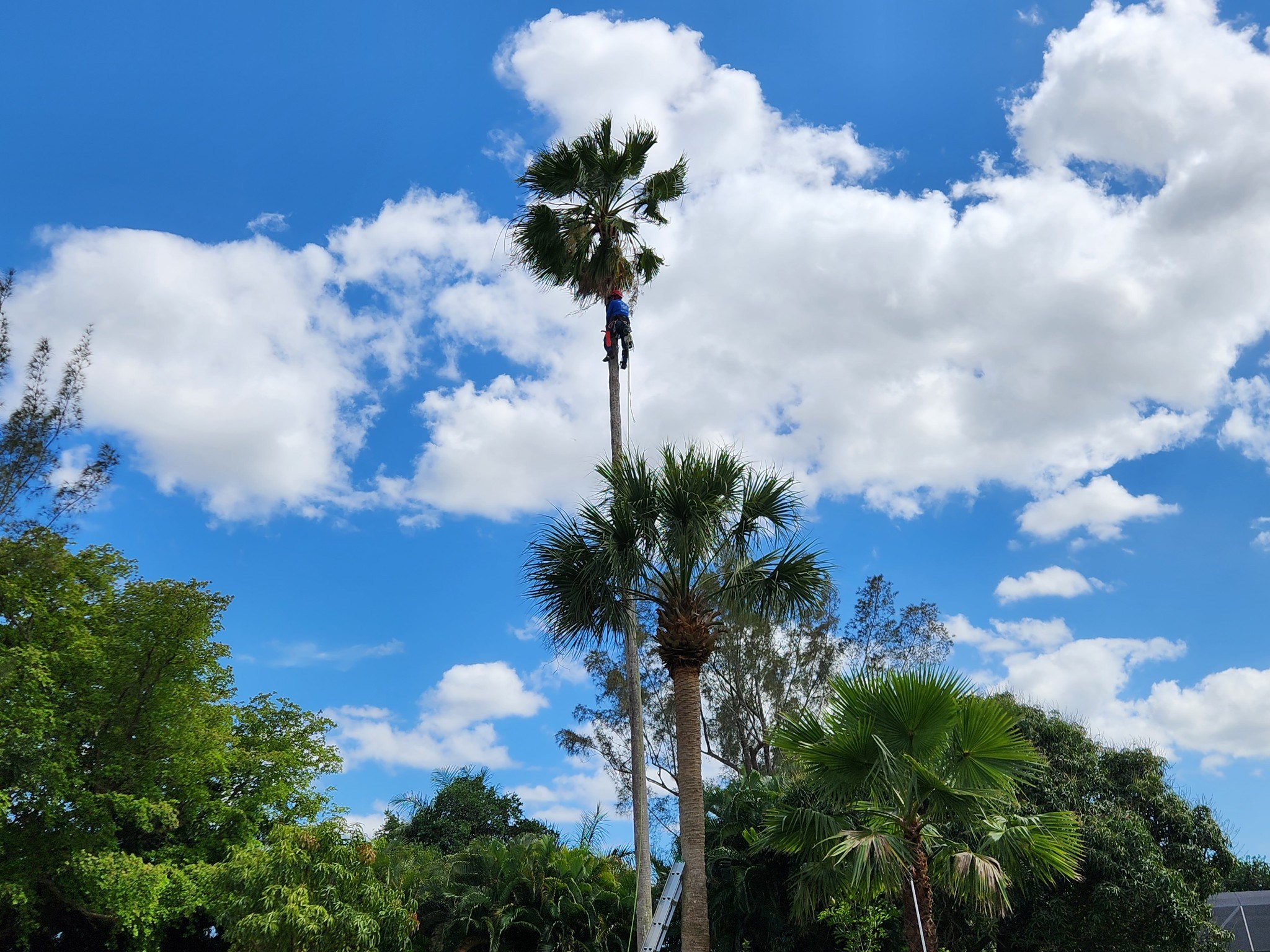
Our team usually uses an aerial lift truck to reach the top parts of the palm tree when removing it. If, because of the location, our truck cannot reach your tree, do not worry – we will climb the palm tree and remove it safely.
South Florida has an ideal climate for palm tree growth, therefore it is not surprising to find them ubiquitously growing everywhere, from golf courses and city parks, to parking lots, shopping centers, beaches, side of the roads and private properties. In fact, 60% of South Florida’s landscape consists of palm trees of all types: short and bushy, squab and thick, slick and skyscraper tall, producing nothing but fronds to coconut and date baring. Typically, palm trees don’t cause much issues, unless they grow too tall or produce coconuts.
Some of the most common palm trees that you find in South Florida are Coconut and Royal Palm trees that can grow 70 to 100 feet tall with fronds extending over 30 feet, which is twice the size of the wingspan of the wandering albatross, a bird with the largest wingspan in the world and 4 times larger than the wingspan of an American Bald Eagle.
But with size also comes the trouble.
Even though the trunks of palm trees look sleek and elegant, don’t be fooled into thinking that they are harmless, since a palm tree can weigh anywhere between 100 lb to 1000 lb per trunk foot, so now, if we do the math, the lightest weight of a 70 foot coconut palm would be around 700 lb, which is enough to completely rack the roof of your house or smash your car into a pancake. Apart from that, a 30 foot long frond falling from a 100 feet can cause quite a lot of damage too. However, the biggest hazard with palm trees in South Florida is falling or flying during the storm coconuts. They can truly cause awful damage to the property and serious injury and even occasional death to people. If a coconut lands on your car, it can create a pretty impressive dent or shatter the glass, if it falls on the roof of your house, you can almost be sure to get a crack or a hole, which might be a thrill, if you are looking forward to watching the night sky from your bed or the couch. A coconut can also hit your window and give you a reason to replace it for the hurricane resistant type, unless you already got that covered. Nevertheless, coconut palms are very common in South Florida and falling-flying coconuts present a serious concern, especially during the storm season. Thus if you have one or more of those palm trees near or on your property, it is best to remove any coconuts they produce before they start falling.
Sometimes an entire palm tree needs to be removed, especially if it starts to show signs of illness or looks unstable. Keep your vigilance and an eagle eye on a large palm tree on your property and consider removing it right away if you notice the following:
Regular palm pruning and trimming are a must if you wish to prevent possible hazards. This also allows for a thorough inspection and detection of possible disease and infestation, so it can be treated in time, before the plant is gravely damaged. But if you have any suspicions about your palms, contact professional arborists. They will advise you on how to care for your palm and if you should remove it.
Remember: never remove a large palm tree alone! Always hire professional arborists to help you out. We will estimate if you should remove the palm and what is the safest way to do it.
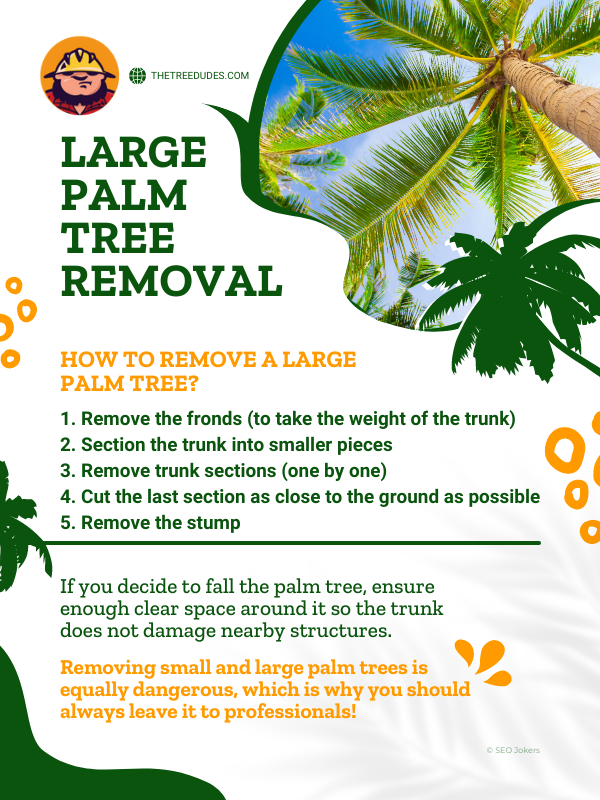
If there is enough space around the large palm tree, you can remove a palm like this:
If our truck can access the palm tree, then we will use an aerial lift to reach the top parts and remove them. If, on the other hand, our truck does not have enough space around the palm tree, our team will climb it and remove it safely.
Some large palm trees are valuable to collectors, so do some research and if you realize that your palm tree is expensive, try to dig it up and sell it.
Once you pull out the large palm tree, you want to protect the roots. There are two ways to do it. The first is instant transplantation, which does not require any root protection. The other is wrapping a root into soil-enriched natural fiber bags until it is ready for a transplant.
Please note that rootball removal is not included in the large palm tree removal service, but we will remove all debris formed during the palm tree removal process as part of the service.