









When you step into Florida’s subtropical paradise, you immediately sense it: the quiet rustling of palm fronds above and the soft, shifting shadows playing on the sunlit streets. Palm trees, standing as sentinels dominate the landscape. These iconic plants represent Florida’s essence, symbolizing natural beauty and human ambition.
But did you know that palm trees are not really the same as other types of trees? So before we delve into the amazing world of Florida palm species, let’s make a clear distinction between trees and palm trees.
What Sets Trees and Palm Trees Apart?
Florida’s botanical tapestry showcases two striking categories: trees and palm trees. At first glance, they might seem like cousins at a family gathering, but their differences are as pronounced as a live oak and a coconut palm standing side by side.
Trees
Trees are the backbone of any forest. Their strong trunks and wide canopies help hold everything together in ways that palm trees just don’t. They create homes for wildlife with their thick wood, while their leaves provide shade and fresh air.
Palm Trees
Surprisingly, palm trees aren’t true trees, they’re closer to grasses. Yes, you read that right. Their flexible trunks, or stems, lack the growth rings you’d find in a traditional tree. Instead, they grow vertically with a singular point of growth at their crown.
This characteristic is what makes palms stand out, It could be the way the leaves of a royal palm dance in the breeze or how the saw palmetto has a nice, full appearance.
Can Trees and Palm Trees Thrive Together?
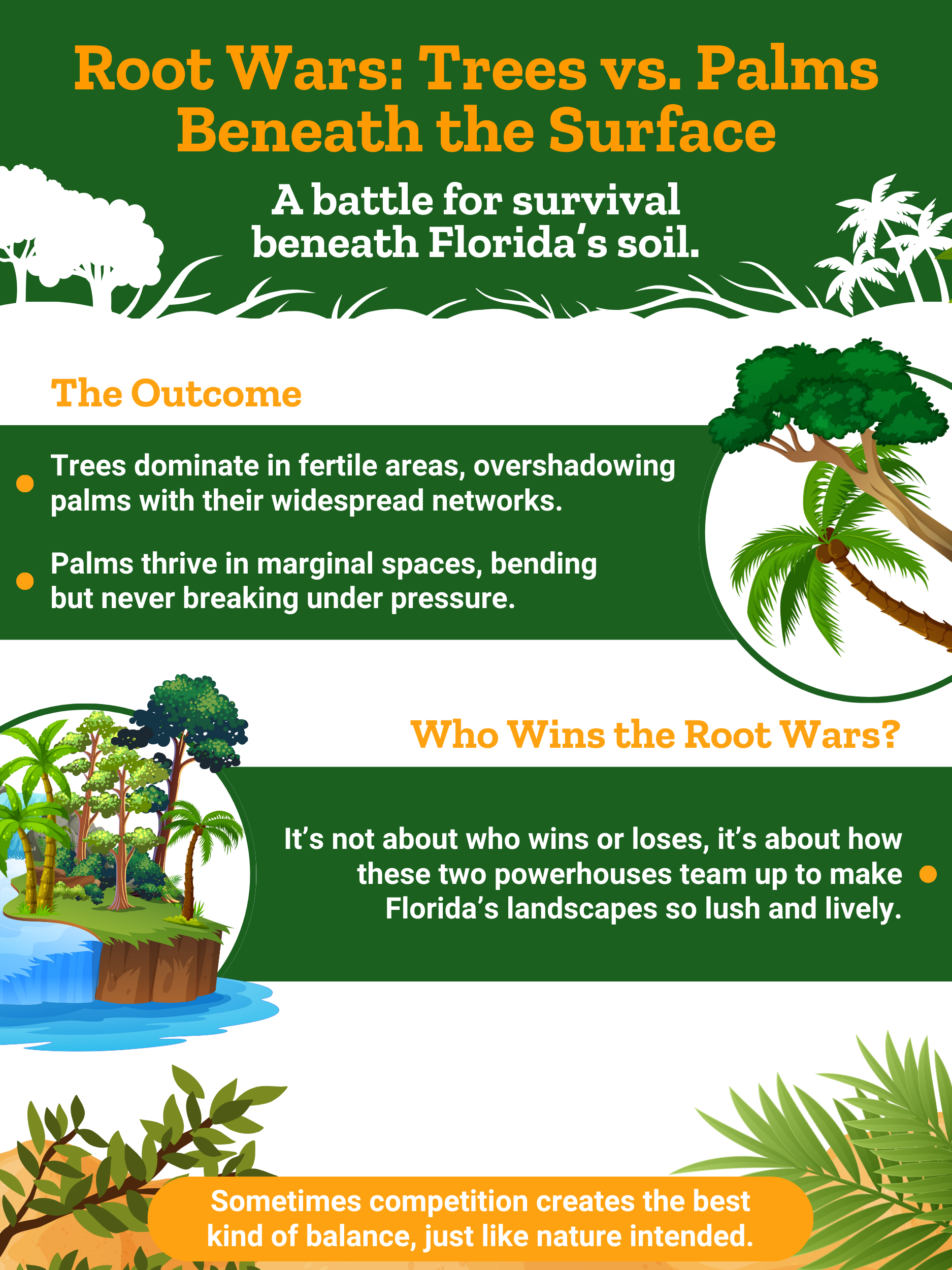
In Florida, the natural environment often merges the elegance of palms with the robustness of trees. But can they truly share the same space harmoniously? The answer lies in understanding their unique requirements.
Potential Challenges
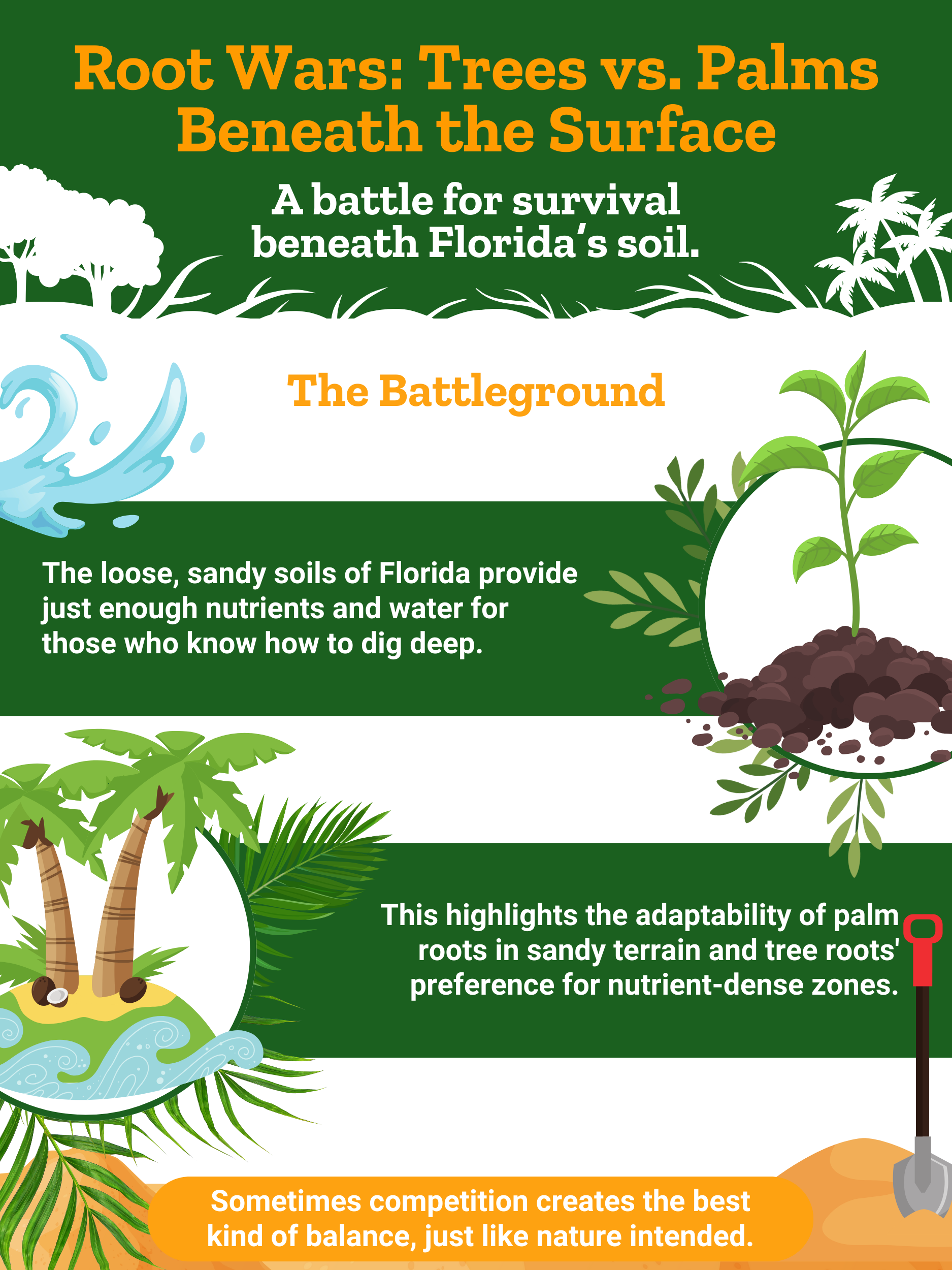
- Competition for Resources: Trees and palms both require sunlight, water, and nutrients. However, their root systems operate differently. Trees typically have expansive root networks that can outcompete palms for underground resources. This can create tension in tight spaces.
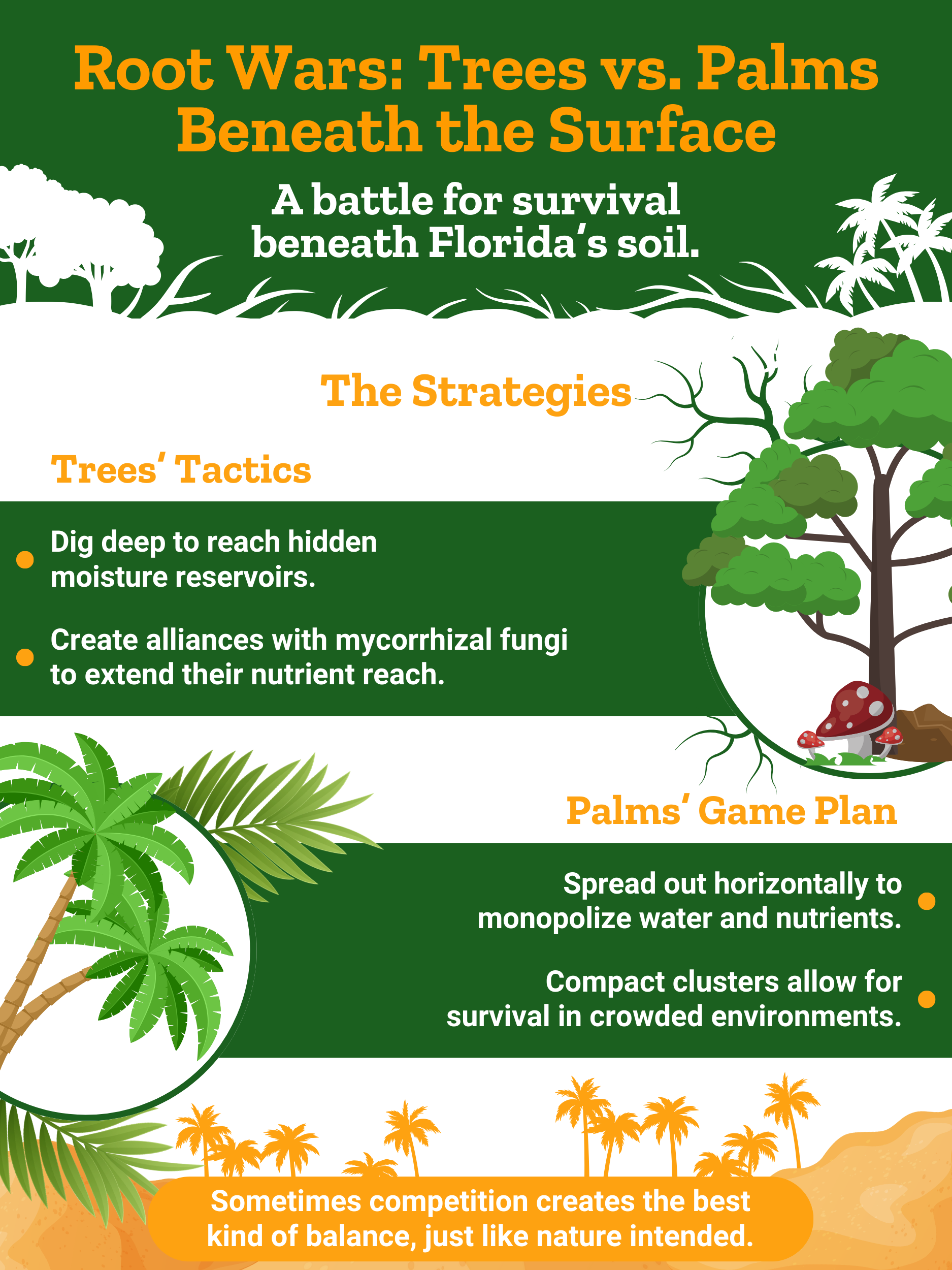
- Canopy Clashes: Trees with wide branches can block out the sunshine for palm trees, making it tough for them to get enough light. For palms that thrive in full sun, this can stunt their growth and lead to an uneven aesthetic in landscaping.
How to Make It Work
Getting trees and palms to look good together takes some careful planning.
- Spacing: Allow enough distance between plants to prevent competition for light and nutrients.
- Layered Planting: Try placing palms as background highlights under taller trees to create a look similar to what you’d find in Florida’s natural environments.
- Choose Complementary Species: Pair palms like the sabal palm with trees such as slash pine, both native to Florida, for a seamless ecological fit.
Palm Tree Species in Florida
As you can see, not all palms are the same. Each species carries its distinct character, shape, and charm. Intrigued?
Now that we know the main differences between trees and palm trees, let’s take a step-by-step journey into the lush, tropical tapestry of Florida’s palm species.
The Chinese Fan Palm
The Chinese fan palm (Livistona chinensis), also known as the fountain palm is kind of a spectacle, but in the best of ways. With its large, fan-shaped leaves spreading out like it’s trying to steal the spotlight, this palm knows how to turn heads in any landscape.
These fronds, which can spread up to 5 feet wide, form a lush, rounded canopy. The trunk grows tall and straight, reaching 30-50 feet, making it a versatile palm for any landscape, urban, coastal, or even as a container palm if you’re into a slow-growth aesthetic.
Adaptability and Uses
Native to East Asia, this palm thrives in Florida’s subtropical climate. It doesn’t even care about droughts or tricky soil, it just adapts and flourishes. You’ll see it as a focal point in Florida gardens, parks, and along streets, just radiating this chill, exotic appeal. The seeds are a magnet for birds and cute little mammals who just can’t resist.
The Queen Palm
The queen palm (Syagrus romanzoffiana) is a staple of Florida’s tropical landscapes, known for its tall, slender trunk and feathery fronds. This fast-growing palm can reach heights of up to 50 feet, with a crown of arching, dark green leaves that sway gracefully in the breeze.
Tropical Elegance
The Queen Palm’s smooth, gray trunk is adorned with a series of evenly spaced rings, giving it a refined and polished appearance. Its canopy is dense and symmetrical, creating a contrast against Florida’s blue skies. Oh, and then there are these vibrant orange dates it drops, which just casually add a pop of color while also being a snack for wildlife.
Versatile Landscaping Choice
Native to South America, the Queen Palm thrives anywhere there’s sunlight and well-drained soil. It is a favorite for lining streets, accenting driveways, or serving as a dramatic centerpiece in residential gardens.
And let’s not forget the multitasking. While it’s busy being the most elegant tree in the yard, it’s also feeding birds and little critters with its fruits and offering shade and shelter.
The Royal Palm
When you first encounter a royal palm (Roystonea regia), it feels like stepping into the presence of royalty. These trees transcend mere aesthetics, radiating an undeniable regal authority. Picture strolling down a sunlit boulevard in Miami, the tropical warmth enveloping you, and there they stand, rising like monarchs upon gilded thrones.
What makes the royal palm so captivating? Perhaps it is the smooth, grey trunks, reminiscent of polished marble, subtly shimmering in the sunlight. It might be the way the leaves spread out, looking like elegant fans that are perfectly arranged. Each one seems to be in just the right spot.
The Perfect Crown
Look up. Just for a moment, let your gaze travel upwards along the trunk, past its perfectly symmetrical rings, to the crown. The fronds seem to explode outward, a symphony of green that sways in rhythm with the breeze. It’s mesmerizing, isn’t it? The symmetry is almost maddening. You wonder how nature could sculpt something so flawless.
Hurricane-Ready Majesty
Despite its luscious beauty, the royal palm is a certified survivor. Florida’s hurricane season can be pretty brutal, but this palm tree keeps standing strong. Its bendy leaves and tough trunk help it handle the strongest winds, showing us how to stay calm and resilient when times get tough.
The Coconut Palm
No Florida postcard would be complete without the quintessential coconut palm (Cocos nucifera), it would look off. Loved for its unmistakable silhouette and tropical vibes, this palm is a favorite among tourists and locals alike.
The Gift That Keeps Giving
The coconut palm is not just a stunning sight, it’s a true nurturer. This remarkable tree is a treasure chest of gifts, offering so much more than meets the eye. From its fruit’s sweet water to its fibrous husks used for rope and mats, every part of this tree serves a purpose. It’s a living testament to sustainable resourcefulness.
Coastal Resilience
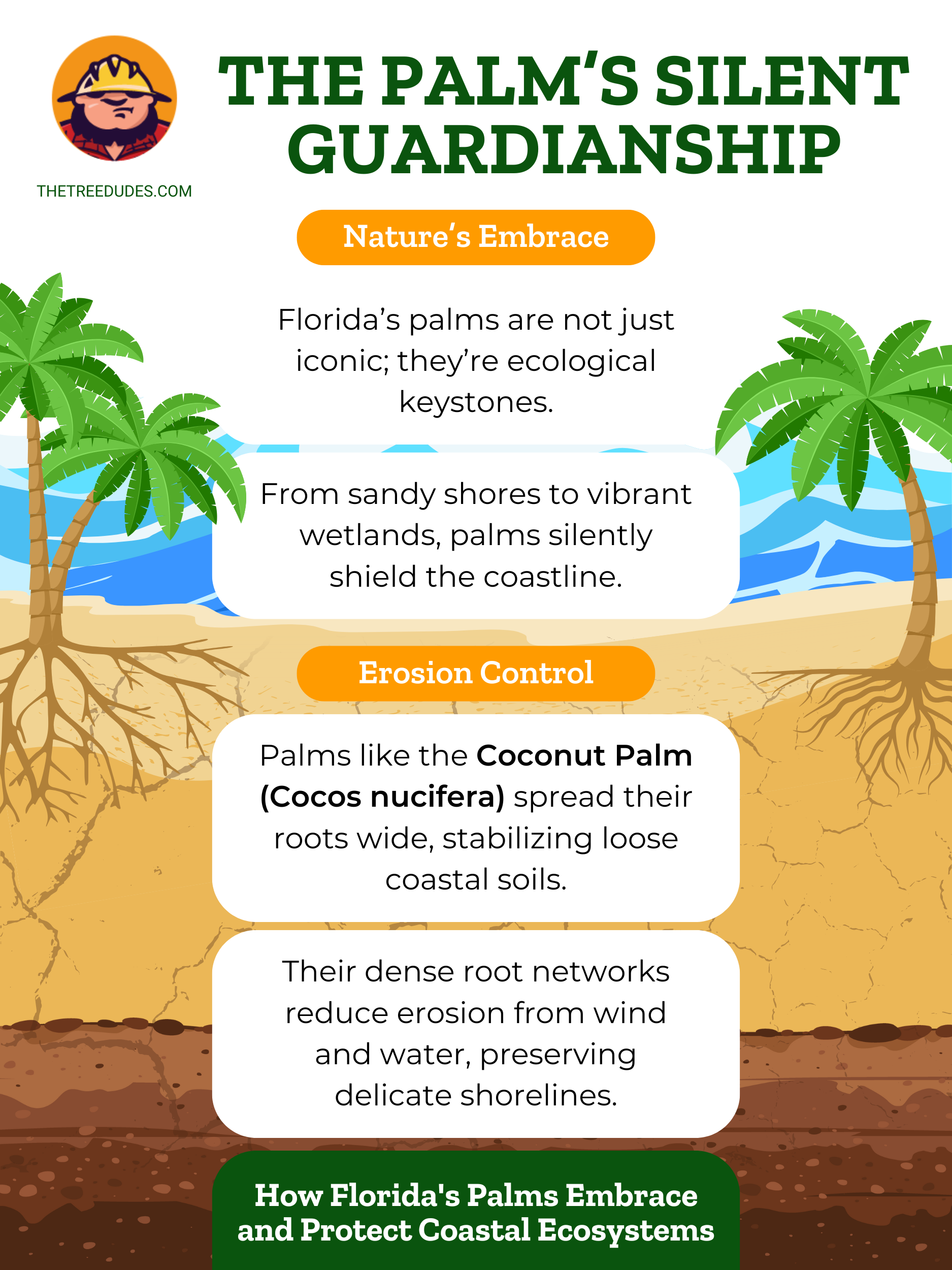
Thriving in the sun-soaked sandy soils and kissed by invigorating salty breezes, this tropical beauty adds a vibrant touch to the landscape. This palm is way more than just a tree, it’s like a little piece of paradise just waiting for you to check it out and get lost in its calmness. Its strong roots keep it steady, helping to protect the coast from erosion and contributing to the rich ecosystem of Florida’s shores.
The Saw Palmetto
Unlike the majestic, towering palms that reach for the sky, the saw palmetto (Serenoa repens) maintains a humble presence, remaining close to the earth, and close to you. Its fan-shaped leaves spread out beautifully, creating a lush green layer that looks like a natural carpet, bringing a feeling of calm and connection to the lively surroundings, including people and pets.
A Medicinal Treasure
This humble palm tree, often overlooked, is a remarkable source of numerous health benefits. Its small, dark berries are traditionally utilized in herbal medicine, particularly for addressing prostate health concerns and enhancing urinary function.
Saw P+palmetto, which is a remarkable botanical extract, has secured its place as an element in the world of natural remedies. Esteemed for its powerful healing attributes, this plant is known for promoting physical health. It’s got a long history in Florida’s traditional medicine that shows how useful and effective it can be. That’s why a lot of people love it when they’re looking for natural ways to feel better and visit Florida just for this reason.
Wildlife Haven
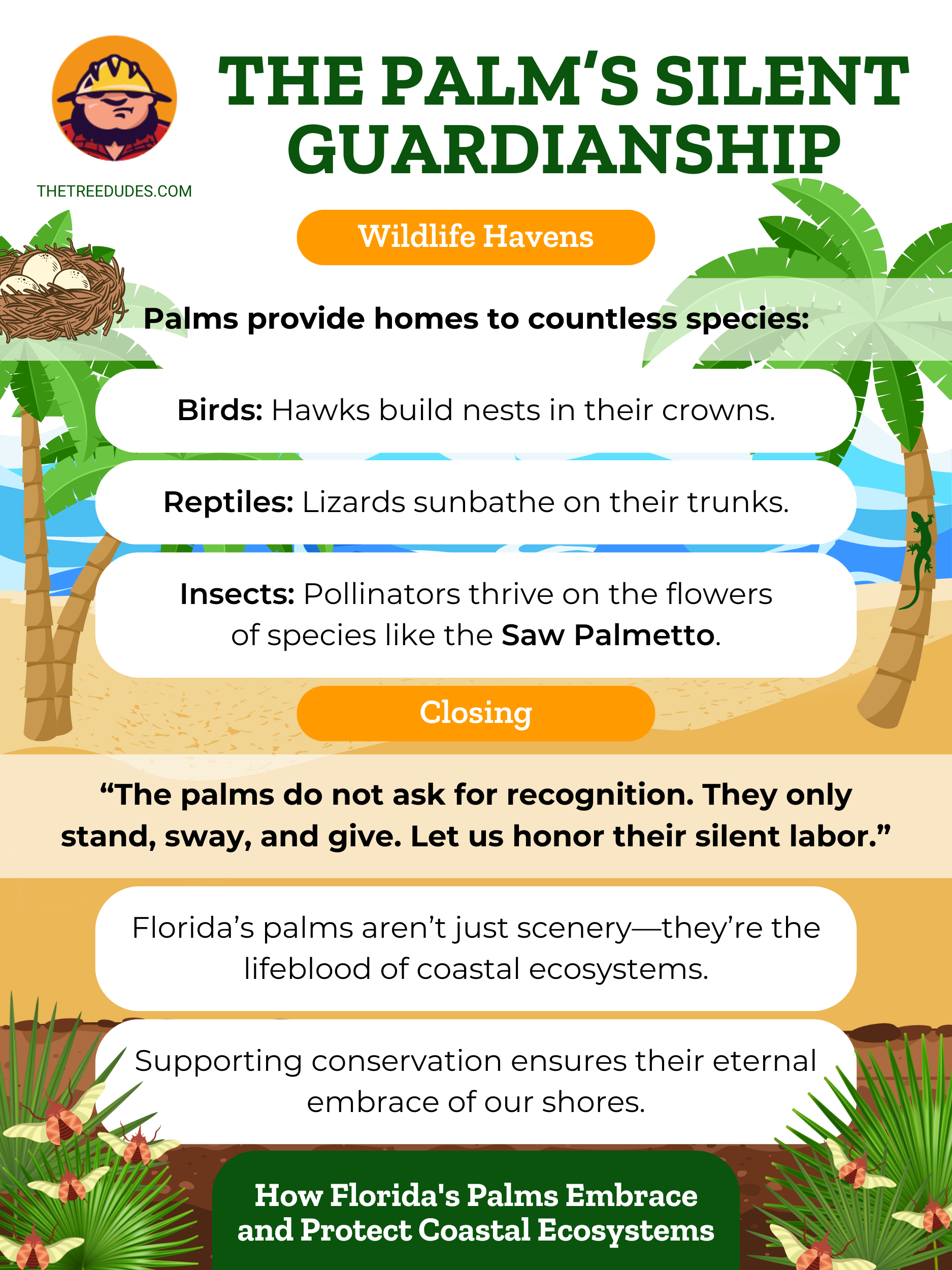
The luscious and dense foliage of the saw palmetto creates a thick refuge for Florida’s diverse wildlife, offering a safe nesting ground for various bird species and a hidden haven for small mammals like squirrels.
Its broad, fan-shaped leaves create a protective canopy, providing shelter and security amidst the vibrant ecosystem that flourishes beneath its cover. The berries are super important for animals like black bears and deer, showing just how crucial they are for the local ecosystem.
The Date Palm
The date palm, scientifically known as Phoenix dactylifera, originates from the arid landscapes of the Middle East, where it has thrived for centuries. Today, this majestic tree has established itself in Florida, flourishing beautifully in the state’s subtropical climate.
Its tall, elegant trunk and nice, feathery leaves make it a cool sight, and it’s a favorite part of the warm, sunny spots in the area.
Ornamental Grace
The date palm is pretty impressive, with its tall, strong trunk reaching up toward the sky, topped off with a bunch of feathery leaves that gently sway in the wind.
This elegant tree is a beloved choice for landscaping in Florida, particularly in upscale neighborhoods and luxurious resorts, where its exotic allure adds a touch of sophistication and tropical charm to any setting. Its classy look adds a nice touch of style to any place.
A Fruitful Legacy
Date palms are renowned for their sweet, nutrient-rich fruits. Though commercial date farming is more prominent in arid regions, Florida’s palms offer a glimpse into this ancient agricultural tradition.
The Sabal Palm
The sabal palm, scientifically known as Sabal palmetto and affectionately referred to as the cabbage palm, is a beloved symbol of Florida’s natural beauty and culture. This palm tree stands tall and elegant, reaching about 80 feet high with a slim trunk. At the top, it has a bunch of fan-shaped leaves that move softly in the warm coastal winds.
You can spot its unique shape all over the place, from the sandy beaches to parks inland, reminding us of the state’s variety of ecosystems. The sabal palm means a lot to folks in Florida, representing both the toughness and beauty of the Sunshine State.
A Historical Connection
The palm has been super important in Florida’s history, acting as a resource for Native Americans. They used its leaves to build shelters, made tools from its strong wood, and picked its fruits for food, which made this versatile tree a part of their everyday lives and culture.
Its trunk was even used as a fortification during early battles, showcasing its versatility.
Eco-Friendly and Hardy
The sabal palm does great in all sorts of places, easily handling everything from wetland areas to dry, sandy soils. Its resilience enables it to stand tall in vibrant ecosystems, showcasing its versatility as it roots itself in different landscapes.
Its amazing knack for adjusting helps it flourish in Florida’s diverse environments. It offers much-needed shade and creates a cozy home for all sorts of species, from colorful birds to tiny insects. This versatility not only enhances the beauty of the landscape but also plays a role in sustaining local wildlife and promoting biodiversity.
The Bismarck Palm
For anyone in search of something truly remarkable, the Bismarck palm (Bismarckia nobilis) stands out as an exceptional selection. This awesome palm tree has wide, silvery-blue fronds that sway beautifully in the breeze, making it a fantastic sight against the vibrant green landscapes of Florida.
Its unique coloration and bold presence not only add a dramatic flair to any landscape but also evoke a sense of tropical paradise, making it a captivating focal point in gardens and outdoor spaces.
Aesthetic Impact
The Bismarck palm, hailing from the beautiful scenery of Madagascar, really grabs attention with its vibrant colors and perfectly balanced shape. Its striking look and tall presence make it a favorite among homeowners who want to add some bold style and a hint of tropical charm to their outdoor areas.
Perfect for those aiming to create a stunning focal point in their landscaping in Florida, the Bismarck palm truly stands out as a testament to nature’s beauty.
Drought Tolerance
Originating from far-off lands, this palm embodies a captivating allure while seamlessly adapting to the warm climate of Florida. Its robust, drought-resistant qualities not only enhance its durability but also make it a practical choice for gardens and public spaces.
This beautiful palm tree, with its lush fronds moving softly in the wind, brings a nice touch of tropical vibes and elegance to any yard. It stands out and adds life to the whole area.
A Palm for Every Corner
Florida’s palm species are not just outdoor decorative plants, they symbolize the state’s diversity and resilience. Each species brings its unique charm and ecological role, contributing to the vibrant tapestry of Florida’s subtropical paradise.
Next time you stroll beneath the shade of a palm, pause for a moment. Appreciate the stories these trees tell, their strength, grace, and enduring connection to the land. Florida’s palm trees are guardians of the state’s beauty, representing the fragile balance between nature and humanity.