





Fruit trees and palm trees are beloved features of many Florida landscapes. They add tropical vibes and delicious harvests to many homes. However, without regular pruning and trimming, these trees can quickly become overgrown, less productive, and even hazardous. Hiring a fruit tree pruning & trimming service is the easiest and safest way of keeping them healthy and thriving.
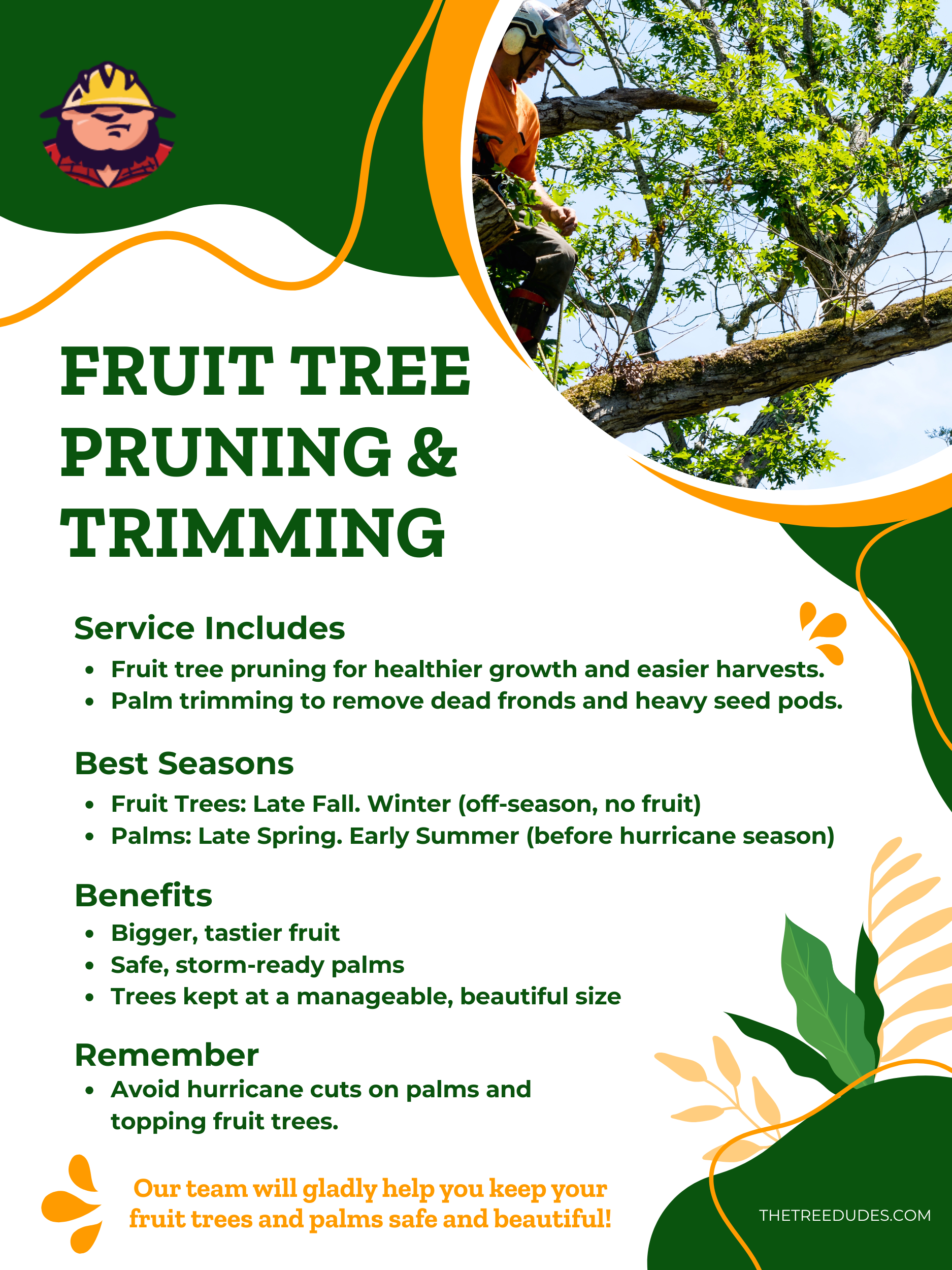
In Florida, the optimal time to prune most fruit trees is during late winter, roughly between January and early March. At this time, the trees are usually at the end of their dormant period or in a slower growth phase and have no active fruit. Pruning in late winter means you are cutting right before the big spring growth spurt, which allows wounds to heal quickly and new buds to form for the next season.
Some tropical fruit trees that fruit in summer or fall, like mangoes or lychees, can be pruned immediately after their harvest season, which might be late summer or fall. The key is to avoid pruning during active fruiting or right before a cold snap. By timing your pruning for the tree’s “off-season,” you will reduce stress on the tree and encourage a healthy bloom and fruit set come spring and summer.
Most fruit trees benefit from pruning about once a year. In fact, annual pruning is usually recommended to maintain tree size and fruiting wood. Consistent yearly pruning keeps the tree from getting overgrown and encourages a steady supply of young, fruitful branches. Typically, you would do a light to moderate prune each year in late winter, focusing on removing dead branches, thinning out crowded limbs, and shortening back some of last year’s growth.
Some very vigorous trees might even need a touch-up prune in summer if they send out a lot of suckers or water sprouts, but heavy pruning in summer is not common for fruit trees, as it can remove too many developing buds. Remember, it is better to prune a little each year than to let a tree grow wild for years and then attempt a drastic cut. Regular maintenance pruning keeps your fruit tree productive, at a manageable height, and in overall great health for decades.
Yes. Done correctly, pruning absolutely can boost fruit production and quality. Pruning has several positive effects on fruiting: it opens up the canopy to sunlight, which helps produce more blooms and better fruit color. It thins out excess fruiting sites, which means the tree can put more energy into fewer fruits, and it stimulates the growth of new fruiting wood for future seasons.
By pruning, you rejuvenate the tree. You will get fruit on lower, more accessible branches, and by preventing over-cropping, you avoid exhausting the tree. Keep in mind, pruning is just one part of good fruit tree care, as proper feeding, watering, and pest control matter too, but it is a big part of why orchards manage to get such high yields of high-quality fruit.
Professional palm crews handle tall and awkwardly placed palms all the time. If a palm is extremely tall or located in a tight backyard where trucks can not get in, we have two main strategies.
First, we might use a bucket truck or lift if there is access. This is like a cherry picker that allows us to trim high up safely. If that is not possible due to space constraints or maybe the palm is in a fenced corner, then we go old-school and climb the palm.
Trained palm climbers use special harnesses, belts, or climbing spikes (for certain palm species) to shimmy up the trunk. Almost all palms can be climbed without hurting them, and our team is skilled in this practice.
This is a common question. For fruit trees and many other trees, pruning can indeed encourage the plant to put out a flush of new growth, as it tries to replace lost foliage. Sometimes that new growth can be denser if you make heading cuts that stimulate side buds to branch out. So yes, in a way, pruning can make a tree bushier in the areas where cuts were made, which is often a good thing if you are trying to create a fuller canopy or more fruiting wood.
Pruning a palm will not make it grow more fronds up top. It will keep growing at its normal rate, about one new frond for every old frond that dies. In summary, a well-pruned fruit tree can develop a nicer, fuller structure with more productive branching as a result of pruning, but a badly pruned tree might grow back a tangle of shoots.
Proper pruning is essential to keep fruit trees producing bountiful, reachable fruit and to keep palm trees safe and beautiful in the Florida climate. In the fall and winter, most fruit trees do not produce fruit, making it the ideal time to cut them back and reduce their size.
By pruning during this dormant or off-season, you ensure that when summer arrives, the trees are shorter, healthier, and you can easily reach the ripe fruit at harvest time.
Likewise, routine palm trimming removes old fronds and heavy flower stalks or coconuts before they cause problems, all while preserving the palm’s health.
Professional pruning and trimming also help your trees withstand Florida’s unique challenges. In its warm, humid climate, trees grow vigorously all year-round, which means branches can get unwieldy fast. Hurricanes and tropical storms are another concern.
A well-maintained palm or fruit tree is less likely to drop large limbs or debris during high winds. Regular pruning keeps your property safer and your trees in top shape without you having to climb dangerous ladders or risk improper cuts.
Fruit trees might be naturally “fruitful,” but that does not mean you can plant them and forget them. Pruning fruit trees regularly is key to their health and productivity. Here are several important reasons to prune your fruit trees:
Palms might not produce juicy fruit except for coconuts and dates, but they require pruning attention, too. Palm tree trimming is a must if you want to keep your property safe and your palms healthy. Florida’s iconic palms can become dangerous and unsightly if neglected. Here are a few reasons to regularly trim your palm trees:
Pruning might look easy on a video, but in reality, it is a mix of science, art, and some intense physical work, especially when it comes to tall palms or fully grown fruit trees. Here is why calling in the professionals is the smart choice:
Our crew will gladly give your fruit trees and palms the expert care they deserve, so you can enjoy shade, safety, and plenty of fruit without the headache. We take pride in leaving every tree better than we found it, stronger, cleaner, and ready to thrive. Contact us now for a free estimate.