







Hurricanes are never pleasant, especially if you are responsible for an entire commercial property. It is a whirlwind of pressure: not just the raging weather outside but the livelihood and well-being of everyone connected to the building inside. Getting ready for a storm is not just something you might think about, it is something you need to do.
Commercial property upkeep can be tricky enough on a sunny, breezy day, let alone when the swirling chaos of hurricane season approaches. You want a thorough plan. You want structure. If you are all set, let’s dive into the world of safety measures, each aimed at giving your commercial property the strong support it needs for the wild storms of a hurricane.
Understanding the Importance of Hurricane Preparedness for Commercial Properties
Every business, every commercial property, is more than just walls, desks, and overhead lighting. It holds the livelihoods and daily routines of the owner, employees, and customers who rely on those services. When hurricanes roll in out of nowhere, it can be pretty rough, leaving families, neighborhoods, and whole communities trying to pick up the pieces afterward.
Why focus on commercial properties in particular? Are residential homes not also at risk? Absolutely. But commercial properties often involve a broader ecosystem, more employees, clientele, data, heavy equipment, and simply more moving parts. Preparing for hurricanes when it comes to commercial properties is not just a good idea, it is something we owe to ourselves, and our communities, and it just makes sense to prevent chaos.
Why Hurricanes Demand Tree Preparation
In Florida, hurricanes are an annual visitor. Around June through November, we grit our teeth, watch the weather forecasts, and sometimes sigh relief when the storms pass us by. But if they do not, how your commercial property’s trees behave in that wind and rain can make or break your ability to resume business quickly.
Unlike a house, a commercial space is not just your property, it is a place where employees earn a living, where customers rely on services, and where critical infrastructure might be housed. If a palm tree crashes through your lobby, you might have to close for repairs for weeks. That is lost income, lost wages, and lost customers. If a massive oak from the street corner goes down across your driveway, that is a major physical blockade preventing everyone from even accessing your building.
More than that, trees near power lines can be a big risk. When trees fall, they can take power lines with them, which can cause some serious safety issues and power outages. One untrimmed branch can yank down a line during hurricane-force winds, and suddenly your entire block might be without electricity.
Tree maintenance is not optional. It is essential, crucial, and absolutely must be addressed in your hurricane preparedness plan.
Pruning, Trimming, and Removing Problem Trees
Regular trimming and pruning are not just a visual nicety, it keeps your property safer. It is like giving your trees a healthy haircut. You would not think of not trimming your hair for years, right? Over time, branches can get unruly, weigh too heavily on one side, and become prone to snapping during high winds.
Planning and Organizational Readiness
When I say “planning,” I do not mean a dry bullet-point list that collects dust in an office drawer. We are talking about a living, breathing strategy that takes into account your property’s unique vulnerabilities, your employee’s needs, and every operational quirk that could otherwise leave you scrambling once the wind starts.
Routine maintenance removes dead, diseased, or dangling branches before the next big storm decides to fling them through your plate-glass windows. By thinning the canopy of dense trees, you reduce wind resistance, making them less likely to be uprooted.
Pruning Palm Trees for Hurricane Readiness
Palm trees in Florida are tall and eye-catching. But those skinny trunks can look a little wobbly when the wind picks up during a storm. Palms are naturally adapted to storms more than you might think, but they do need some care:
- Remove dead or weak fronds: They can easily break off and become airborne projectiles.
- Watch out for the “hurricane cut” trap: Over-pruning palms can stress them out, ironically making them weaker. Just do not go overboard with the scissors and end up with a messy “feather duster” vibe, that can cause more problems than it solves.
- Check the trunk: Look for signs of disease, fungus, or big gashes where pests might have settled in. These vulnerabilities can cause the trunk to fail during a storm.
When Tree Removal Is the Best Option
Sometimes, the hardest choices in life revolve around letting go. With trees, it is particularly tough because they are living parts of your property. But if an arborist warns that a tree is diseased, or has a structural weakness that won’t hold up in 100+ mph winds, it is safer to remove it before hurricane season. Yes, it can be heartbreaking, but it is better than dealing with severe roof damage, or worse, a risk to people’s safety.
The key is to coordinate. If you think a tree could be risky, get an expert to take a look and give you their thoughts. They will help confirm whether it truly needs to go. In some cases, you might be able to brace or cable it, but that is only if the trunk and roots are healthy enough.
Building Exterior Preparations
Now let’s step beyond trees alone and talk about your commercial property’s exterior as a whole, specifically as it relates to trees, landscaping, and potential debris.
Clearing Gutters and Drains of Leaf Buildup
Gutters and drains are like the property’s arteries, carrying water away from your roof and foundation. In Florida’s torrential rains, you can get an entire summer’s worth of water in a single afternoon thunderstorm. Now layer hurricane-force winds on top, and the volumes of rain can be monstrous. If your drains are clogged with leaves, twigs, or palm fronds, water has nowhere to go except to pool on your roof or back up around the foundation.
Pooling water on the roof is a big no-no. It can add weight, seep into cracks, and lead to internal flooding or even roof collapse. That is why, if you have trees, be especially vigilant about cleaning up leaves, seed pods, and branches around downspouts and gutters. You do not want your place turning into a random indoor swimming pool, believe me.
Checking Nearby Trees, Poles, or Structures for Loose Objects
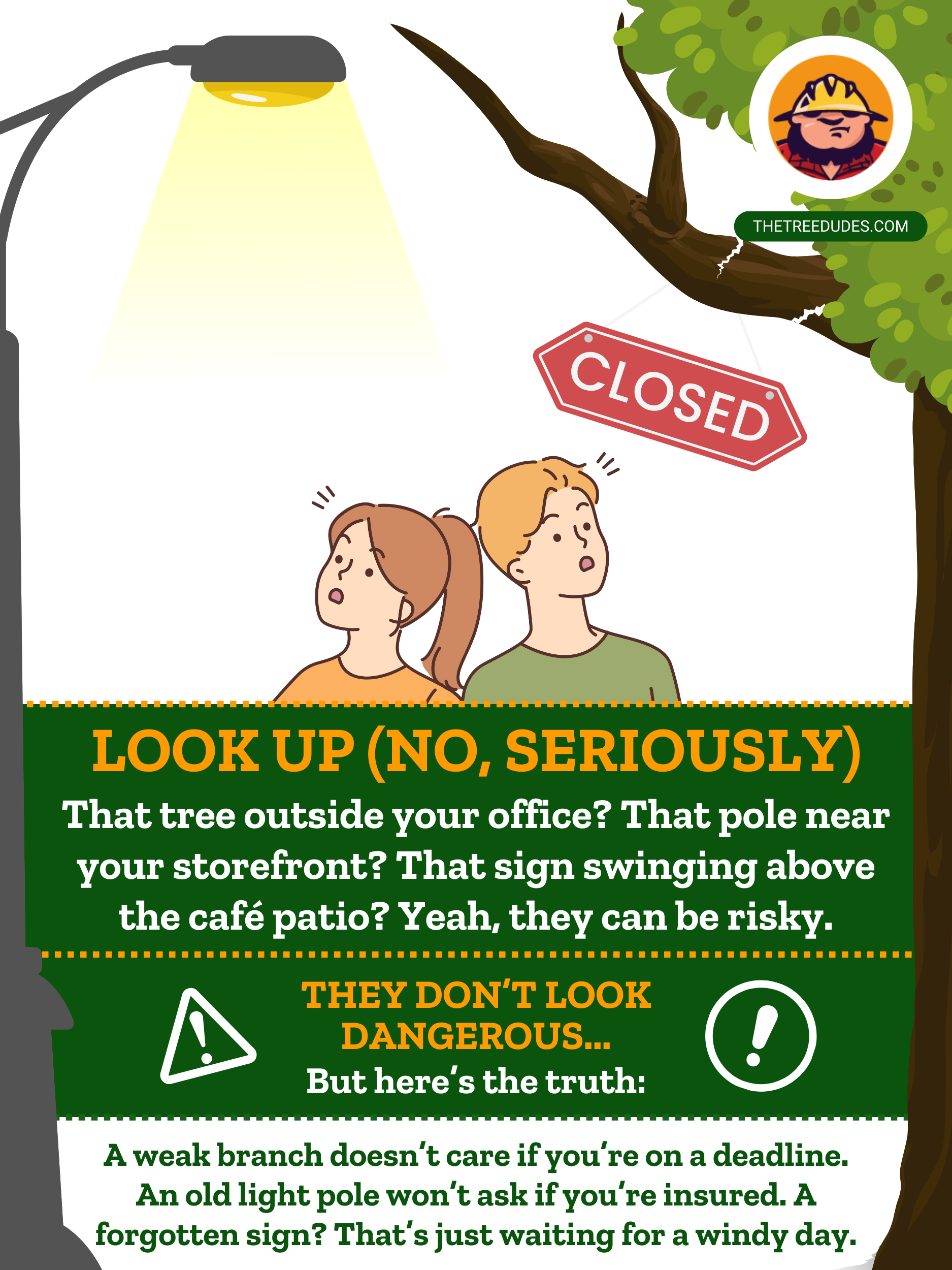
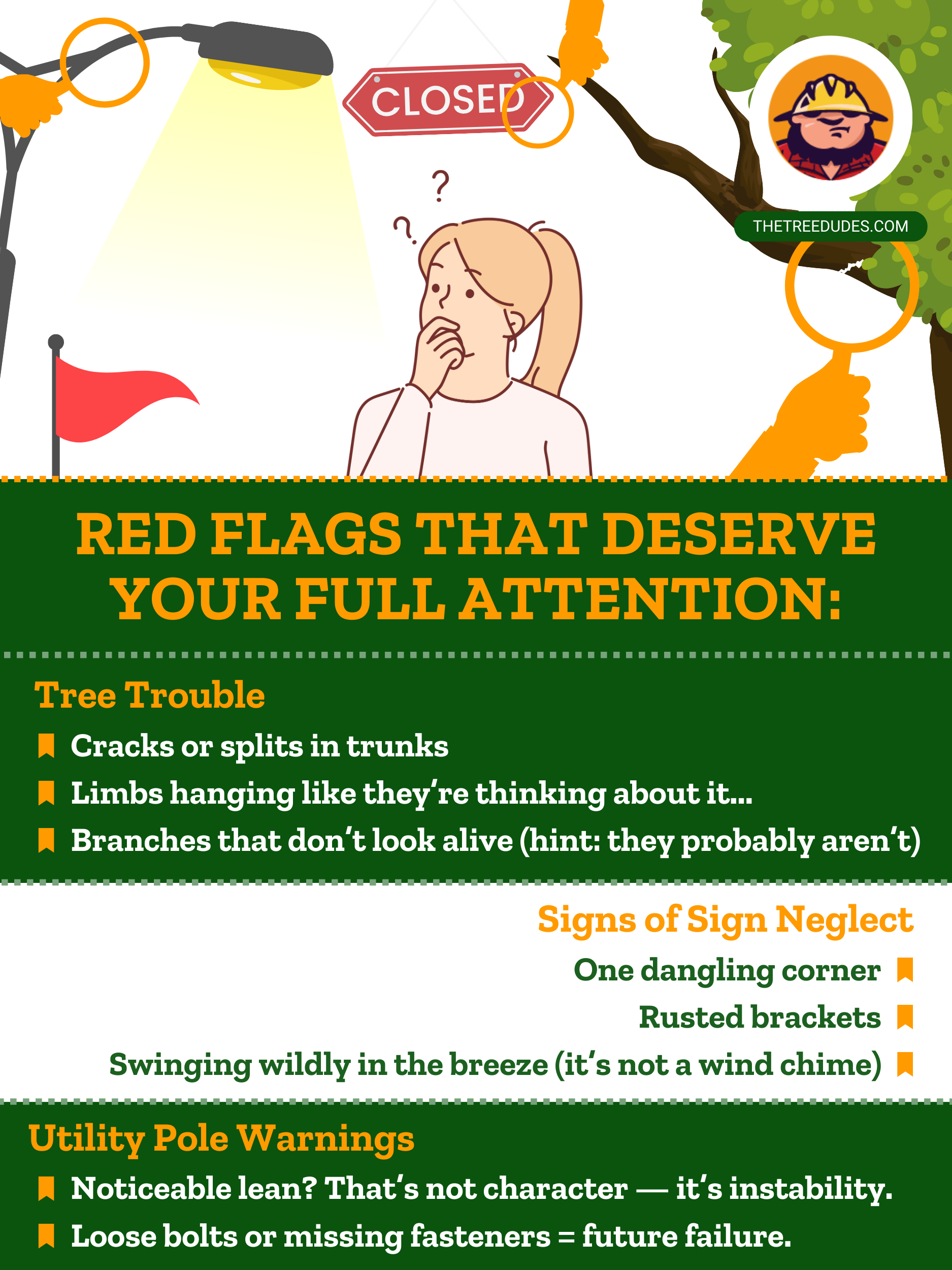
Floridians know that anything not bolted down can become a missile in a hurricane. A broken branch can shatter your windows, but so can a forgotten sign on a pole. If you have signs by the trees, like big standing billboards or those movable arrow signs, be sure to secure them or take them down well before the wind starts picking up.
Do a thorough sweep of your property and look for:
- Decorative items like potted plants or benches.
- Trash cans that might tip over and roll.
- Loose signboards or window advertisements.
- Branch piles that haven’t been hauled away yet.
Secure or remove them entirely. If you leave it out, you might just find it halfway down the street after the storm.
Interior Preparations
You might be thinking: “Trees are outside, so the inside is safe, right?” Not always. A strong gust of wind could break off branches or even parts of a tree, and that could easily smash windows or damage roofs. That can cause water to seep in, and the shifting wind pressure can mess up the interior walls and ceilings. So, prepping your property’s inside can make a massive difference in how fast you bounce back.
Creating Safe Zones Away from Windows and Glass
Offices, conference rooms, and lobbies are often lined with glass for an airy, open feel. It is great when the weather’s nice, but when a hurricane hits, a branch can easily smash a window. If you must remain on the premises or return quickly post-storm, designate safe interior zones, ideally windowless or with minimal exterior exposure. Although, in many cases, you will want people to evacuate if the authorities say so.
Covering Windows and Doors
When the weather gets bad, cover your windows with sturdy shutters or storm panels. While you are at it, secure entrances and check your building’s door frames for gaps. If a big branch cracks a window, your building could become a wind tunnel, with pressure changes blowing out the roof or walls from the inside. Sandbags near doors can help if flooding is a possibility, and heavy plastic taped over windows adds another layer of defense if you do not have official storm shutters.
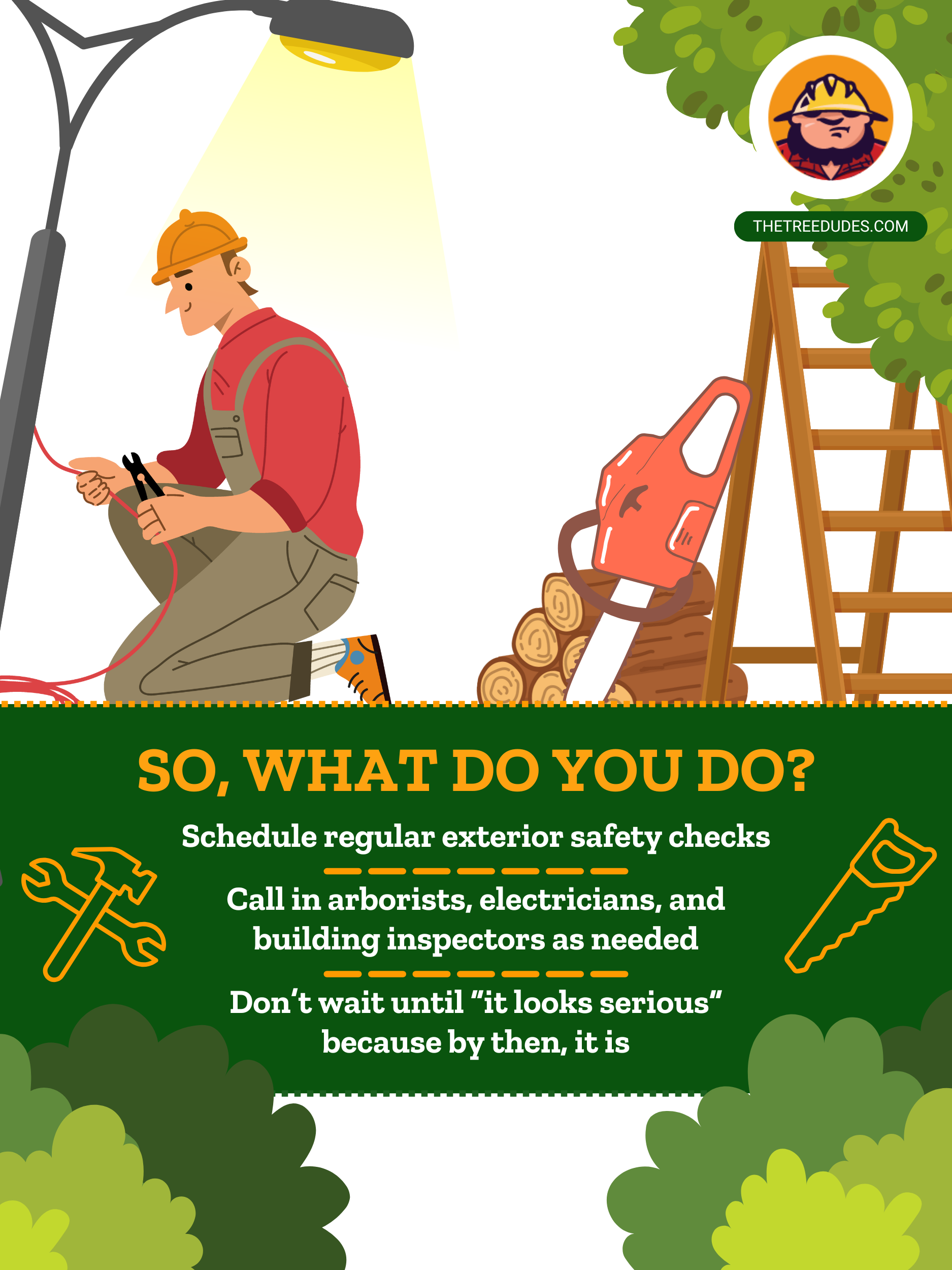
Reviewing Property Insurance and Financial Protections
Let’s begin with the financial safety net: insurance. While you can fortify your building from top to bottom, sometimes you simply cannot avoid the damage that a hurricane might bring, even if it is not that much.
Understanding Your Coverage
Start by reviewing your commercial property insurance. Just make sure you know what is included and what is not. I know what you are thinking: “Insurance policies are as exciting to read as a phone book.” Your hard work here is like building the strong base of a fortress. Does your policy cover wind damage? Does it cover flood damage? Many standard policies do not cover flooding, so you may need a separate policy. The National Flood Insurance Program (NFIP) is an option worth exploring, especially if your business is in an area where flooding does happen.
Business Interruption Insurance
Business interruption insurance compensates you for the income your business loses during the time it is forced to close due to a disaster. Think about your employees’ paychecks, the rent or mortgage, and the utilities.
Gather All Essential Documents in Waterproof Containers
Have you ever dropped your phone in water and panicked for a moment, hoping the bag of rice trick would come to your rescue? Imagine that, but with a lot of essential documents getting soaked in a flood. That is why you want to store your insurance policies, financial records, important inventory details, and even property documents in waterproof containers, preferably stashed somewhere elevated and accessible. When disaster hits, easy access to these documents can expedite insurance claims or financial aid.
Detailed Inventory and Visual Documentation
One of the smartest ways to speed up insurance claims and maybe snag some tax breaks is by keeping a clear list of what you own. Take photographs and videos of your commercial property, both inside and outside. Document every piece of equipment. Store these records digitally off-site or in the cloud as a safe backup. You never know when you will need to show “before” footage to prove what was lost.
Training Employees and Ensuring Communication Plans
A business never operates on its own. It is the people who bring it to life, and it is those same people whose safety and well-being you want to protect as fervently as you would your own. That is why training is non-negotiable.
During the Hurricane
You have done everything in your power, pruned the trees, boarded the windows, secured the interior, and prepped your staff. The storm is here, the sky is a weird gray, and you can feel the air pressure change. What is next?
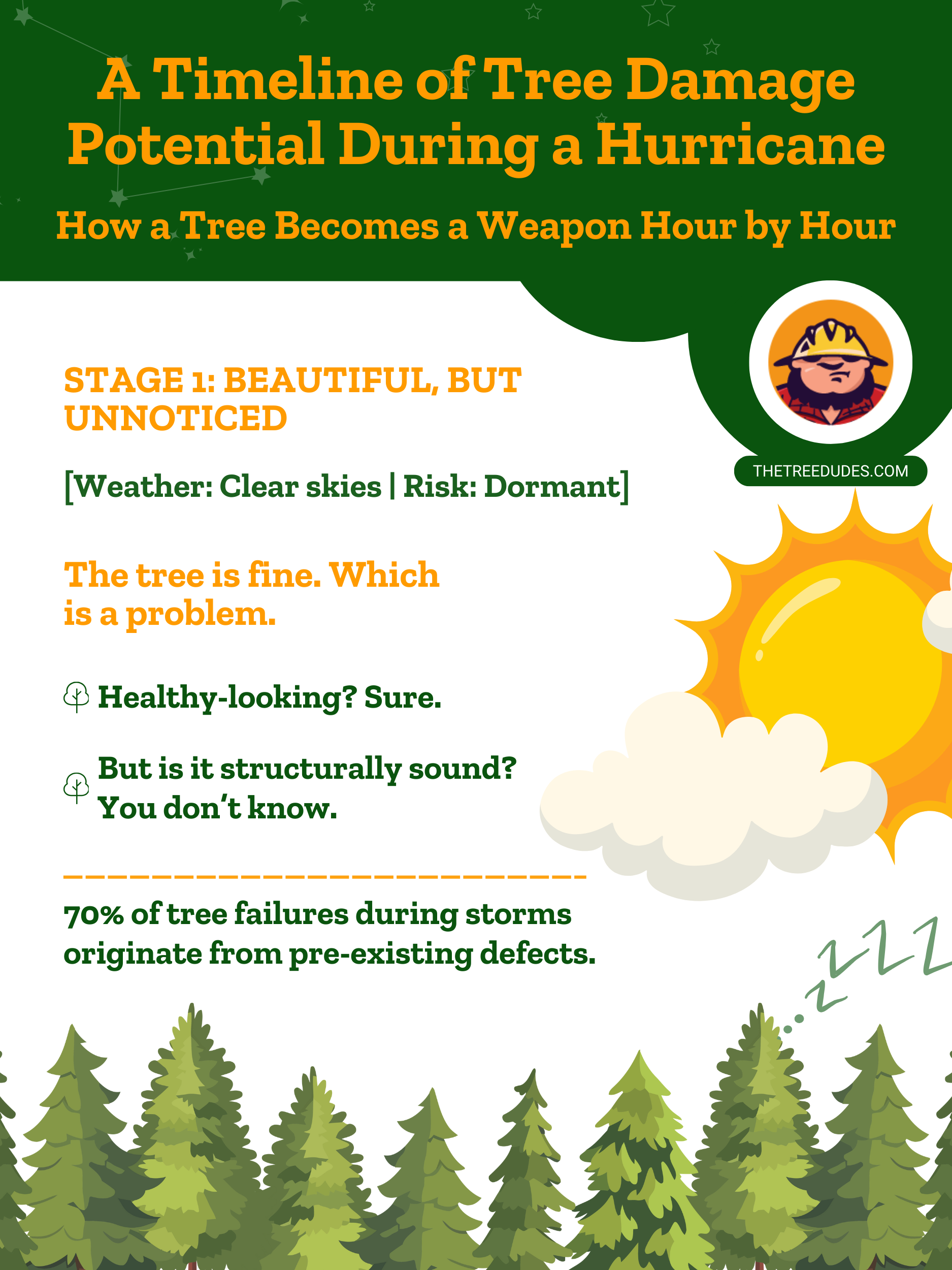
Stay in a Designated Safe Area if You Must Remain
If, for some reason, you or a small team has to remain on site, which is not advised if there is a mandatory evacuation, you should stay away from windows and exterior walls. Stock up on non-perishable snacks, water, flashlights, batteries, and a weather radio. Keep away from areas where a branch or flying debris might break through the glass.
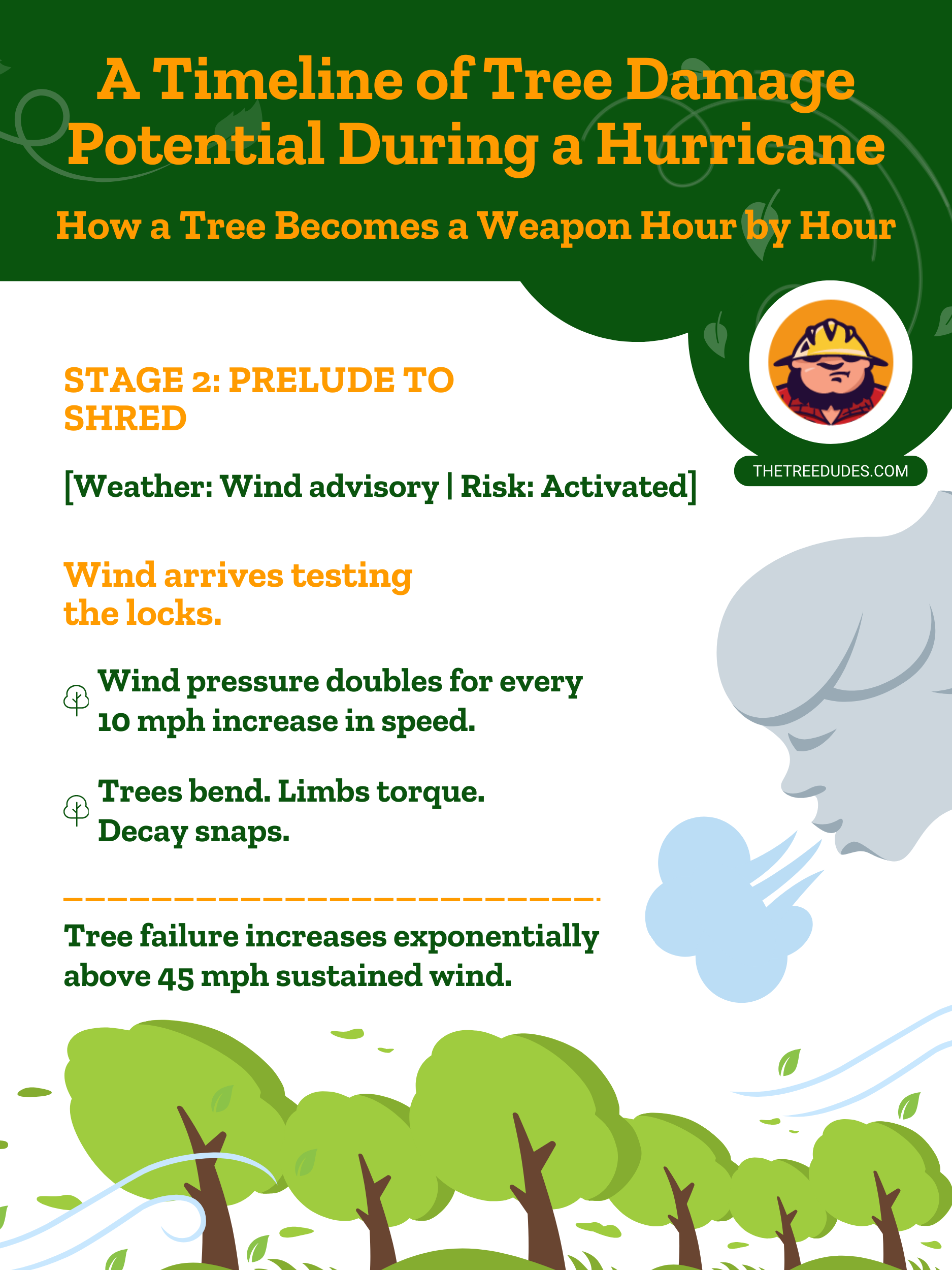
Monitoring for Damage
If it is relatively safe to do so, you might peek out occasionally, from a protected spot, to see if the trees are still upright, if there are leaks, or if any branches have broken through. But do it carefully. Hurricanes can generate gusts strong enough to shatter windows unexpectedly. Never go outside during the eye of the storm thinking it is over. The backside of the hurricane can be just as intense.
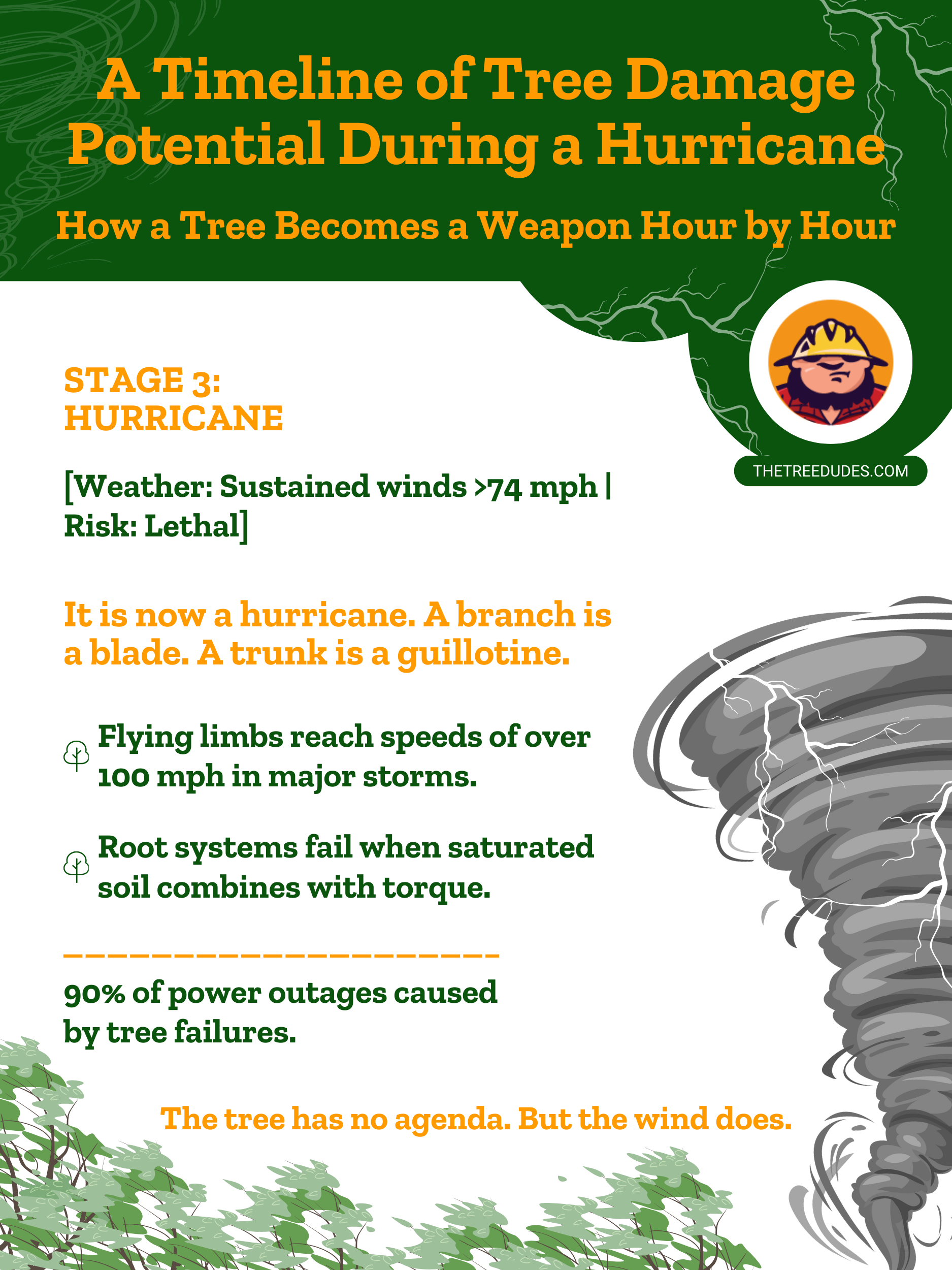
Post-Hurricane Tree and Property Inspections
The storm has passed, your ears are still ringing from the howling wind, and the sun might even peek out for a moment. Now begins the next step: assessing damage, addressing hazards, and getting your commercial property back on its feet.
Re-Entering Your Commercial Property
Before anything else, the local officials need to give the green light that it is safe to come back. Watch out for:
- Downed power lines: If you see them, call the electric company immediately. Do not go near them.
- Flooded roads: Do not drive through bodies of water, you never know how deep it goes.
- Fallen or leaning trees: A large tree leaning on a power line or building is an accident waiting to happen.
Once on-site, do a slow walk-around. Take pictures of everything, roof, walls, windows, and yes, every single tree that looks damaged. These images are gold when you file insurance claims or apply for assistance.
Prioritizing Immediate Tree Removal
If you spot a tree that is partially uprooted and leaning dangerously, call a professional removal service right away. The last thing you need is a delayed collapse, possibly injuring someone or causing more property damage. The same goes for large limbs precariously hanging. If smaller branches have fallen, gather them in a safe area away from the building to keep walkways clear.
Cleaning and Clearing Debris
Debris can clog drains, create slip hazards, and even become a breeding ground for pests. Grab some heavy-duty gloves, and a good pair of boots, and check for nails, glass, or sharp objects. Separate what you can for green waste disposal, like branches, leaves, and other vegetative debris. Keep in mind that large-scale debris removal might require a professional service or specialized equipment.
Checking for Hidden Water Damage and Erosion
Sometimes, it is not the immediate visual that is the problem, it is the slow, seeping water damage or subtle soil erosion around your tree roots. If the ground near a large oak or palm is suddenly softer or caved in, that is a sign the roots might be compromised. An arborist or tree specialist can give you a post-storm health check, letting you know whether a tree can recover or if it poses a future threat.
Building a Hurricane-Resilient Commercial Landscape
Hurricane prep is not a “once and done” thing. Every season in Florida is another test of your readiness. Over time, you can adapt your property to be more hurricane-resilient, especially when it comes to the trees and landscaping you choose to plant or keep.
Wind-Resistant Tree Species
Believe it or not, some trees handle wind better than others. For example, certain native Florida species like live oaks are known to be more wind-tolerant when well-maintained. Palms, in general, can be surprisingly resilient if healthy and properly pruned. So, thinking about some new landscaping? It is a good idea to chat with a horticulturist or an arborist about plants that have deeper roots and shorter branches. These types can handle strong winds better.
Strategic Planting and Spacing
If your commercial property is large enough, consider the spacing of trees between buildings, power lines, and each other. Crowded trees can weaken each other’s root systems and create a domino effect if one goes down. Planting them at appropriate distances can reduce the chance of them toppling onto each other or your structure.
Regular Assessments and Maintenance Schedules
A storm may pass and you might be lucky this year, but skip the follow-up, and next season’s storm might not be so forgiving. Set a maintenance schedule:
- Bi-annual or annual arborist check-ups
- Seasonal pruning before hurricane season
- Routine checks of soil health and irrigation.
Keeping an eye on your trees like this helps them stay healthy, which cuts down the chance of a big disaster when the next storm rolls in.
Balancing Aesthetics and Safety
In Florida, where the sun shines bright and tourism thrives, businesses often rely on attractive landscaping to draw customers. A luscious line of palms swaying in the breeze can be more inviting than a sterile concrete box. You need to find that sweet spot between looking amazing and being ready for bad weather.
Incorporating Sturdy Shrubs and Low-Growing Plants
Trees are not your only greenery. Shrubs, hedges, and ground covers can also help reduce erosion and runoff. They add aesthetic appeal, but, properly chosen, can also be beneficial in stabilizing soil around your property. During hurricanes, that helps keep your foundation and walkways from washing away.
Using Decorative Hardscaping with Caution
Hardscaping elements, like statues, water features, or large pots, look amazing but can become projectiles if not anchored. Ensure that anything over a certain weight is fixed securely to the ground or can be easily moved indoors when a storm is on the horizon.
Embrace the Florida Hurricane Reality
Living and doing business in Florida is both a blessing and a challenge. We get year-round sunshine that draws visitors from everywhere and nourishes our stunning native trees, and we also get those swirling storms that keep us on our toes. But that is just part of the dance here. By actively caring for your commercial property’s green perimeter, pruning, removing hazards, maintaining healthy root systems, and planning for the worst, you can weather even the fiercest storm with a lot more confidence.
When you find out there is a hurricane possibly coming, you do not need to freak out and panic. You will have your property’s trees trimmed and your building well-fortified. You will have a plan to safeguard data, equipment, and, most importantly, the people who count on your business. And as soon as that last gust fades, you will emerge ready to clean up quickly, reopen your doors, and show your customers that you are as resilient as the palms that still stand tall outside your window.
Hurricane season does not have to be a nightmare. With the right preparation, especially focusing on the care of your trees, you can transform it into just another annual Florida ritual, like getting out the holiday decorations or enjoying that first cool breeze in late October.