


Removing most trees is dangerous, no matter their size. Small trees can be as unpredictable as large ones. Super large trees are even more threatening. If you are alone, do not go near them. Play it safe and hire professionals!
Our prices are also based on the size of trees/palms and where they are located on the property. Basically, if our trucks and dudes can reach them safely.

Super large trees are usually higher than 50 ft. Some can reach more than 100 ft, such as Loblolly Pine or Southern Live Oak. Their crowns and roots can reach diameters over 120 ft, sometimes covering the entire yard.
These trees and their branches are also heavy. It is not surprising to hear they are some of the most significant hazard sources on many properties. Branches can fall on any nearby building, destroy roofs and walls, and even take down an entire house. Vehicles don’t stand a chance because these trees can destroy vans and trucks.
Super large trees can live several hundred years. Once they reach maturity, they might start disposing of dry branches. They might also get susceptible to diseases and pest attacks, which is dangerous because if a super large tree gets infected, it could quickly spread the infection and destroy your and your neighbor’s property.
The less you take regular care of your trees, the more dangerous they become. If you miss pruning, never trim them, or decide that you are going to put off crown reduction for one more year, you are risking too much.
Here are several important reasons why you should remove a super-large tree:
We offer professional super large tree removal. We will estimate the tree’s condition, make a removal plan, and remove the tree without endangering you or your property. We will do all the hard labor for you, including debris removal and firewood preparation.
Please note that rootball removal is not included in the super large tree removal service.


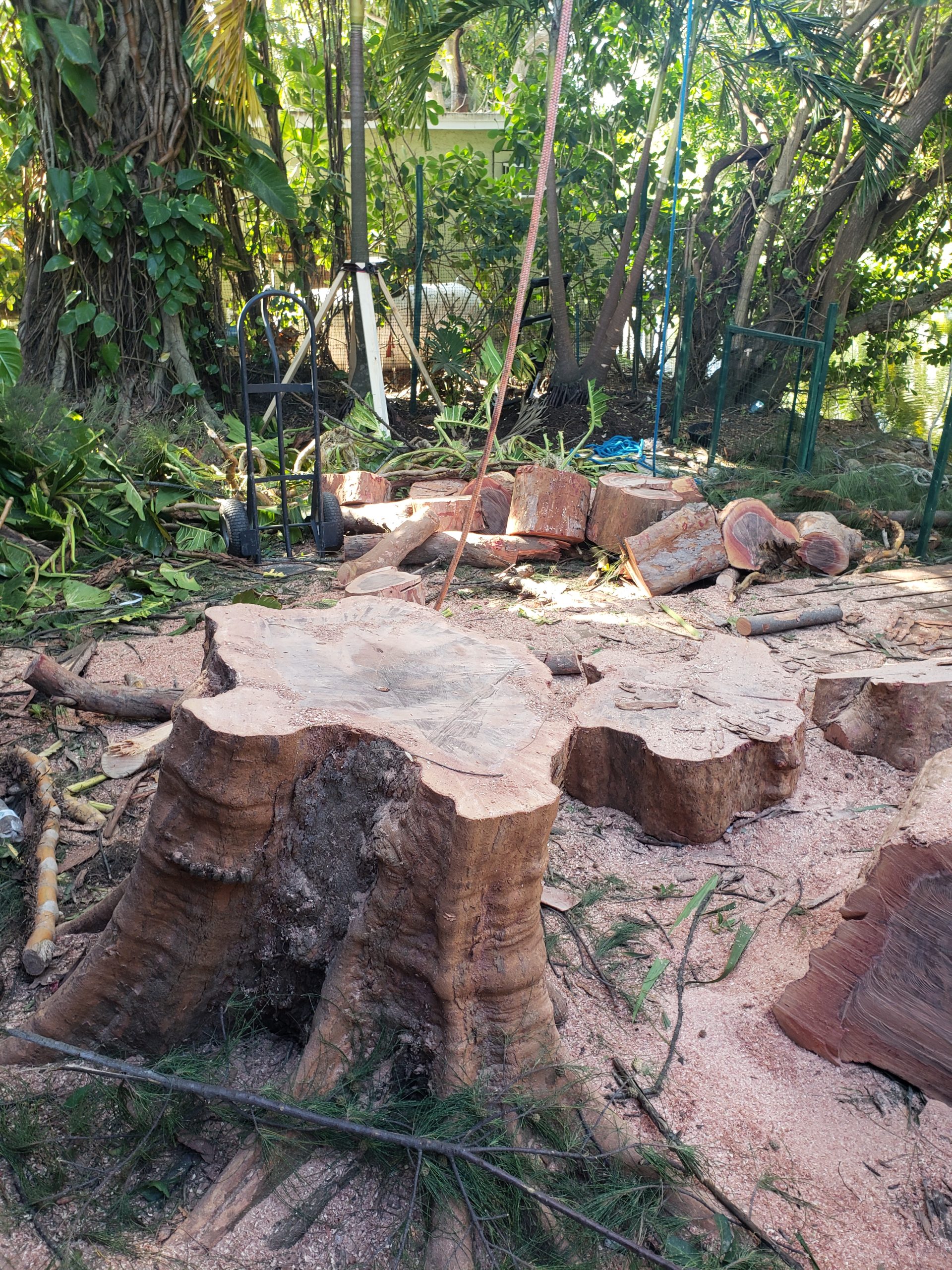


Yes, in many cases, you can keep the wood. Some homeowners prefer to keep logs for mulch. However, large pieces may be difficult to handle, and our team can assist with chopping or removing the wood if you’d rather not keep it. Be sure to specify this preference when arranging the service to ensure the job aligns with your plans for the leftover wood.
It depends on many factors, but there are many situations where having a certified tree trimmer report is necessary to remove trees from your property. Our team can assist with the report and the tree removal process.
Before you start planting or removing trees on swales in Florida, contact your local authorities because you will probably need a permit to do so. Swales are located right next to the sidewalk or a road, so even if you are the legal owner of a swale, you will still need a permit to plant a tree there or remove it.
Certain species of trees are strictly protected in Florida due to their ecological roles. For example, mangroves are safeguarded under state and federal regulations. These incredible trees are guardians of diverse habitats! Their majestic presence helps shield the shoreline from the forces of nature while providing a thriving sanctuary for countless species.
Chopping down, trimming, or messing with mangroves can lead to some pretty big fines and you’ll have to fix things up afterward. Local governments may also have regulations protecting other native species to preserve Florida’s natural habitats.
The fastest way to burn out a tree stump is by drilling holes in the stump, filling it up with fuel, lighting it up, and giving it time to burn out. Trying to speed up this process by adding more fuel is dangerous and might result in a fire hazard, so you will just have to have a little patience and let the stump burn out on its own. But an even faster and safer way of burning tree stumps is by hiring a team of professionals. We will estimate the stump condition, bring our fuel, and monitor the burning process until the stump is completely gone from your property.
The Florida government protects various tree species to support biodiversity and environmental stability. Notably:
Oak trees can be safeguarded by different local laws, especially if they’re big and old. In some areas, you may need a permit to cut down or trim these trees. Large oaks contribute to Florida’s ecosystem by providing shade, reducing carbon dioxide, and housing wildlife. Contact your local government to verify if a permit is required for oak tree maintenance or removal.
The best time for tree services, such as pruning or trimming, typically depends on the type of tree and its growth cycle. In Florida:
Consulting with an arborist to schedule tree maintenance at the optimal time of year can ensure healthier, longer-lasting trees.
It’s not recommended. Removing a tree, especially one that’s already fallen or damaged, can be incredibly dangerous. Trees under tension, heavy branches, and unstable roots all present hazards. We have got the right gear and the skills to make sure it’s done safely, so you don’t have to worry about any damage to your property.
Costs vary based on the tree’s size, location, and condition, but emergency tree removal is typically more expensive than standard removal due to the immediate response required. We’re up for giving you a quote so you know what to expect when it comes to the green bills. Homeowners’ insurance might help cover some of the costs, especially if the tree has damaged something on your property.
Rules can differ depending on where exactly in Florida you live, but if you’ve got a real emergency, like a tree that could hurt you or has already caused some damage to your family members, you can usually take care of it right away. For stuff that’s not urgent, it’s a good idea to check with your local authorities or your homeowners’ association in your suburb since you might need a permit from these people.
You can remove a large tree in less than half an hour when there is nothing around it. If any buildings are nearby, the process could last several hours. If the tree is damaged, removal might last more than a few hours but no longer than a day.
You can remove a large tree in several different ways. If there is nothing around it, tree felling is the fastest option. If buildings are nearby, felling might damage them, so you should remove a tree piece by piece. Hiring a tree service has proven to be the safest, fastest and easiest way of removing large trees.
Professionals do not recommend removing any trees alone. Even small trees require hard manual labor, good safety gear, and quality equipment. Removing them produces dangerous debris, so keep it safe and hire arborists to do it for you.
Yes. Small tree roots usually reach 10 feet in the ground. You can dig up a hole around the tree and loosen the soil around it. Once the hole is deep enough, you put a lever under the root to push it out or pull out the tree using a machine. You should not do it without professional help because you can damage the roots, break the trunk, or damage a tree in some other way, so contact a tree service now!
When you remove a tree, the stump will soon start producing sprouts to regenerate it. If you wish to stop this process, remove the tree stump as soon as you remove the tree. Some techniques you can use are grinding, pulling out, or herbicides.
If you have a super large tree that you do not wish to remove, there are ways of controlling its size. Crown reduction is one of the best methods. It includes the removal of one-third of a tree crown, which does not harm the tree. Regular pruning is also great for size reduction. It decreases the branch size, removes dry or infected branches, and positively affects the overall health of your tree.
If a super large tree is less than 20 ft away from your house, you should consider removing it. Tree branches could fall off and damage your house or your car, or the tree might get infected with pests, such as termites. Tree roots could also start undermining and damaging the foundation of your house, which could result in wall deterioration. So if a super large tree is close to your home, consider hiring professional arborists to remove it.