









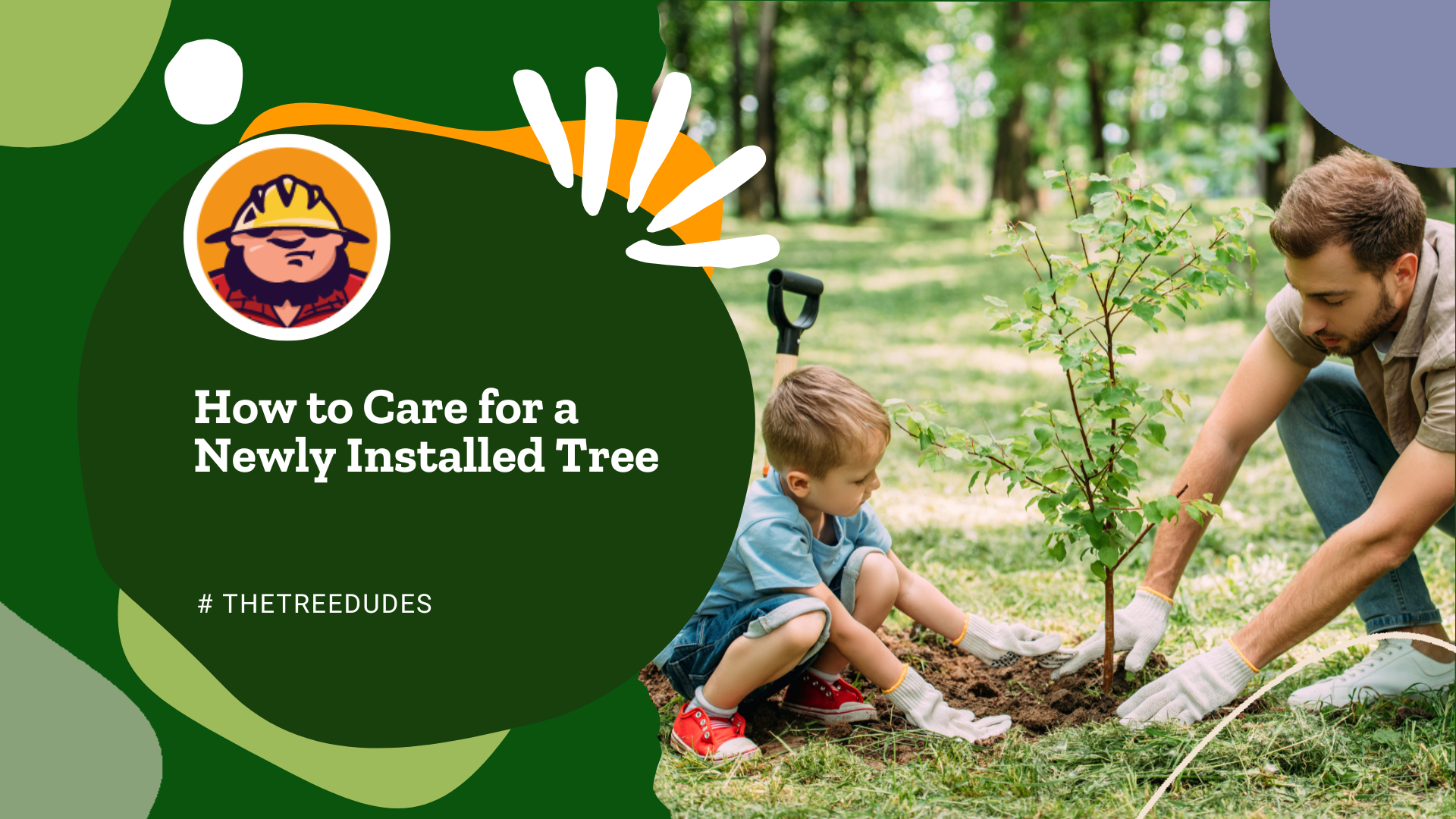
Having a newly planted tree on your property is such a joy. Not to mention, it is a positive, long-term investment with multiple benefits, from providing shade, cooling and cleaning the air, to preventing flooding and being a cozy home for various types of birds that can sing you out of your slumber in the morning.
But, there are some things you should provide your new trees with, so they can truly thrive and become one of your property’s biggest assets. Here is a short but thorough guide on how to properly care for newly installed hardwood trees.
Planting a New Hardwood Tree
Planting a new tree is not an easy process. It requires knowledge and experience, so in most cases, leaving it to professional arborists is the safest option, especially for the tree.
The planting process includes several steps, such as choosing the right place, picking the right tree, and digging a hole of appropriate size. If you are not experienced and confident in what you are doing, then your trees might not thrive as much as you would hope.
What Newly Installed Trees Need
After the tree is planted, you cannot just leave it alone and hope for the best. It is your responsibility to provide additional care so the tree can grow and reach full maturity.
There are several things you can do to help your new trees, and they include:
- Watering,
- Weed control,
- Animal and weather protection.
Watering: The Most Important Step of Tree Care
One of the most important things you can do for your newly installed tree is provide it with enough water. Regular watering helps tree roots adapt to the new soil, supports photosynthesis, and makes transpiration easier.
Without supporting these processes, your new trees might take much longer to accommodate. In some cases, they might not even survive the planting.
So here is some advice on how to properly water your newly installed trees.
Watering Instructions
The first few months after planting the tree are the most important because that is the period when the tree is actively trying to adapt to its new environment. Most newly planted trees go through “transplant shock” because up until that point, they were probably growing in a pot, which is a highly controlled and protected environment in which they were provided with all the important nutrients. Now they are moved to the ground, and that sudden change leaves them vulnerable.
It can take anywhere from one to several years for new trees to fully adapt to their new environment, but the first few months are absolutely crucial. They can literally make or break a young tree.
Proper watering can make this adaptation process much easier for the tree, and here is how to do it.
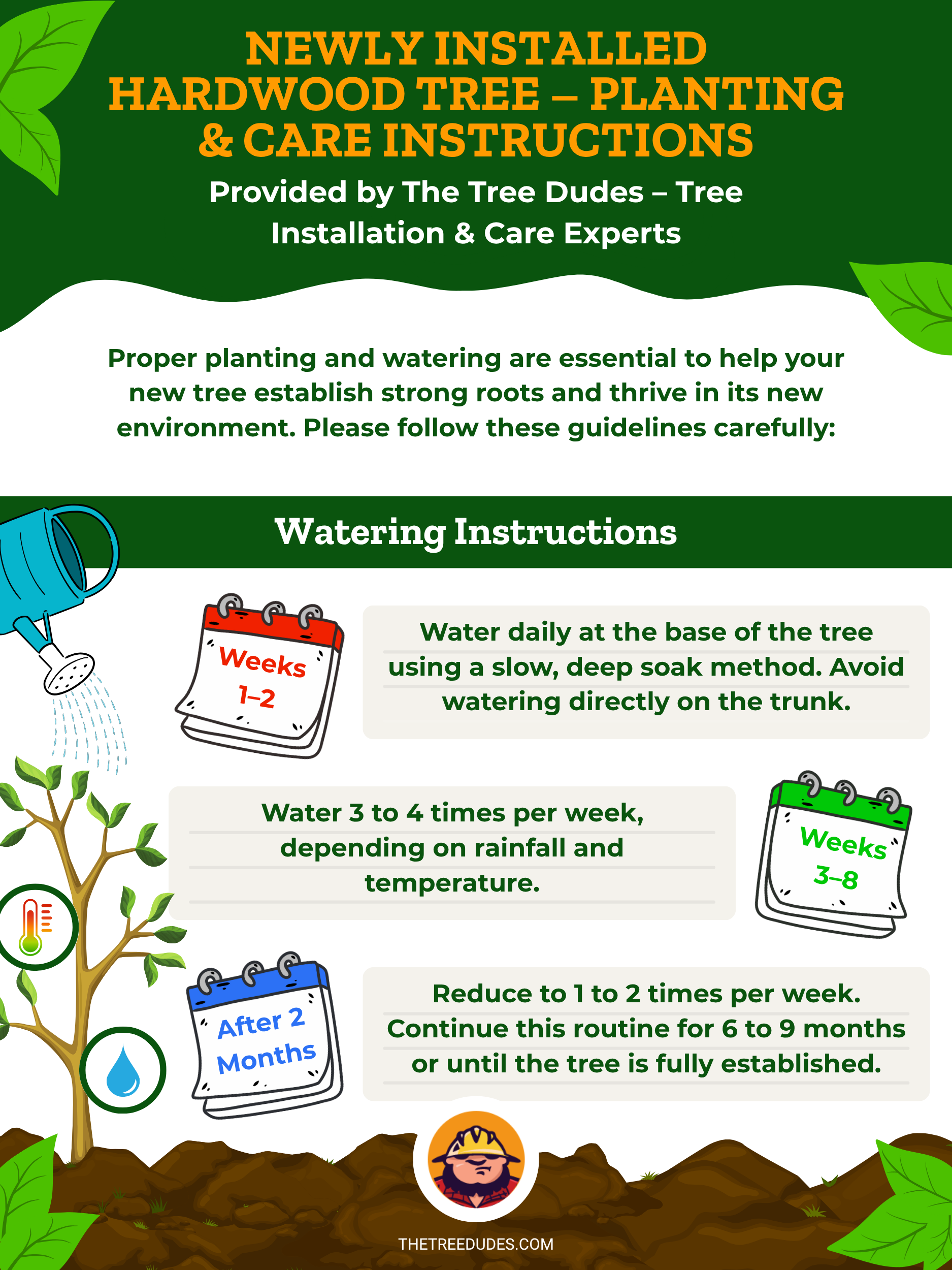
Weeks 1–2
During the first and second week after a tree is planted, water it daily at the base using a slow, deep soak method. This method includes slow watering applied over a longer period of time, which allows water to penetrate deep into the ground and reach the roots.
Avoid watering directly on the trunk, because it can weaken the tree and make it more susceptible to diseases or rot.
Weeks 3–8
From week three to eight after planting, water your new tree 3 to 4 times per week, depending on rainfall and temperature.
If temperatures are higher, more water evaporates from the ground, which means that you might need to water the tree a bit more frequently, 5 to 6 times a week. If there is more rain, then you should lower watering frequency to 1 or 2 times a week.
Always make sure to check the moisture in the ground, so you can be sure that you are not over- or underwatering.
After 2 Months
After eight weeks, you can reduce watering frequency to 1 to 2 times per week. Again, if you live in a very dry, almost desert area, watering frequency should be adapted to it, but still, try not to water it more than 3 times a week. Regularly check ground moisture to be sure you are providing enough water.
Continue this routine for 6 to 9 months or until the tree is fully established.
How Long to Water
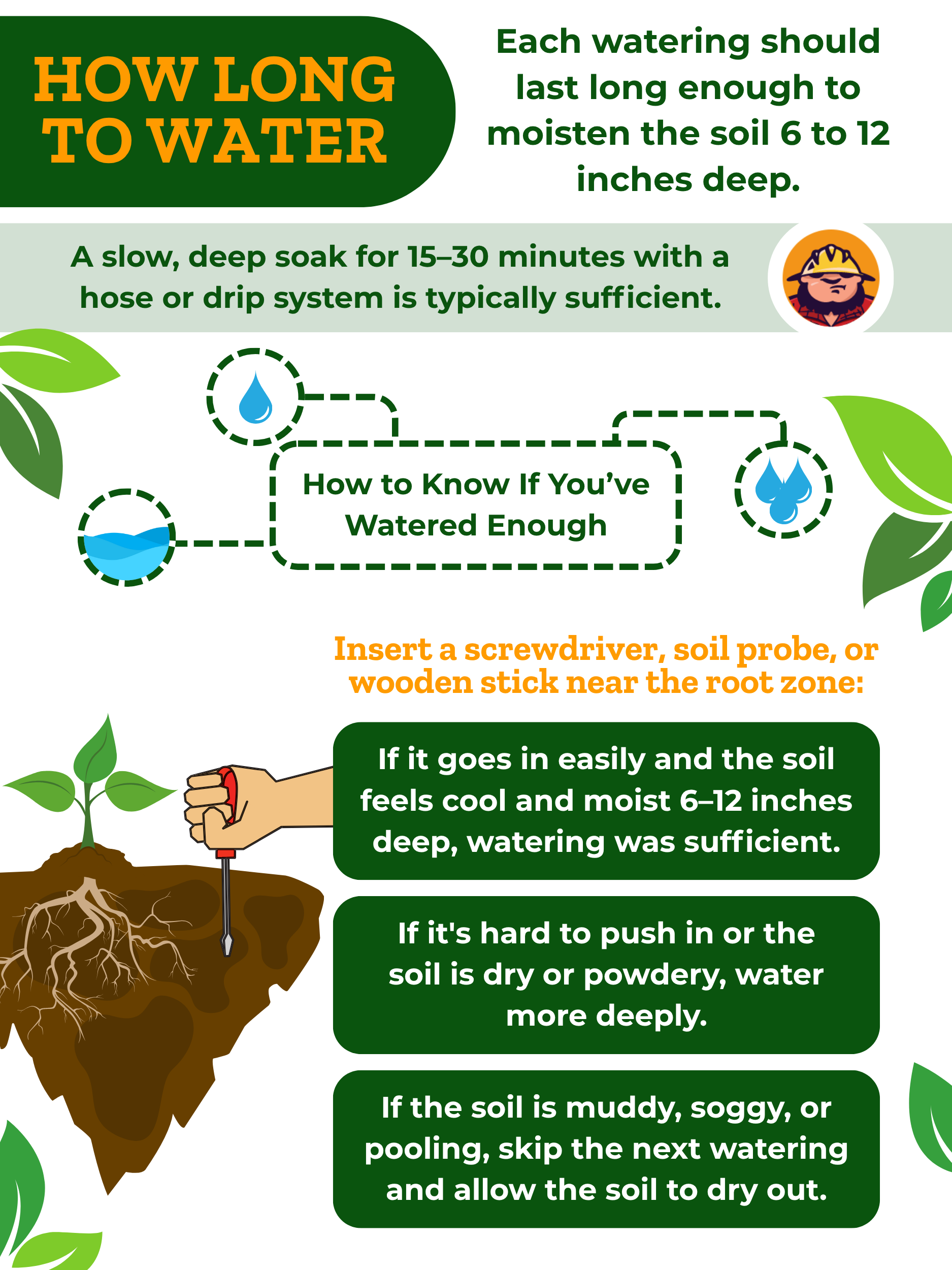
Each watering session should last long enough to really moisten the soil 6 to 12 inches deep. This way, water will reach the roots instead of just moistening the surface.
A slow, deep soak with a hose that lasts for 15–30 minutes is typically sufficient. The drip system is also a very good solution, because it can moisten the soil enough, and you can be sure that the water reaches the roots, without having to constantly oversee the process.
How to Know If You’ve Watered Enough
Making sure that water reaches the root is important because it ensures that the tree is truly getting what it needs. Here is how to know if you watered a new tree deep enough.
Insert a screwdriver, soil probe, or wooden stick near the root zone:
- If it goes in easily and the soil feels cool and moist 6–12 inches deep, watering was sufficient.
- If it is hard to push in or the soil is dry or powdery, water more deeply.
- If the soil is muddy, soggy, or pooling, skip the next watering and allow the soil to dry out.
Knowing when to stop watering is also very important because overwatering can weaken the tree and cause root decay.
What to Do After Rain
Rain is also a form of tree watering. In areas with a lot of rain, additional watering can lead to mold, fungal infections, and root decay that could harm the tree. So, here is how to handle watering during the rain:
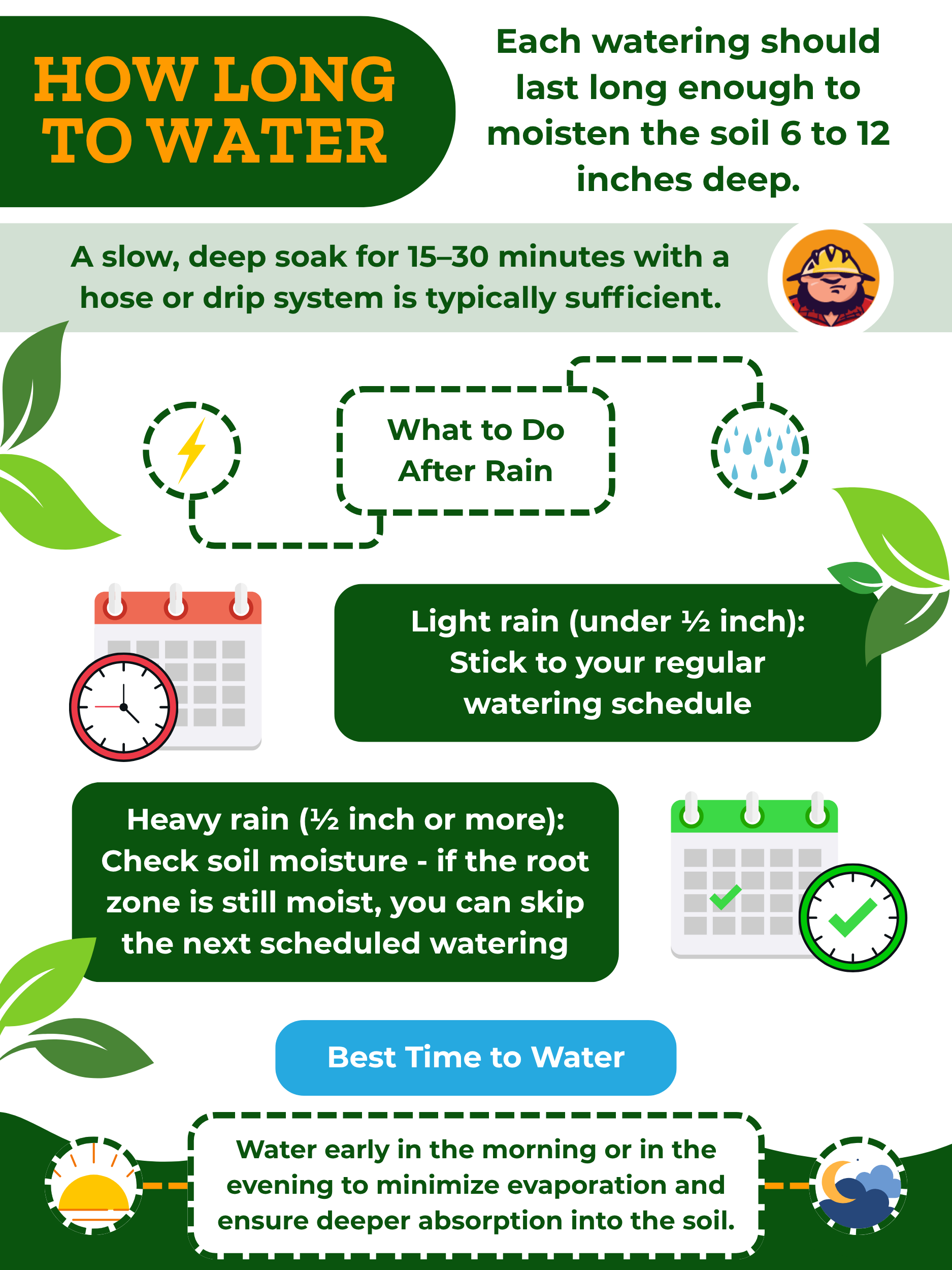
- Light rain (under ½ inch): Stick to your regular watering schedule.
- Heavy rain (½ inch or more): Check soil moisture – if the root zone is still moist, you can skip the next scheduled watering.
Best Time to Water
Watering at the right time can also be detrimental for young trees.
Water your newly installed trees early in the morning or in the evening when the sun is very low, or already set, to minimize evaporation and ensure deeper absorption into the soil.
Weed Control
Young trees need all the nutrients they can get. Weeds take up not only space, but also valuable nutrition that a young tree desperately needs, so make sure you are picking them out and leaving the area around a new tree clean.
Some types of weeds can grow taller than regular grass or dandelion, so if a young tree is still on the smaller side, they can prevent it from getting enough sunlight, especially if there are bigger trees that create additional shade in the area.
Other types of weeds, like bittercress, can even attract pests that might attack the young tree and make its adaptation process harder.
So weeds in general, especially while they are young, too, can very aggressively compete with young trees for nutrients, water, and space, so you should always remove them.
How to Control Weeds Around Newly Planted Trees
There are several ways to battle weeds around your new trees:
- Inspect the area on a regular basis and remove weeds manually as soon as you notice them.
- Place mulch around the tree (but not too close to the trunk) to suppress weed growth.
- Plant weed-suppressing plants around the tree (but wait a few months first).
Protect Trees from Animals and Weather
Weeds and overwatering are not the only factors that can affect young, newly installed hardwood trees. Animals and weather can also play a certain role.
Animal Damage
Animals like rabbits, hares, squirrels, mice, and rats love young trees. They often nibble on their bark because it is soft, juicy, and full of nutrients. Some animals, like squirrels, mice, and rats, climb and munch on the young leaves and thin branches, or just linger on the tree, sometimes even breaking some limbs because of their weight.
Deers also love freshly planted trees. If you live near an area with deer, they will often trespass on your property and eat juicy leaves and thinner branches. During mating season, they might scratch their antlers all over the tree, breaking branches and peeling off the tree bark.
Raccoons are another pest that can give you a headache. Their nails can damage the bark while climbing, and their heavy bodies can break branches. Not to mention that they might find a way to climb into nearby buildings if a tree is planted too close to your home, shed, garage, or stable.
If you live in places like Florida, other animals might want to get access to your new trees as well. Iguanas are famous for climbing trees, and because they can grow big, their weight might break fragile branches.
Weather Damage
In places with extreme weather, such as many places in Florida that often get hit by tropical storms and hurricanes, all followed by very strong winds and heavy rain, newly planted trees can get damaged if you do not protect them in time.
Strong winds often harm fully mature trees. Now imagine what they can do to newly planted ones. Fragile branches might sometimes be flexible enough to withstand winds, but the young tree trunk and roots that have still not been fully established are on the frontline. In other words, only one gust of wind can snap a thin tree trunk in half. Another one, and a newly installed tree might go flying through the air, together with roots.
Tree Guards to the Rescue
Protecting young trees from all of the mentioned dangers can literally save them, and one of the best ways to do so is to install tree guards.
Tree guards can prevent all kinds of animals from accessing your newly planted trees – they can protect the trunk and prevent animals from climbing the tree and damaging it in the process.
They also provide additional stability for the tree, which significantly reduces weather damage.
So, planting new trees on your property brings many benefits to the environment, but just as any other living being, young trees need your care and attention to reach full maturity and offer you all of their gifts. Following this guide will help you keep your trees healthy and happy for a long time. And if you need any help, do not hesitate to contact us! We will be happy to help!