






Anyone who has ever visited a golf course, or even just seen one on TV or the internet, knows that many of them are true landscape masterpieces. They feature multiple areas, some with only bare grass, others with sand and little ponds, but most importantly, trees. Trees on golf courses are undeniably one of the most significant landscape features. They serve both functional and aesthetic purposes, elevating and enriching the environment in a unique, environmentally friendly way.
Florida has a long history of golfing. The first Florida golf courses were built as early as the late 19th century, and this tradition continued all throughout the 20th century. Today, Florida has over 1000 golf courses and stands firm as a state with the most golf courses in the country.
But not all trees are a good choice for a golf course. While some bring numerous benefits, others bring nothing but trouble. And it is not the trees’ fault – some of them are simply not a good fit for an environment such as a golf course, not because they are bad, but because they might be too difficult to maintain and could disrupt the serenity of the landscape.
If you are wondering what trees are a good choice for a golf course in Florida, what benefits they bring, and how to maintain them, you are in the right place. This article will teach you everything there is to know about trees for golf courses, and a few more things you might find interesting.
Why Are Trees Planted on Golf Courses?
Why would anyone want to have trees in the golf course? What is their purpose? What are the benefits, and what are the “consequences” of having them there? These are the questions most property owners, and sometimes players, often ask themselves.
The shortest answer to all of these questions is quite simple. Trees have a positive impact on the environment. They provide shade, look nice, and attract birds and pollinators, which can help the local ecosystem. In golf, they are important parts of the game that make it more diverse and interesting.
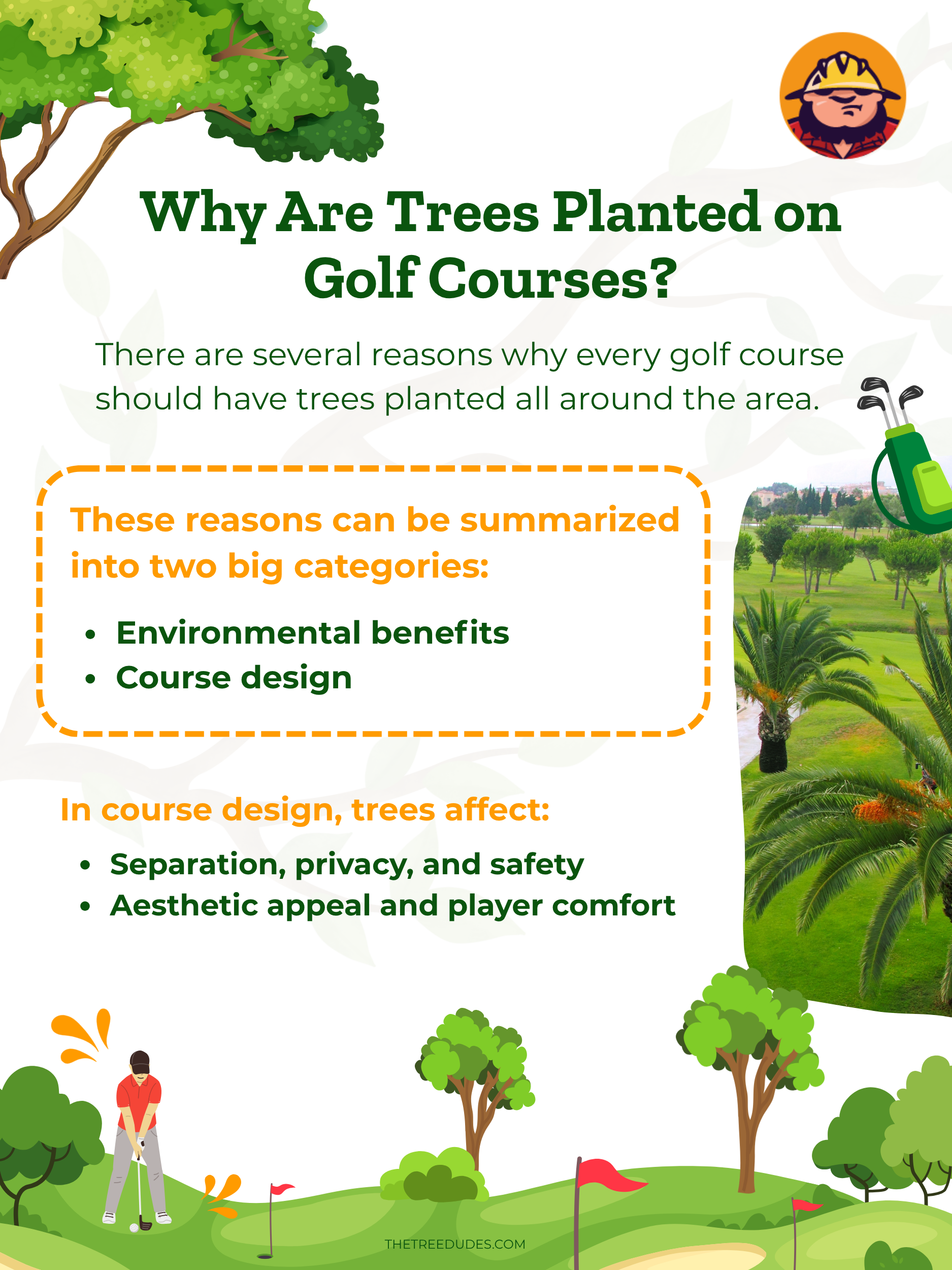
But it is important to note that there are several layers to this answer, so let’s dive into the reasons why trees are planted on golf courses.
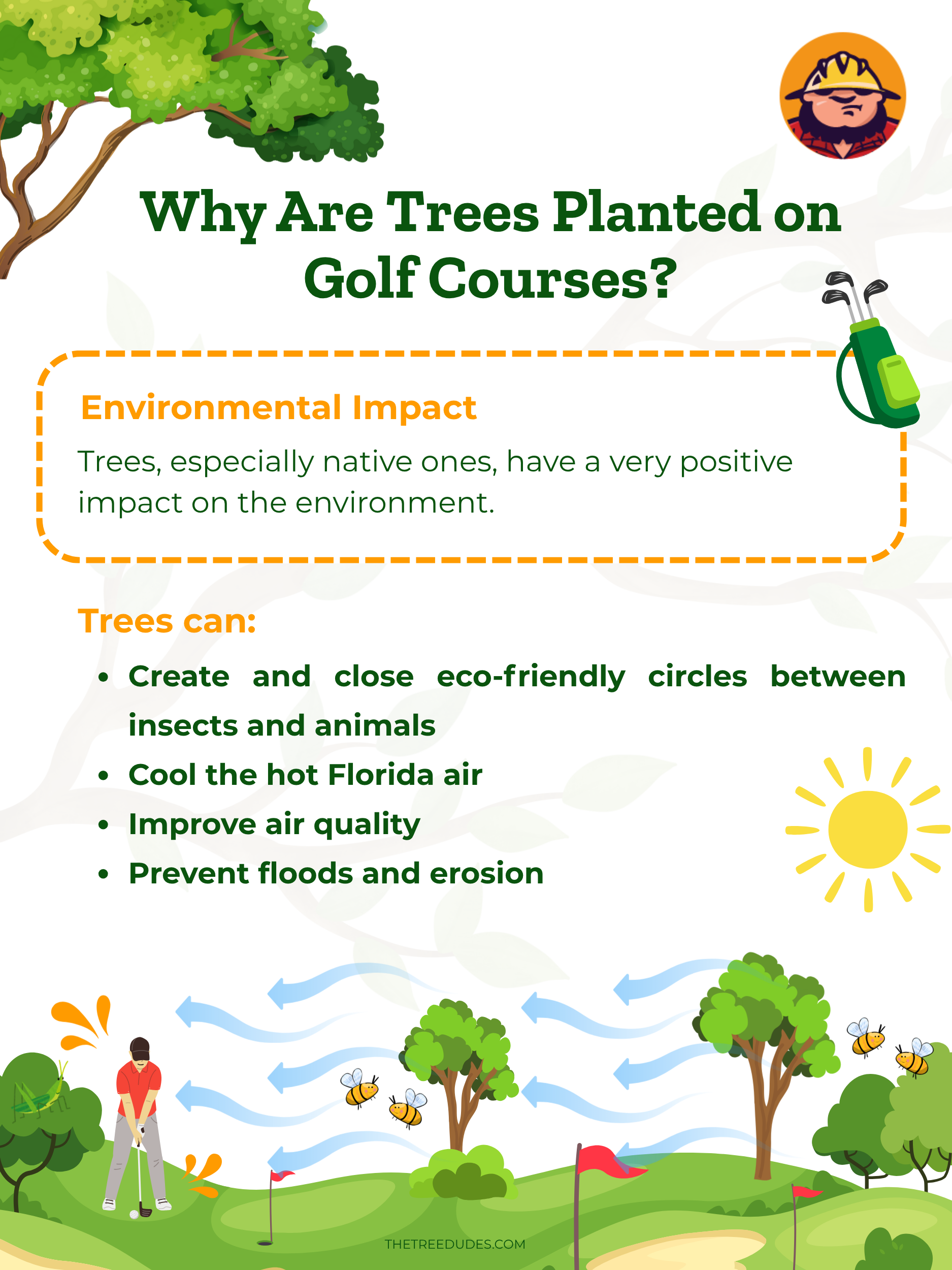
Environmental Impact
Trees, both deciduous and evergreen, attract a lot of insects. Some are friendlier than others, but they all have their place in the ecosystem. These insects attract small animals, especially birds, who come to feast on them, and stay because canopies provide protection. These animals then control the insect population in the entire area, which closes the eco-friendly circle. A lot of animals and insects are pollinators as well, and that helps native plants spread to a wider area.
Trees cool the hot and humid Florida air, which can be a lifesaver for both people and animals during summer. This is how they do it. Strong sun causes water to evaporate from leaves. When this evaporated water comes in contact with air, it cools it down, which keeps the entire area surrounding a tree quite fresh and pleasant.
Improving air quality by oxygen production is another one of their secret powers. During the photosynthesis, trees intake CO2 from the air, process it into food, and release oxygen into the air as a byproduct.
Trees also prevent floods. Their roots have an amazing ability to absorb massive amounts of water during and after the rain, which can prevent flooding and keep the level of water in the ground under control, so other plants, like grass, do not have to fight to survive in humid soil.
Because the Florida sun can sometimes burn the grass, trees come in as a special level of protection there as well – their canopies create shade, which slows down water evaporation from the grass and soil, so it stays fresh for longer.
Trees can also prevent erosion, which is especially important for Florida’s sandy soil that erodes easily and sometimes gets overly flushed by massive rains. Many native trees in Florida can catch strong winds with their canopies as well, which prevents damage of other parts of the course.
Course Design
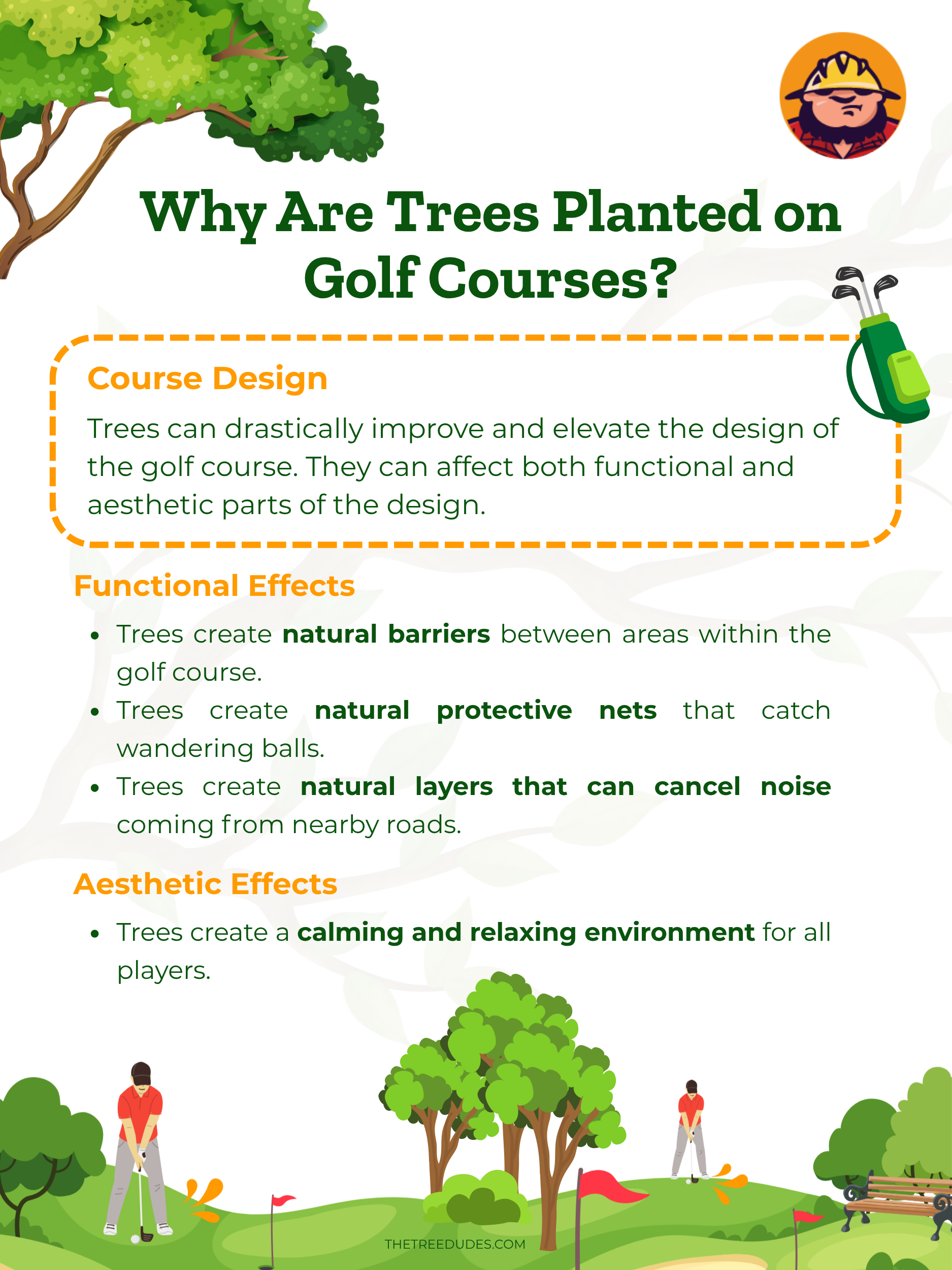
Besides positive environmental effects, trees on golf courses are used as aesthetic and functional parts in the course design. Planting them on golf courses creates stunning visual effects, but also adds another layer to the game.
For example, several trees in one area can get in the line of sight and introduce new challenges to players, requiring them to come up with new game strategies.
Simply put, planting trees on golf courses can make the game more interesting and really push players to show some of their best skills and abilities.
Separation, Privacy, and Safety
Planting trees around the golf course can create a great natural barrier between the course and the surrounding area, which usually has loud roads or other sources of noise that distract players during the game. Combining taller and smaller trees can create noise-canceling layers of leaves and branches that help keep the area noise-free.
Strategically planted trees can be used to create little private areas within the golf course as well. This way, several groups of players can remain separate, despite circling around the same area, which gives much-needed privacy to each group.
When it comes to safety, tree branches and leaves serve as natural nets that can catch balls that wander off their course. And because golf balls are dense and quite heavy, compared to their size, this can keep players safe and prevent accidents or injuries.
Aesthetic Appeal and Player Comfort
Besides functional advantages, trees also create a very pleasant environment for players, which not only makes the game more interesting but also makes it more relaxing. Being among trees, breathing fresh air, and listening to birds can help relieve accumulated stress hormones from the body.
By creating shade, they provide little areas of rest where players can catch their breath and take a little break from the game. Combine them with a few benches, and the area becomes a true heaven.
So, trees on golf courses bring multiple benefits. Most people today would argue that a golf course without trees is not really a golf course, because their presence elevates the entire area to the next level and makes the game such a pleasant experience that you might feel like you took a short vacation every time you come to play.
Best Trees for Golf Courses
Some trees are better for golf courses than others simply because they embody all of the mentioned benefits a bit better. These trees include various species, from those that can grow very tall and wide to those that stay closer to the ground.
Knowing why different trees are a good choice can help you during decision-making, and, more importantly, it can save you years down the line.
Southern Live Oak
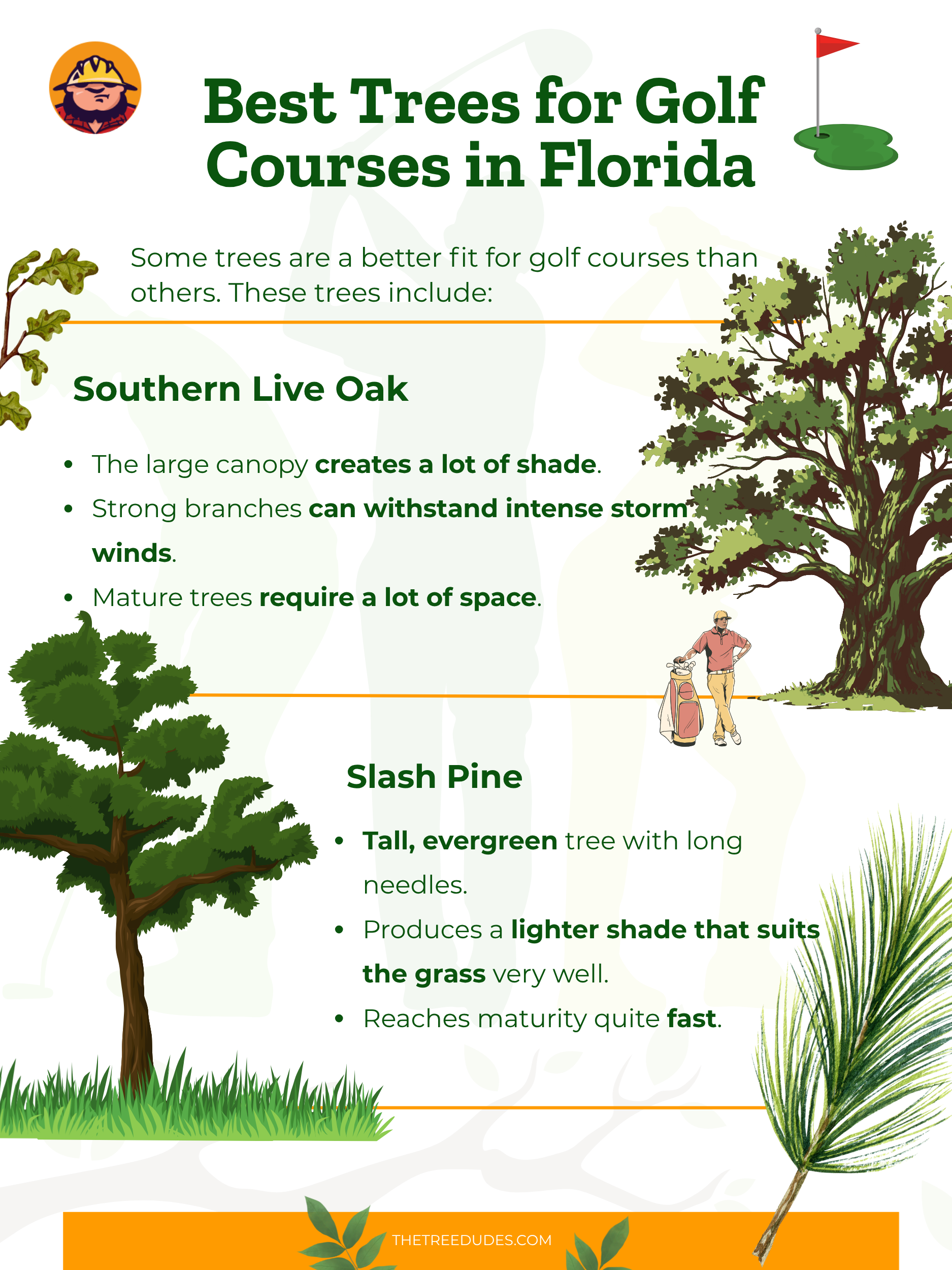
Southern live oak is one of the most famous and most frequently planted tree species on golf courses in Florida.
These trees are native to the southern parts of the USA, including Florida, so the warm climate with lots of sun suits them very well. By the time they reach maturity, they can be almost 70, sometimes even 80 feet tall. They are slow-growing tree species that can live for hundreds of years, so it might take a while until they show their true potential.
Southern live oaks are an incredibly strong species. Their trunk and main branches are made out of dense hardwood that can resist even the strongest storm winds, which makes them a safe option for areas with frequent visitors. If the storm winds hit, southern live oaks will resist, and their large canopies might even provide some wind protection.
Their canopy branches out wide and covers a lot of area, which means that they also provide a lot of shade and attract lots of wildlife. In other words, they have a very positive impact on the environment and the local ecosystem. Not to mention the fact that their canopies can literally save your head in case someone sends a golf ball flying in the wrong direction.
If you decide to plant southern live oaks on your golf course, make sure not to plant them too close to other trees or each other, because they require a lot of space once they get closer to maturity. Also, keep in mind that they drop their leaves in the fall, so be prepared to rake if you want to keep the area spotless.
Slash Pine
Slash pine is another very popular tree species for golf courses in Florida. It is a native Florida tree, so it has an extremely positive effect on the local environment and ecosystem.
Slash pines can grow very tall. Their canopies stay a bit smaller compared to their height, but they are still decently branched out. Since they are an evergreen species, they have long needles instead of leaves, which makes their canopy slightly more open. This results in a lighter shade, but it also means less work during the fall, when deciduous trees usually drop all of their leaves. The lighter shade can also be more favorable for the grass because it lets through more sun.
These trees grow quite fast and reach maturity faster than some other hardwood trees. That means that the golf course can reap all of the benefits faster than it would be the case with some other tree species.
You can plant them in little forests, with around ten or more trees in one area, which creates a perfect habitat for many native animals and bugs, and provides a nice shade area for players.
Keep in mind that slash pines like slightly more acidic soils, but are tolerant of sandy and clay soils. They also like to have good drainage.
Bald Cypress
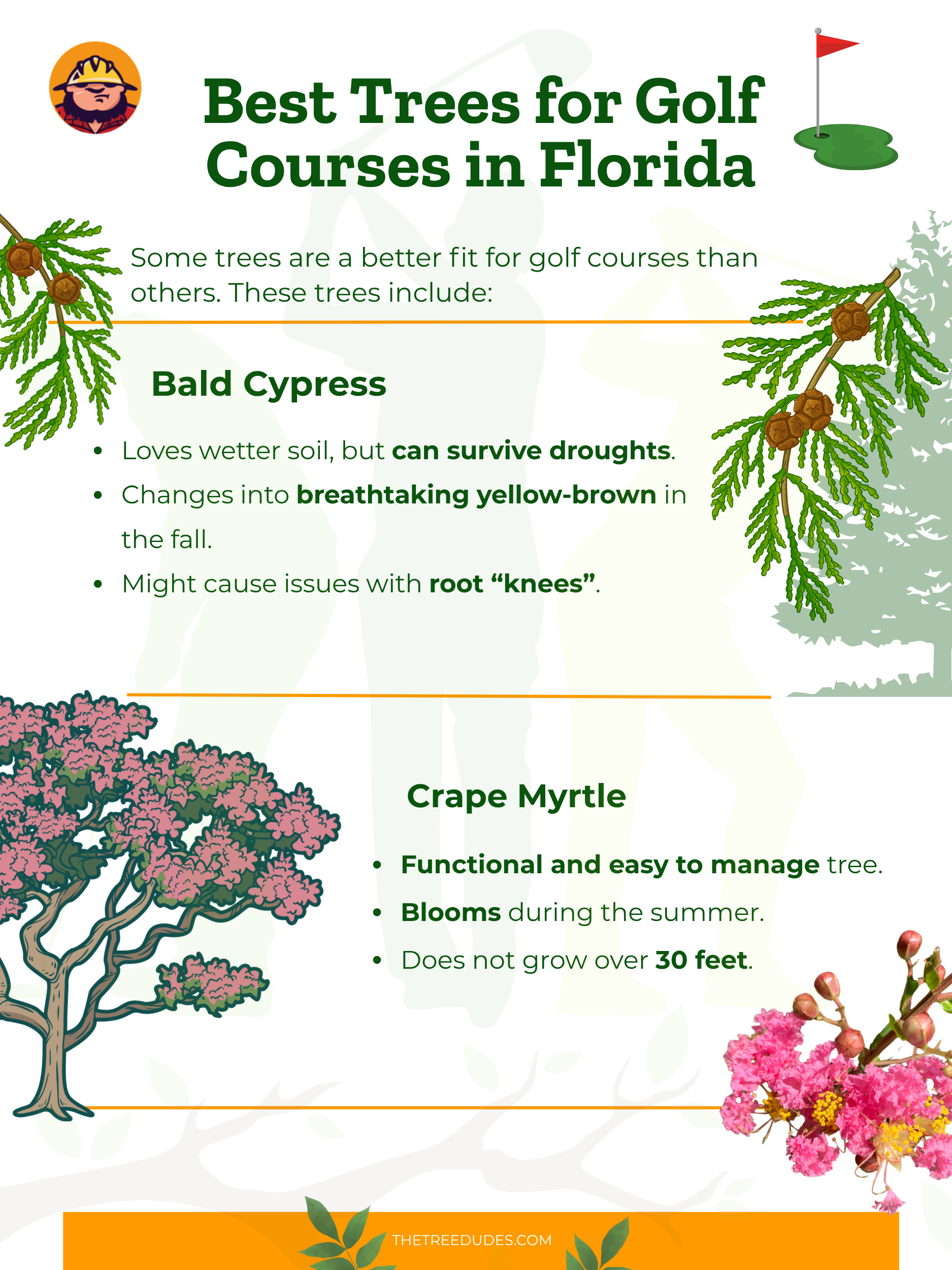
Because Florida has a lot of rain during the year, the soil often gets too wet and soggy for many tree species. But there is one that is perfectly designed to withstand it, and it is a bald cypress.
These trees can really thrive in areas around retention ponds or low-lying swales. It is a quite sturdy tree that can, however surprising it might sound, survive droughts, but only when well established.
It is a beautiful tree with short, feathery, soft needles that turn yellow-brown in the fall. This way, they make a truly breathtaking color play that can sometimes even charm players away from their game – they simply have to stop and admire the sight of bald cypress trees in front of them.
The most important thing to consider when it comes to bald cypress are their roots. When a tree reaches maturity, its roots might start sticking out of the ground. This is usually called root “knees”, and it can affect the terrain and make maintenance a bit more challenging. It can also affect the game if the tree is too close to the hole.
Crape Myrtle
Crape Myrtle is a very popular tree in Florida, but often overlooked when it comes to golf courses. Which is a bit strange, considering that it is one of the most functional and easy-to-manage trees out there.
It is much smaller compared to some other hardwood trees like southern live oak, but this size is a part of its charm. Its canopy is closer to the ground and quite open, which means that you can maintain it as a shrub. This type of canopy does not create as much shade as that of larger trees, which can be good for the grass. When planted in the line, they can create a natural border between two playing areas, or separate the golf course from the busy street or nearby neighborhoods.
And not to mention the color of its flowers that bloom around summertime. It ranges from white and light pink to bright reddish and purple shades. The visual contrast it can create when combined with other green trees can be an amazing sight for players.
Crape myrtle trees produce fruits, but they are small and will probably not make a mess around the tree. They also like well drained soils, so pick their location carefully.
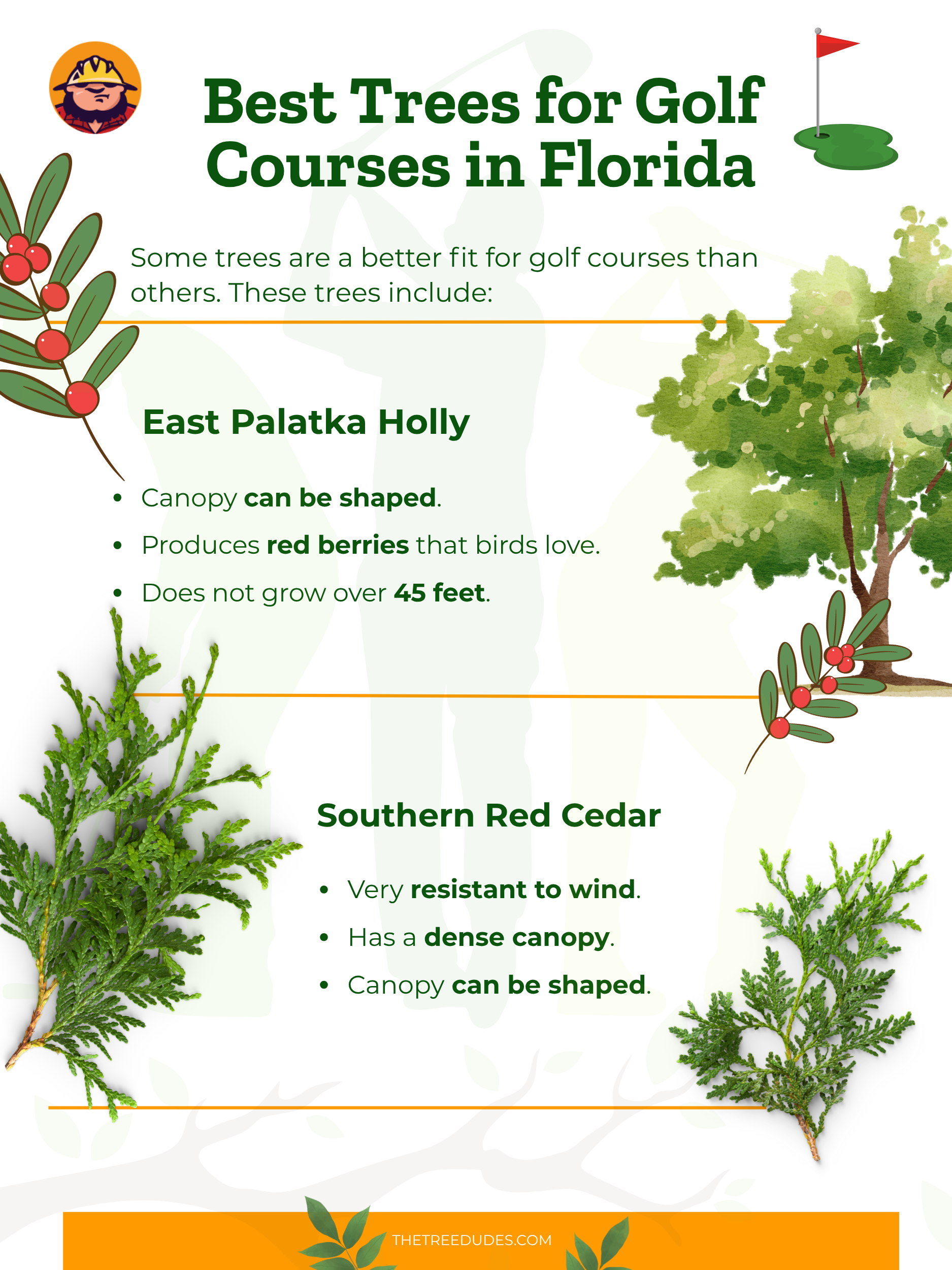
East Palatka Holly
This beautiful tree with thick, juicy leaves can be a great addition to a golf course in Florida. Just like crape myrtle, east palatka holly does not grow too tall, so it does not produce a lot of shade.
Its canopy can be shaped into various shapes, or left to grow as is, and when planted in a group, it can create a natural barrier within the course, or separate the course from the surrounding area.
Female East Palatka holly trees produce red berries, which are not exactly good for people, but are great for birds. This means that they support the environment and local wildlife, which makes them an even better choice. These berries will, in most cases, not make a mess around the tree.
These trees mostly like well drained, slightly acidic soils, so just like the others we mentioned, be mindful when choosing their location.
Southern Red Cedar
This is another Florida native tree that can serve several purposes on the golf course. Because of the shape of its canopy and its flexibility, Southern red cedar is very resistant to wind. Its canopy is very dense, and a great habitat for smaller birds. It can also be shaped, just like East Palatka holly.
Similarly, it can be planted in lines or groups to form a natural border. Because it is quite narrow, it can be planted between some other trees to fill gaps and make the area nicer.
It can grow in various types of soils, but usually prefers well-drained areas.
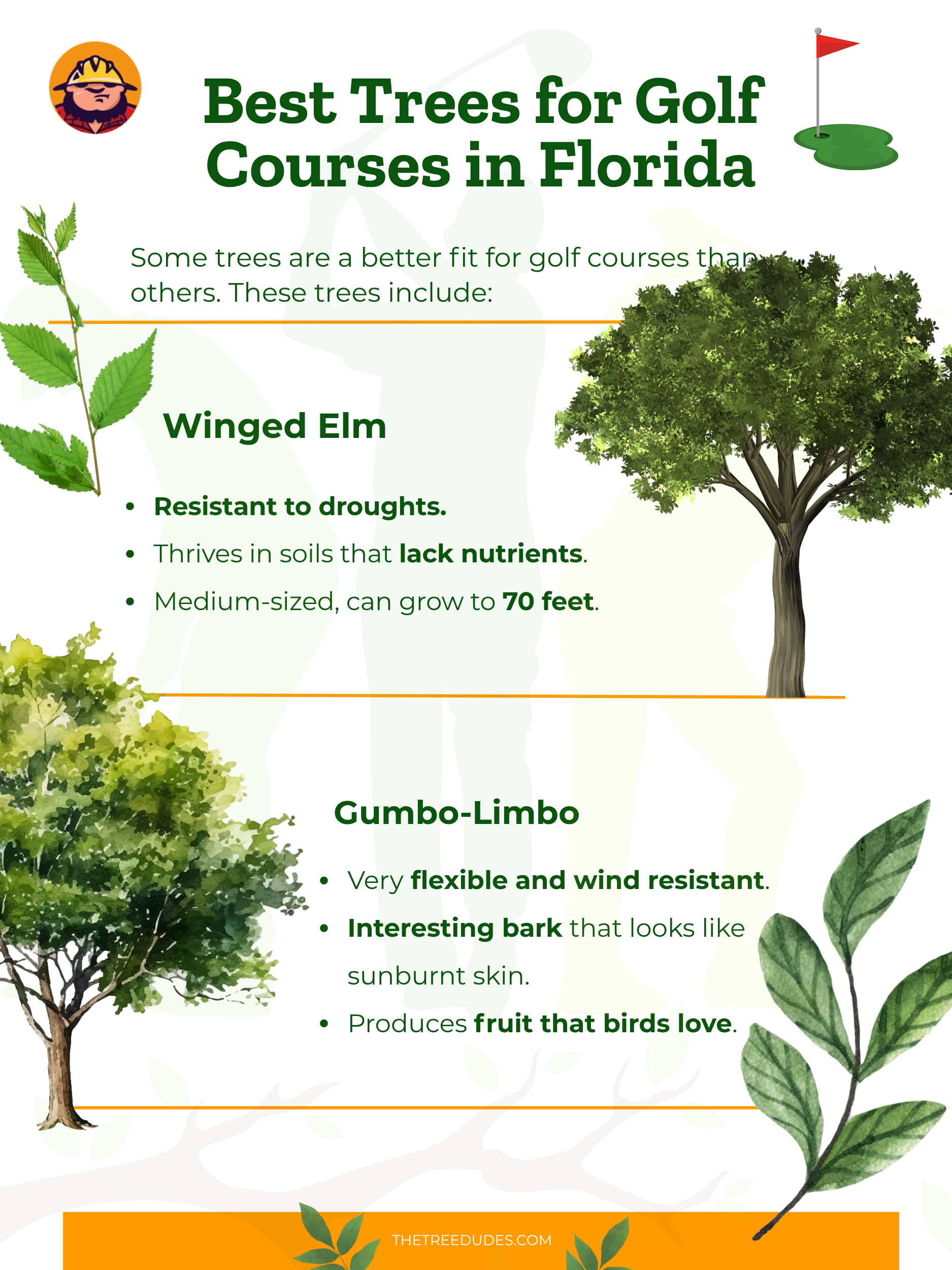
Winged Elm
Winged elm is another type of elm tree that is native to Florida. Because of this, it makes a perfect tree for golf courses.
It is a medium-sized tree, which means that it can be planted alone or combined with some taller trees to create a visually pleasing landscape. It is a resistant species that can withstand droughts and clay soils that lack nutrients. It is a great choice for golf courses located in areas with particularly bad soil.
During fall, it changes color to yellowish brown, which can take the color game to the next level, especially when combined with other trees that change color with seasonal changes.
Gumbo-Limbo
Gumbo-Limbo is another Florida native tree that is perfectly adapted to the harsh weather conditions. It is very flexible and able to withstand some of the strongest winds. Some would say that it is practically impossible to break it. This tree will lean in all sides during strong gusts of wind, but it will hardly ever break.
It has a very interesting bark – some say that it reminds them of sunburnt skin. It is a tree that can grow quite tall, and its canopy is often very wide. This means that it creates a lot of shade.
Gumbo-Limbo produces small fruits that are not edible for humans, but birds love them, so it is definitely a type of tree that supports the local environment and ecosystem. These fruits usually do not make a mess around the tree.
While all of these trees might be a good choice for a golf course, it is important to note that the soil, drainage, and surrounding area also playan important role. If you are not sure where to plant a tree, we advise you to consult with professionals because they will be able to tell you which locations would be a great choice for each tree, and they can guide you during the planting or transplanting process.
Palm Trees on Golf Courses
Because of Florida’s specific climate, which palm trees simply love, many golf courses decide to make them a part of the landscape. But unlike hardwood trees that provide a lot of shade or absorb excess water from the soil, palm trees have a more aesthetic role.
Most golf courses add them to parts of the course with sand, because palm trees’ shallow roots prefer sandy soils. They also nicely fit that type of aesthetic, because most people think about palm trees once they see sand that reminds them of beaches. But, to be clear, you can plant them anywhere you like on the course.
Because palm tree fronds can never produce as much shade as a hardwood canopy, they can benefit the turfgrass because they provide more light needed for the grass to grow.
They also require less work than hardwood trees, because their fronds fall a bit less than hardwood branches.
Downsides of Planting Palm Trees on Golf Courses
There are some downsides to planting palm trees on a golf course.
For example, unlike hardwood trees, their fronds can not catch wandering balls. Also, animals prefer larger canopies, where they have more space to hide. Fronds do not allow a lot of space for multiple nests. And, of course, the coconuts. Coconut palm trees can produce dozens of fruits that will eventually start falling down. And you do not want to be under them when it happens.
So, while palm trees can be a great aesthetic addition to golf courses, in most cases, they are planted only in specific areas, and not as often or densely as hardwood trees.
If you do decide to plant them, opt for native palm species like Saw or Scrub Palmetto, Sabal Palm, and even Buccaneer Palm, which is an endangered palm tree species.
What Trees Are Not Good for Golf Courses in Florida
Just like some trees are a great choice for golf courses in Florida, there are some others that are less than ideal.
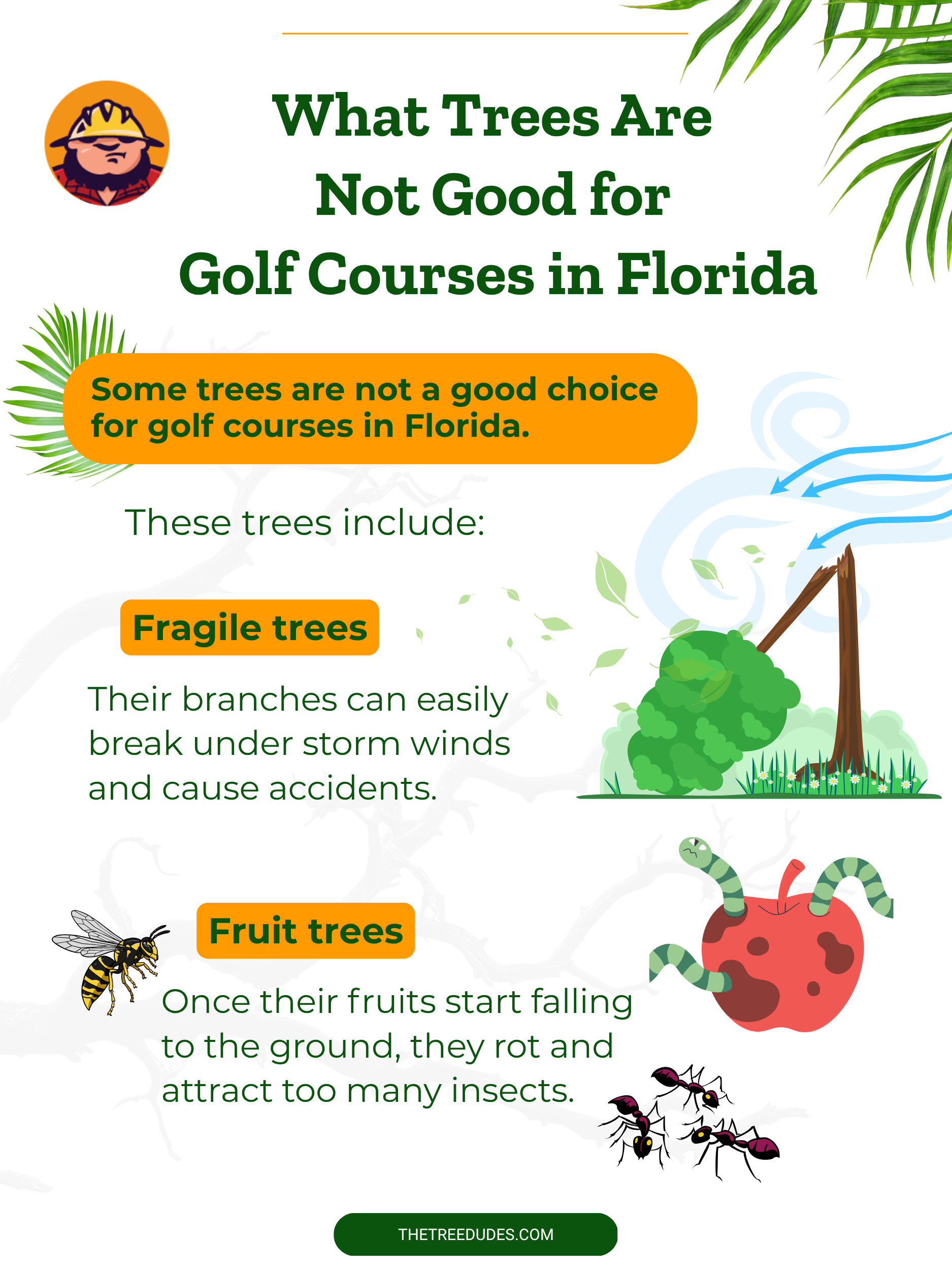
Fragile Trees
These trees usually include ones that can easily lose branches, especially during strong winds, which are frequent in Florida. A good example is the Mimosa tree – its branches can easily break, and the wind does not even have to be that strong.
Fruit Trees
Trees with larger edible fruits are also the ones that many avoid planting on golf courses. Certain plums, figs, and cherries are generally avoided because their fruit falls all around the tree and starts rotting, attracting wasps and other bugs. They also stick to the shoes, and affect the grass under the tree. Not to mention that they affect the gameplay. Just imagine your ball falling right into a squishy fig. That sort of thing can ruin a good day.
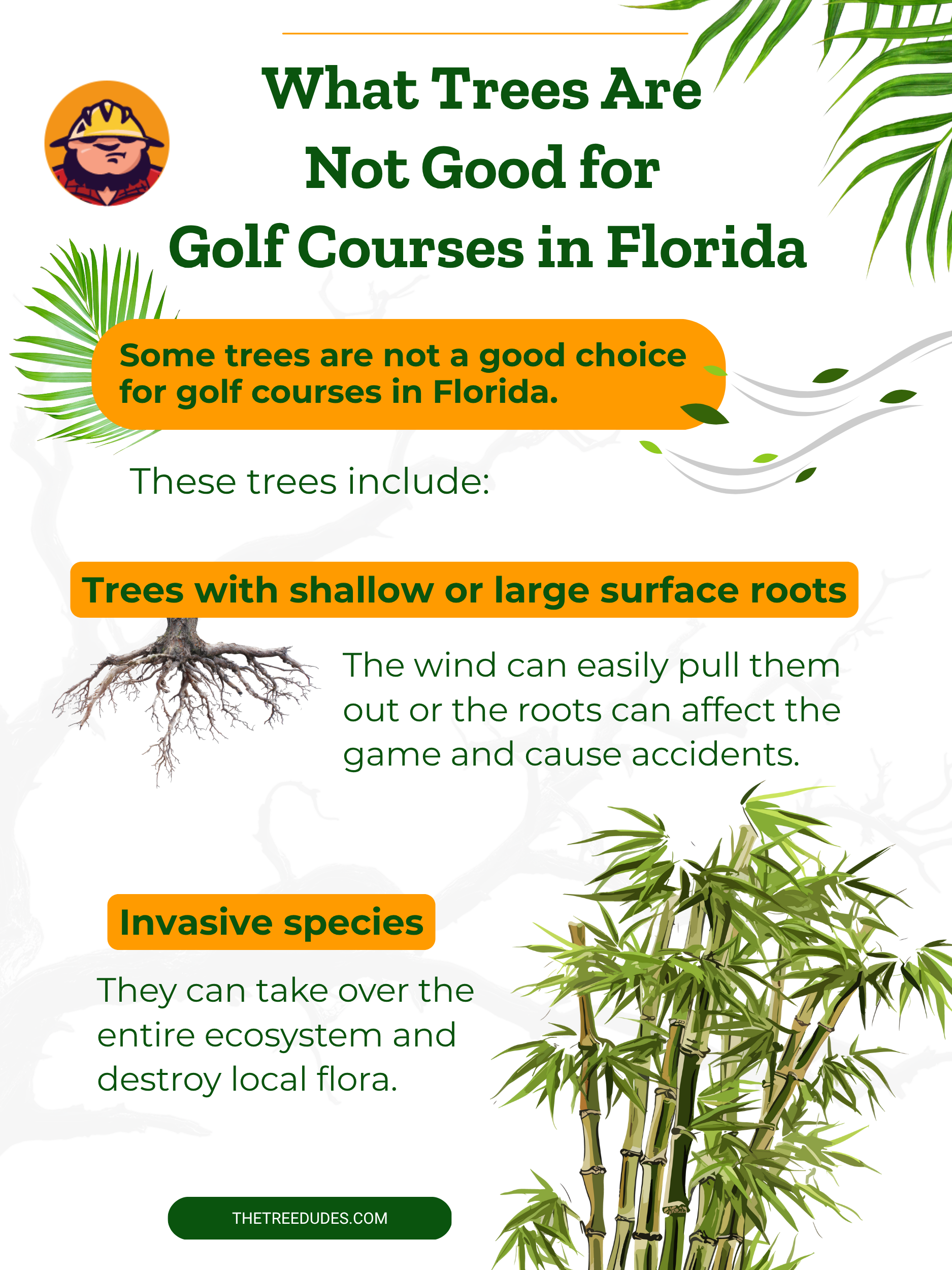
Trees with Shallow Roots
Trees with shallow roots are another type that you should try to avoid, because they can become a hazard during the first storm. While some might think that this includes palm trees, it is important to mention that the majority of palm trees are quite resistant to strong winds, despite their roots being shallow. But hardwood trees with shallow roots are not a good choice for golf courses because they can cause significant damage to the course or even lead to injuries.
Trees with Large Surface Roots
Trees with large surface roots are also not a very good choice. Their roots can affect the game, because balls can easily get stuck between them, and it might take players more than a dozen strikes just to get the ball out of there. People can also trip on them, or they can start lifting cart paths.
Invasive Species
And finally, invasive tree species should also be avoided, because they can damage the environment and the local ecosystem. Some native plants might not be able to defend themselves from these invasive plants. Mimosa, which we already mentioned, is a very invasive species that has a strong tendency to push out many native species. This is another reason why you should not plant it on a golf course in Florida.
Red sandalwood is another invasive species that you should avoid planting, as well as Javanese bishopwood and many other types of trees.
And while this might not be a tree, we have to mention it because people often confuse it with a tree, because of its size – bamboo. Bamboo is an extremely invasive species, and once you plant it, you will practically never be able to get rid of it. The only way to remove it is to completely dig out all risomes, which can be a lot of work and could potentially destroy an entire golf course.
Maintaining Trees on Golf Courses
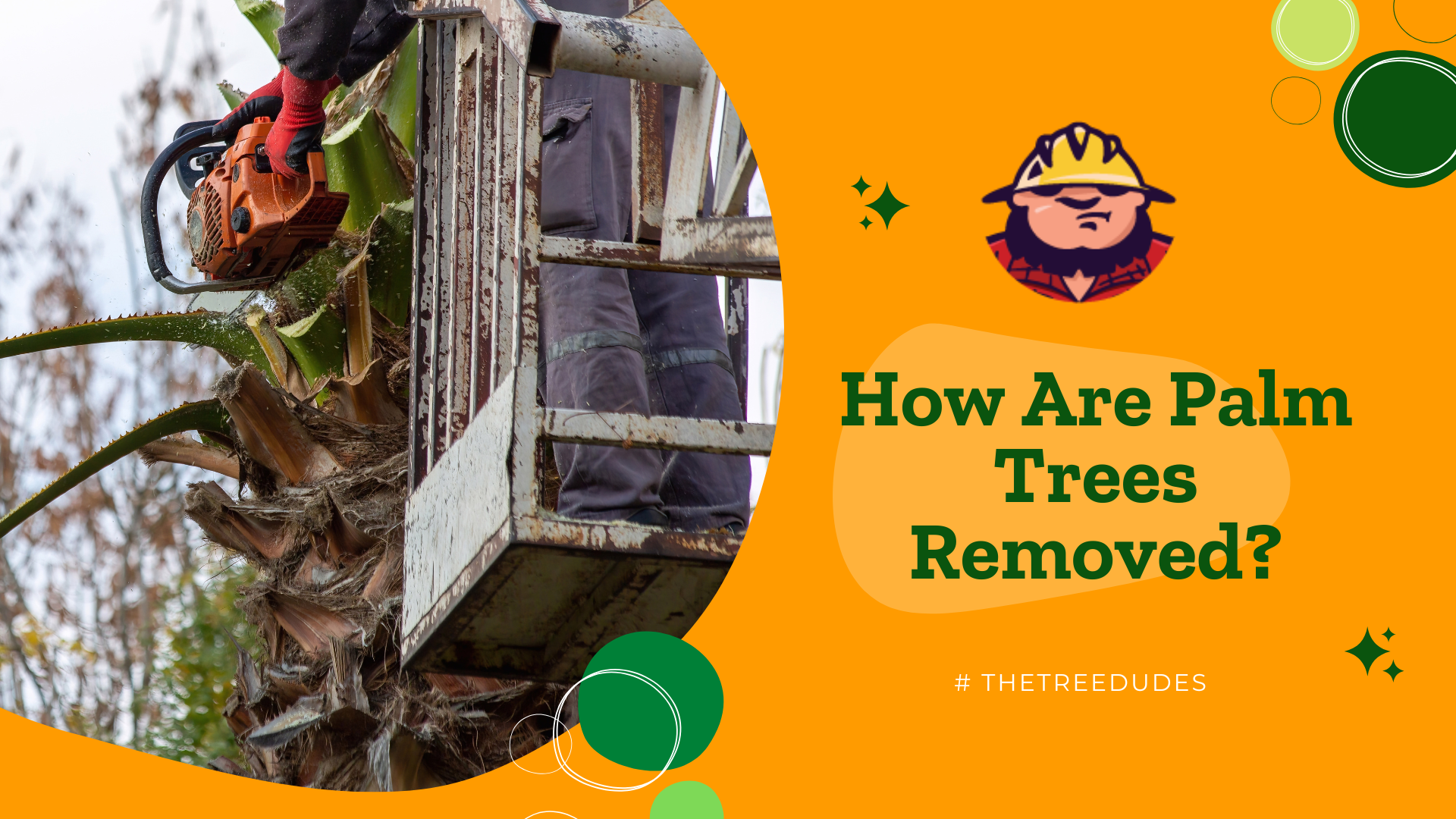
The best way to keep your golf course safe and beautiful, and all of the trees thriving, is regular maintenance. It can include all sorts of services, depending on your specific needs, but most frequently it includes tree/palm tree trimming and pruning, cabling and bracing, coconut removal, tree/palm tree removal, partial tree removal, pest control, and fertilization. Again, depending on your needs, some other services, like crown reduction or tree shaping, can be included as well.
All of these services can help your trees keep their vigor and prevent accidents or hazards.
For example, tree trimming and pruning will keep all dry or damaged branches under control. If a tree has a particularly large canopy that is becoming very heavy, then crown reduction can resolve the issue. This can prevent these branches from falling and causing accidents.
Cabling and bracing can be used when a tree has an unstable structure or very heavy branches. Supporting them with cables and braces can help stabilize them, which is particularly important during storms.
If any tree suffers from pest attack or disease infection, pest control can help it get better and prevent the spread of the hazard to other trees.
Fertilization can help young trees that need extra nutrients, or mature trees that have lived in a nutrient-poor soil for a long time.
And finally, if any tree is recognized as a danger, because it has been damaged beyond repair, or completely drained by disease or pests, then tree or palm tree removal can help remove them from the property. This can be followed by tree planting or transplanting, which will fill the previous tree’s spot. In some cases, only one part of the tree is damaged, so partial removal can help control the damage.
All in all, having trees on a golf course is a positive thing. Just make sure you are taking good care of them and not letting them cause any damage or accidents. If you have a golf course and you are looking for a tree maintenance crew, contact us to schedule a free estimate.