




For all the benefits of coconuts, they can be dangerous if dropped from a great height. In this article, you will learn why it is important to have coconuts removed by qualified professionals and what steps they will take to resolve this problem.
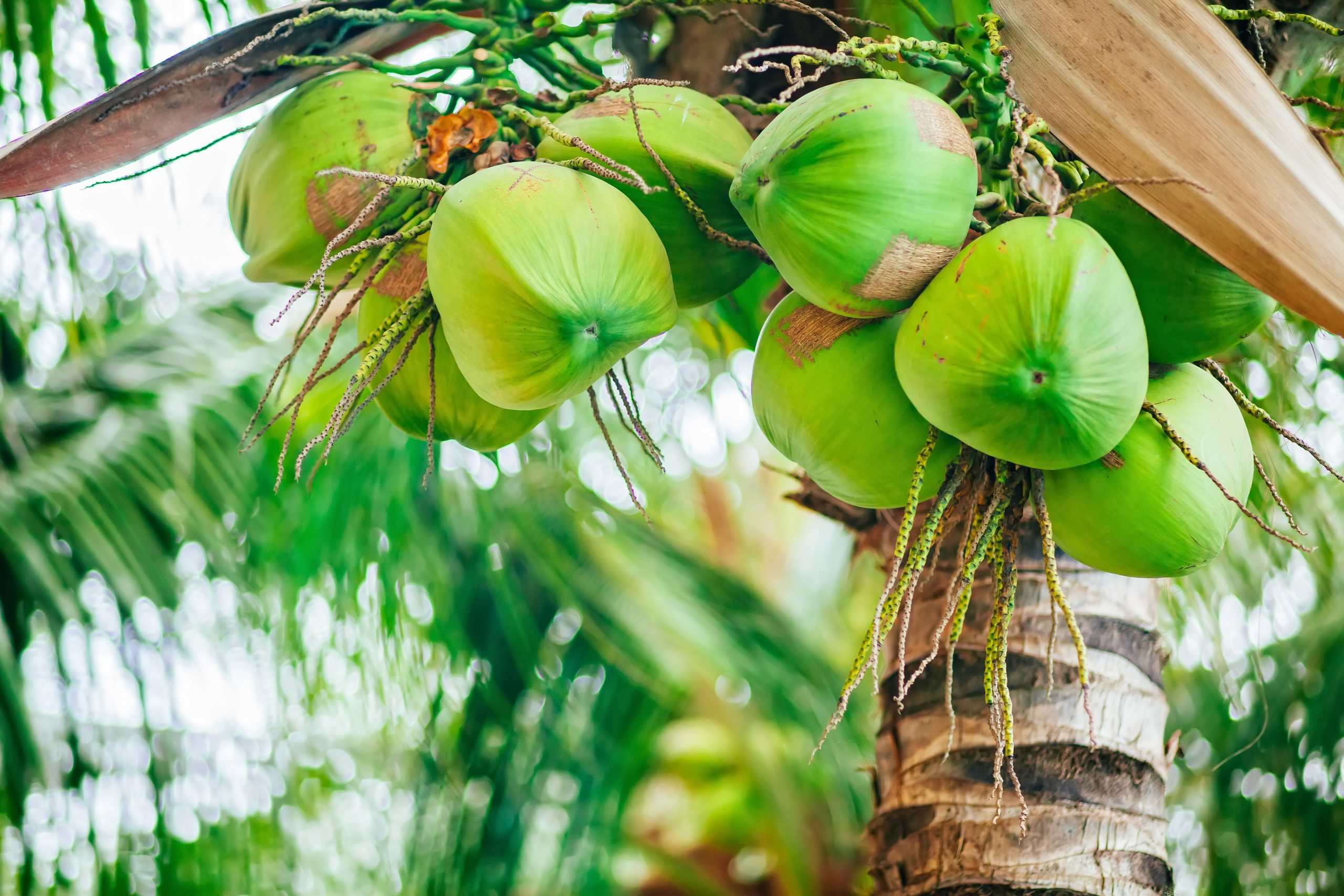
Coconuts are very tasty and healthy. They contain vitamins B1, B2, B5, C, proteins, carbohydrates, fats, sugars, trace elements (calcium, potassium, phosphorus), and a lot of fiber. Coconut oil is widely used not only in food but also in cosmetics, being one of the most important components for skin and hair health. But for all its many benefits, coconut can also be dangerous.
Understanding the Hidden Threat of Falling Coconuts
You’ve probably passed them countless times on your evening walks: those tall, elegant palm trees scattered along avenues of polished resorts or lining the breezy yards of upscale neighborhoods. They may strike you as symbols of tropical luxury, evoking visions of sun-kissed women near poolside lounges.
But, while you might love the tropical fantasy, the coconut trees may be less kind. When a coconut matures, heavy, thick-shelled, and perched dozens of feet above the ground, it can transform into a lurking hazard. Imagine strolling down a sun-drenched street, preoccupied with your weekend plans, and suddenly, a coconut dislodges and plunges earthward. This isn’t a flimsy leaf drifting down to greet your shoulders.

A mature coconut can weigh several pounds. Dropped from the height of a palm, it can exert a shocking force capable of causing serious injury. As absurd as it may sound, you should never underestimate the potential threat posed by these innocently swaying orbs.
What Is the Danger?
Statistics on coconut-related deaths are rather uncertain because these cases are rarely recorded. And those that are registered are often mixed with all kinds of palm-related injuries. For example, a palm tree fell on a person or a person fell from a palm tree.
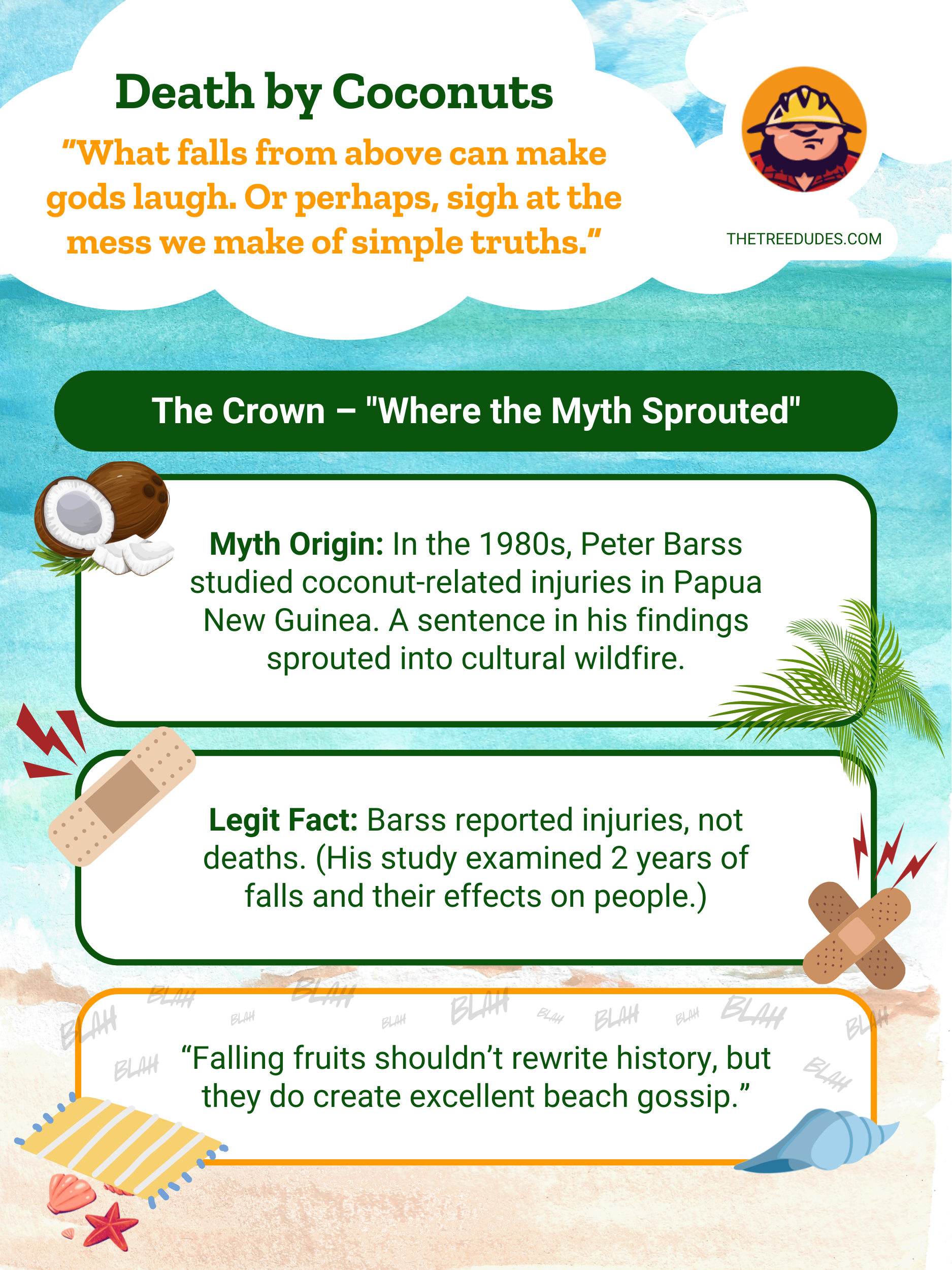
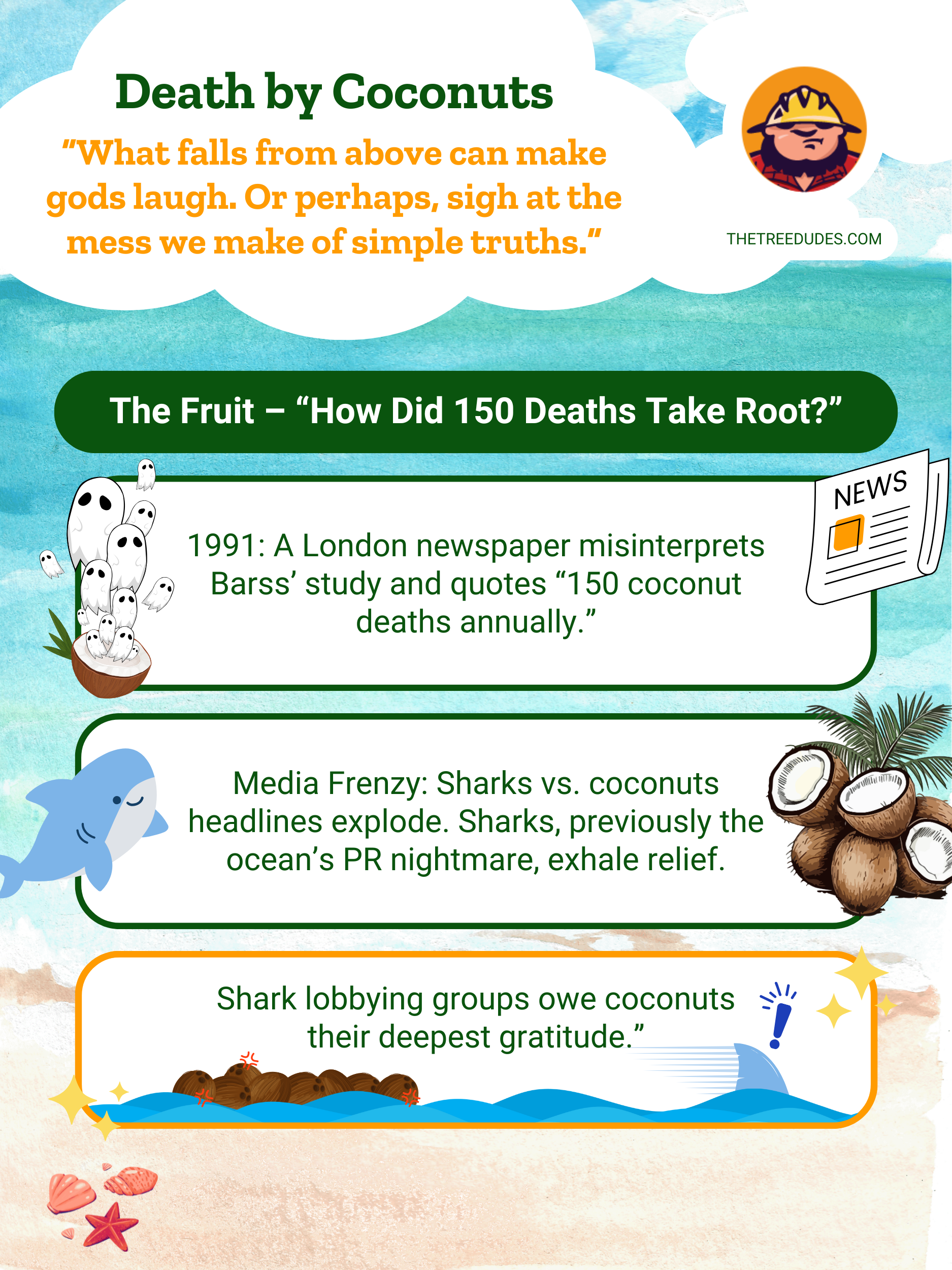
A well-known legend says that the probability of a person dying after falling on his head with coconut is much higher than being killed by a shark. It follows from the legend that an average of 150 people in the world die each year from falling coconuts, while only 5-6 people die from shark attacks.
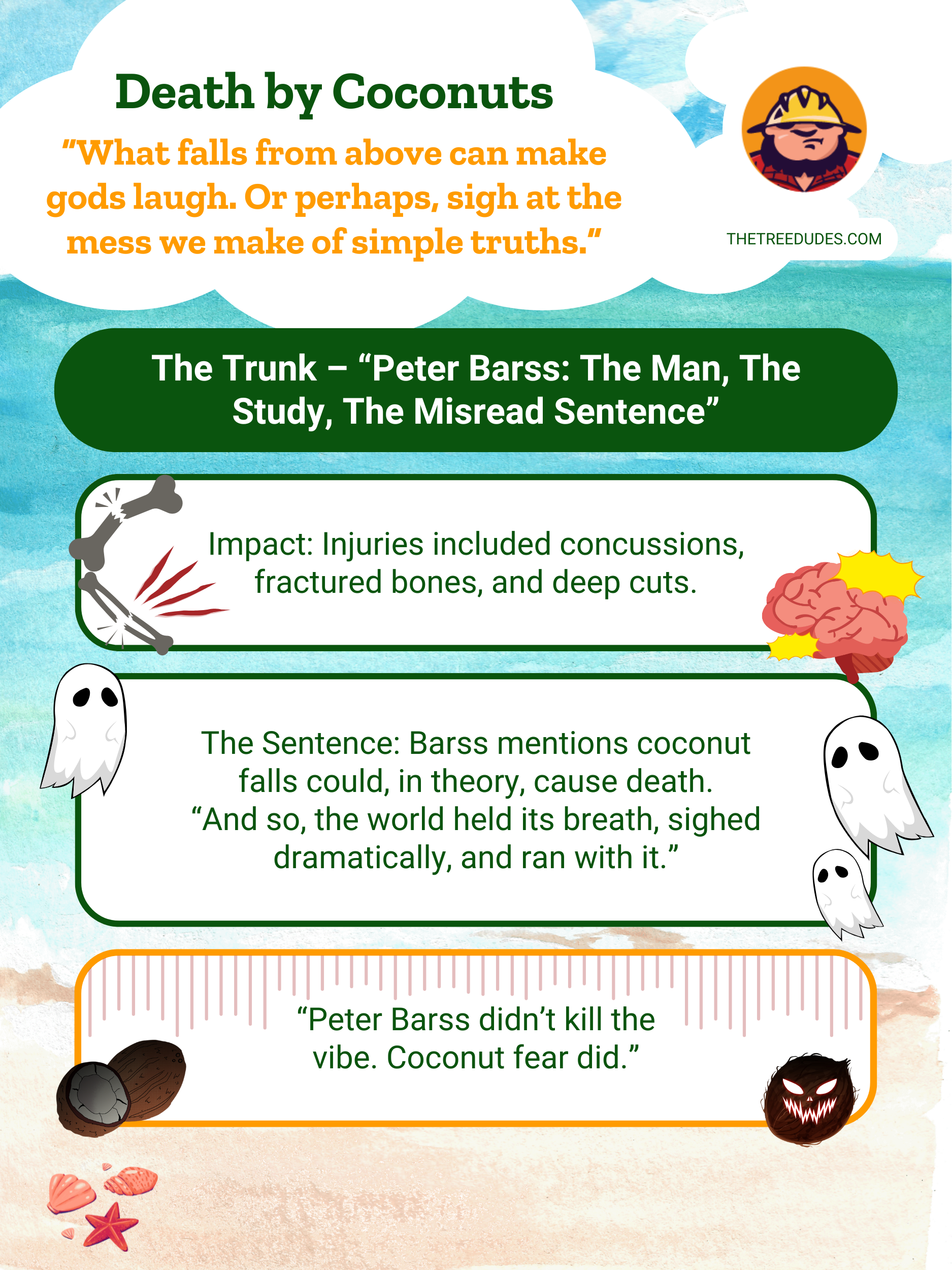
This was claimed by researcher Peter Barss who even published an article entitled “Injuries from falling coconuts,” but then admitted that he had quoted a line from an insurance agency’s advertising company. Barss was later awarded the Ig Nobel Prize for this research.
However, this does not change the fact that coconuts can sometimes fall on a person’s head and cause serious injury.
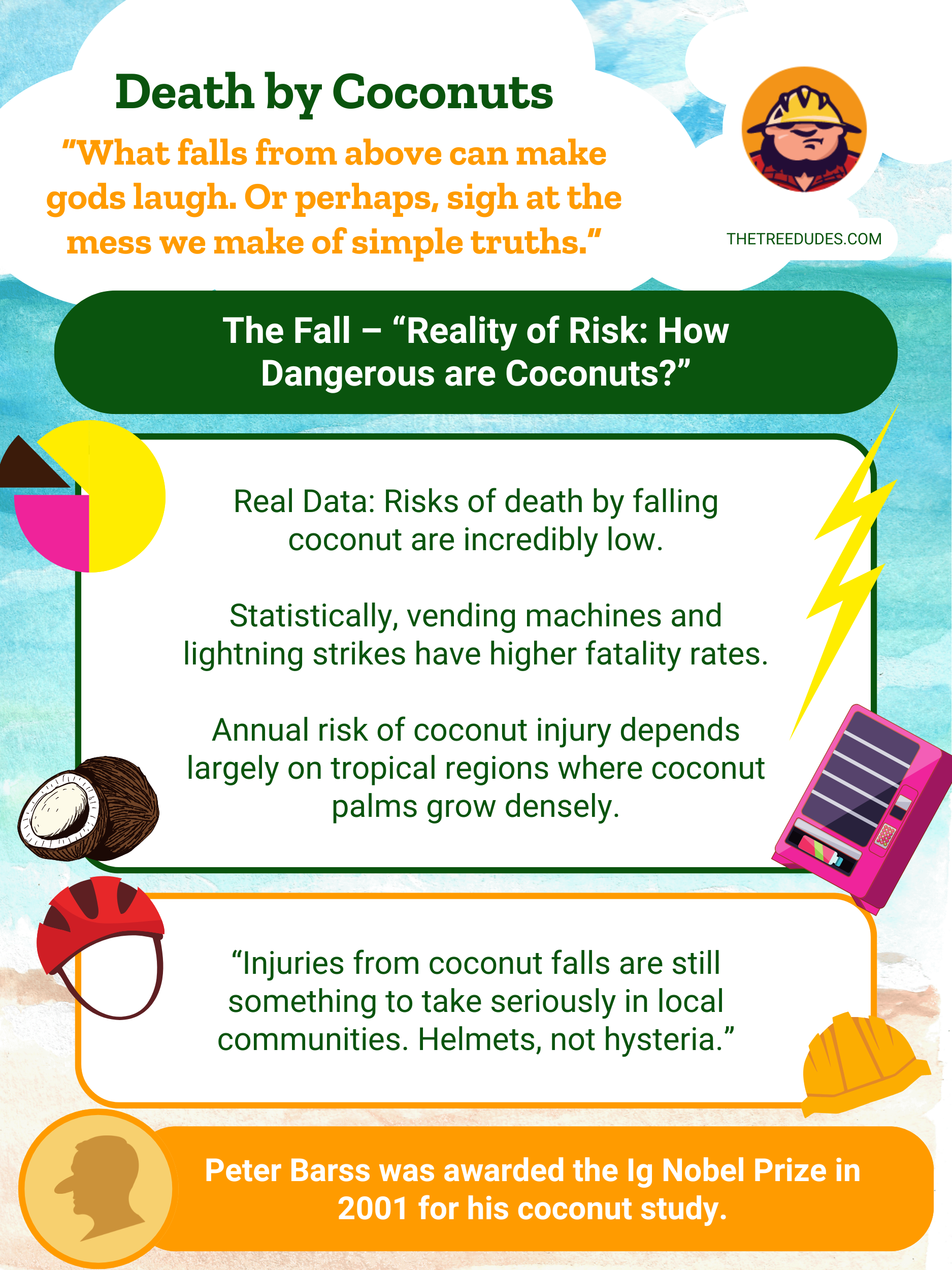
For this reason, palm trees are not planted near residential areas or busy streets. Where this is not possible, “Beware of falling coconuts” signs can often be found.
Real Life Example
As an example, let’s look at a particular case. The picture shows a scar from a fallen coconut in Sunny Isles, Florida. According to the doctor, if the man on whose leg the coconut fell had not been kickboxing for more than ten years, his leg would have been completely shattered. By the way, if you want your kids to have strong legs like that, bring them to MMA4KIDS!
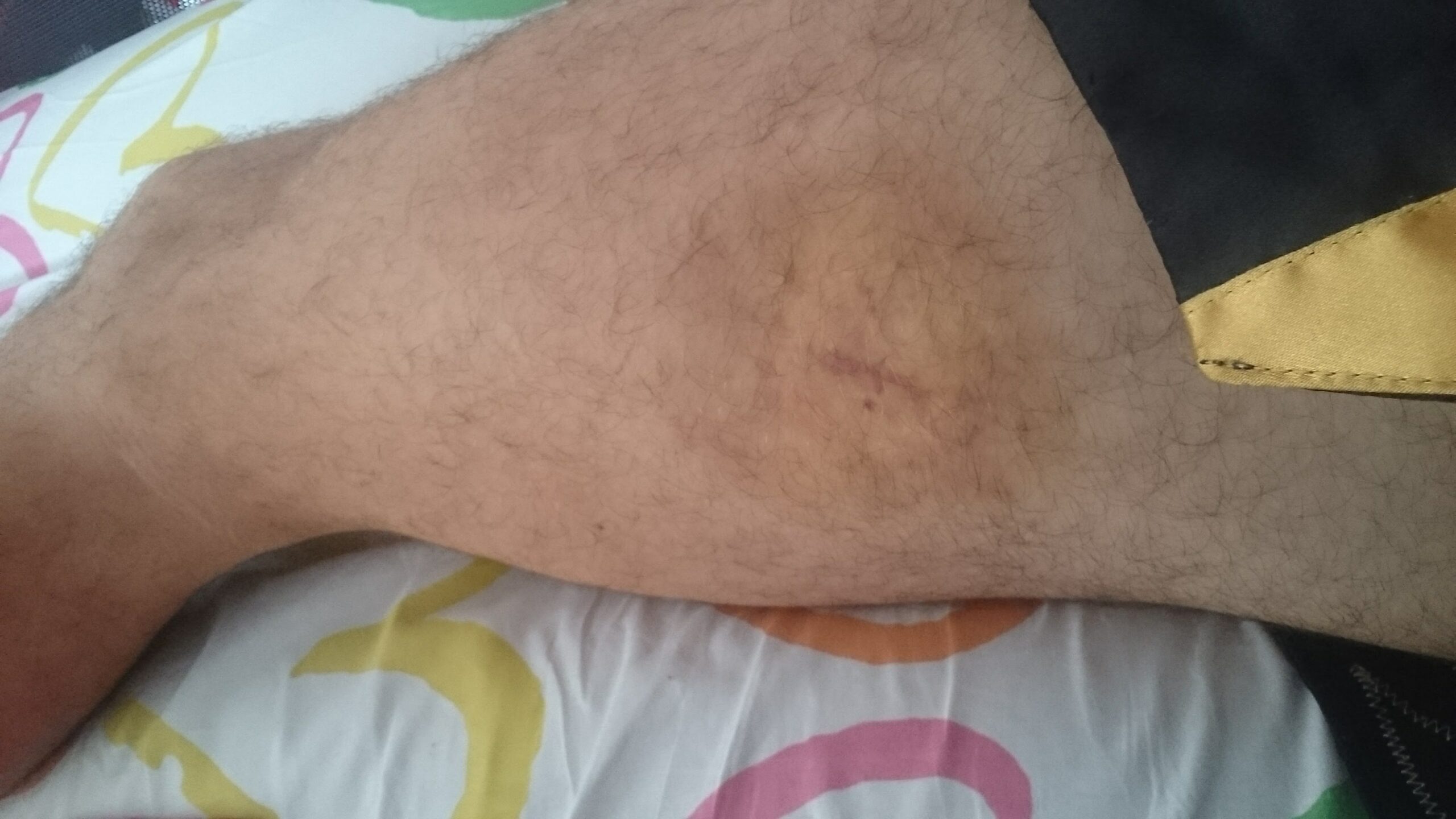
Fact: Coconuts falling from a tree are fatal and can cause death to humans or animals and can even totally destroy a car and even crack your sidewalk.
For the safety of people, vehicles, or infrastructure, coconuts are most often removed from palm trees. This is the best way to protect people. Not everyone reads the signs, and besides, palm trees are the most common tree species in Florida, each of which is impractical and pointless to cut down.
There is another important reason to remove coconuts. If a coconut growing on your property hurts or injures another person, they will sue you, which the court will completely uphold. This is especially important to keep in mind during hurricanes or rainy seasons, as coconuts can fall in bunches.
That’s why coconut removal is a fairly common service we provide.
Hiring Professionals for Safe Coconut Removal
You might now be wondering: how do you rid yourself of these unwanted hazards? There’s no shame in admitting that certain tasks are best left to the experts. This is not your typical do-it-yourself garden chore. If you’re dealing with tall palms, some can stretch as high as 80 feet, but you need experienced arborists equipped with the right tools. Consider the meticulous nature of their craft: they must scale the tree or use specialized lifts without damaging the tree’s trunk. Climbing spikes are often avoided because they scratch and wound the bark, leaving the palm susceptible to disease. Instead, workers rely on careful climbing techniques or mechanical lifts.
Professionals know how to identify ripeness. You see ripe coconuts, often ranging in color from yellow-green to dark brown, are the ones most likely to fall. Removing them before they drop is a preventive measure. Skilled workers carefully rope off the area below, ensuring that if a coconut slips, it won’t harm anyone. They must wield secateurs or specialized shears to prune each coconut individually, never cutting an entire bunch at once.
So, to keep your palms and property safe, hire a professional coconut crew to remove them for you.
How Are Coconuts Removed?
The first thing to remember: if the palm on your plot is very tall, do not try to cut the coconuts yourself! Such work should be entrusted to highly qualified professionals with extensive experience and using professional equipment.
Because it is quite difficult to work, especially at a high altitude.
- The first thing to do is to determine the ripeness of the coconut. Ripe coconuts fall off most often, so this period is the best time to remove them. The ripeness is determined by its color, from yellow-green to dark brown.
- The area around the palm is fenced off so that if the coconut falls, it will not cause damage to human health or property.
- A worker uses an elevator to get to the top of a palm tree. In some cases, climbing equipment is used, but not climbing spikes. They scratch the bark of the palm, which is very sensitive to this kind of damage.
- Coconuts grow in bunches, but it is not recommended to cut the whole bunch at once, this will cause the coconuts to fall out of control and may cause damage. Cut one coconut from the bunch at a time, holding it in place with your hand. Coconuts should be cut with secateurs or scissors and only on very rare occasions should they be sawn off.
- The blade of the secateurs is held just above the top of the coconut, and then the stem is cut off.
- When cutting the coconut, it is important not to damage the leaves. The palm is very sensitive to pruning and, unlike other trees, grows better the less it is cut. You can cut back brown or yellow leaves because they are already dead, but not the green ones.
The Practical Side of Coconut Maintenance
On a strictly practical level, let’s detail a few steps you might encourage professionals to follow:
- Assessment: Professionals assess the palm to identify ripe coconuts and evaluate the stability of branches and leaves. They consider the height, the angle of growth, and any obstacles below.
- Preparation: They cordon off the area beneath the tree. This ensures no one accidentally wanders into the drop zone.
- Safe Climbing Techniques: No climbing spikes that would harm the tree. Instead, ropes, harnesses, and cherry pickers ensure access.
- Individual Removal: Coconuts are cut one by one, never in bunches, maintaining total control. The goal is to prevent sudden, uncontrolled falls.
- Minimal Impact on the Tree: Only dead or discolored leaves are removed. The professionals cherish the tree’s health, just as you cherish your own.
Through these steps, the service becomes more than just a mechanical task. It’s an exercise in subtlety, restraint, and respect—qualities you hold dear.
Let us remind you again that coconut removal is a difficult and dangerous job that requires skill and special equipment. Careless actions can lead to damage and harm to people’s health. Therefore, always contact professionals for this work.