






When winter comes to Florida, it’s easy to overlook this season’s impact on your property’s landscape, especially your trees. Florida winters are milder than in many parts of the country, but that doesn’t mean they’re maintenance-free. Winter is the ideal time to give your trees, especially hardwoods like oak, mahogany, and other Florida natives, the attention they deserve to ensure their health, longevity, and appeal.
In this guide, we’ll cover everything you need to know about winter tree maintenance, from the benefits of a winter trim to tips for keeping pests and diseases at bay. Learn why calling a professional tree trimming company can make all the difference in preserving your landscape’s health and aesthetic appeal.
Why Winter Tree Maintenance Is Essential in Florida
When most people think of winter, they envision leafless trees and dormancy. While Florida’s trees don’t experience the same deep winter dormancy as those in northern climates, they benefit from a seasonal rest period that makes winter the perfect time for pruning and trimming.
Preserve the Look of Your Property
Strategic winter trimming can transform your landscape’s aesthetic. Hardwood trees, such as oaks and mahoganies, often grow new shoots and foliage each spring. Pruning in winter prevents excess growth from overwhelming your property’s aesthetic, maintaining a balanced and polished look year-round.
Regular trimming prevents the “wild” look that unmanaged branches create and keeps your trees in perfect shape to highlight the natural beauty of your property.
Less Stress for Trees
Unlike spring or summer, when trees are actively growing, winter is a season of slower metabolic rates for trees, particularly hardwoods. This slower pace means trimming during this period is less taxing on the trees, allowing them to heal and regenerate more efficiently before the growing season.
Pruning during winter minimizes the risk of shock or stress to the tree, setting it up for healthier growth in the coming months.
Preventing Pests and Diseases with a Winter Trim
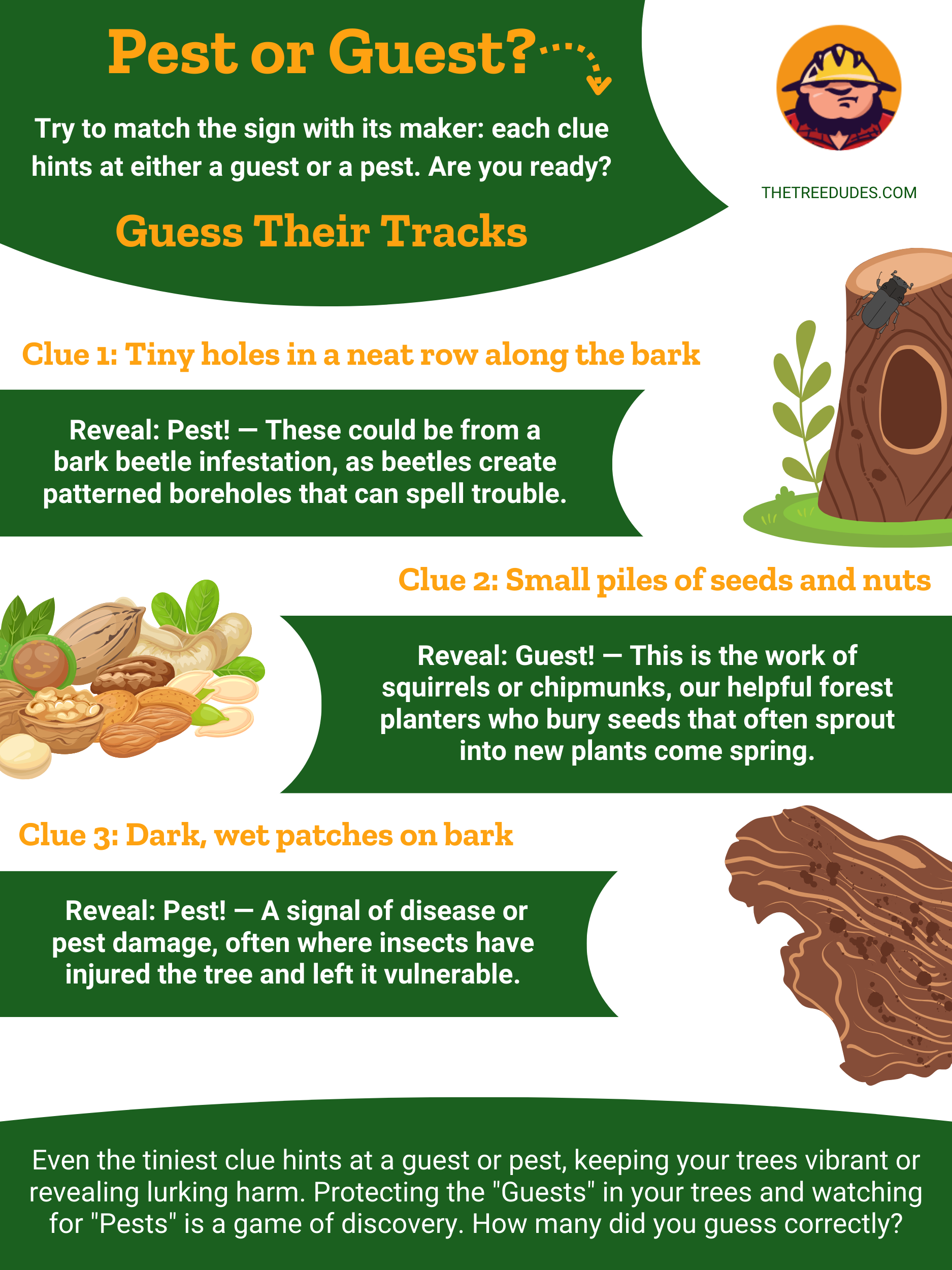
Florida’s warm weather, even in winter, is awesome but comes with hiccups. You get to enjoy luscious green plants in your yard almost all year long! However, this paradise isn’t without its trials, specifically, the pests and diseases that love to make a home of your precious trees. But don’t stress! With a little planning and a fun winter trim, you can protect your trees from damage.
Florida’s Seasonal Quirks
By understanding the subtleties of Florida’s climate and how it influences pests and diseases, you’ll be better equipped to nurture your trees with care that reflects the season’s unique qualities.
Reduced Pest Activity
When get a professional to trim your trees, they start giving off amazing smells and oozing sap, which makes it super attractive to insects. Moths, borers, and beetles flock to the tree in droves, drawn in by the alluring aroma of fresh wood and the promise of a sweet feast. This attraction is especially strong in Florida’s spring and summer when insect populations peak.
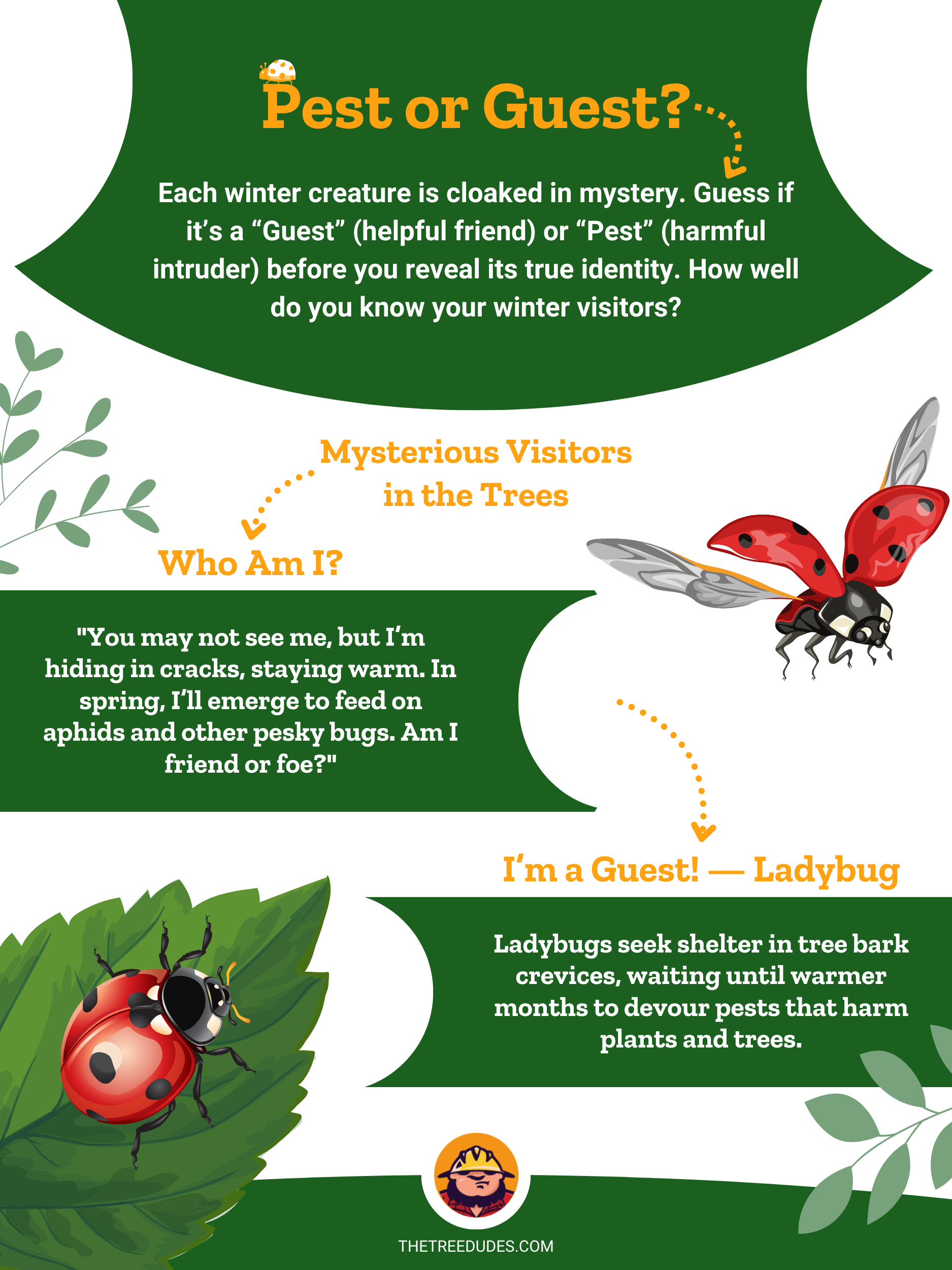
However, winter introduces a natural slowdown. With cooler temperatures, insects are less active, minimizing the chance of fresh cuts becoming open invitations for malicious pest infestations. This quieter time reduces stress on your trees, making winter trimming a protective strategy that lets you stay one step ahead of these pests.
A Shield Against Disease
Just as pests are drawn to the fresh cuts of newly trimmed trees, so too are diseases that thrive in warmth and moisture. Florida’s warm climate and frequent rains provide ideal conditions for fungi, bacteria, and other pathogens that can threaten your trees. Trimming during the winter when the air is drier and cooler curbs the spread of these evil agents.
Fresh cuts in cooler weather are less susceptible to infection, protecting your trees from diseases that can stunt their growth or, in severe cases, lead to tree death. This seasonal strategy gives your trees the advantage of remaining resilient and disease-free.
Protecting Hardwood Trees from Pests
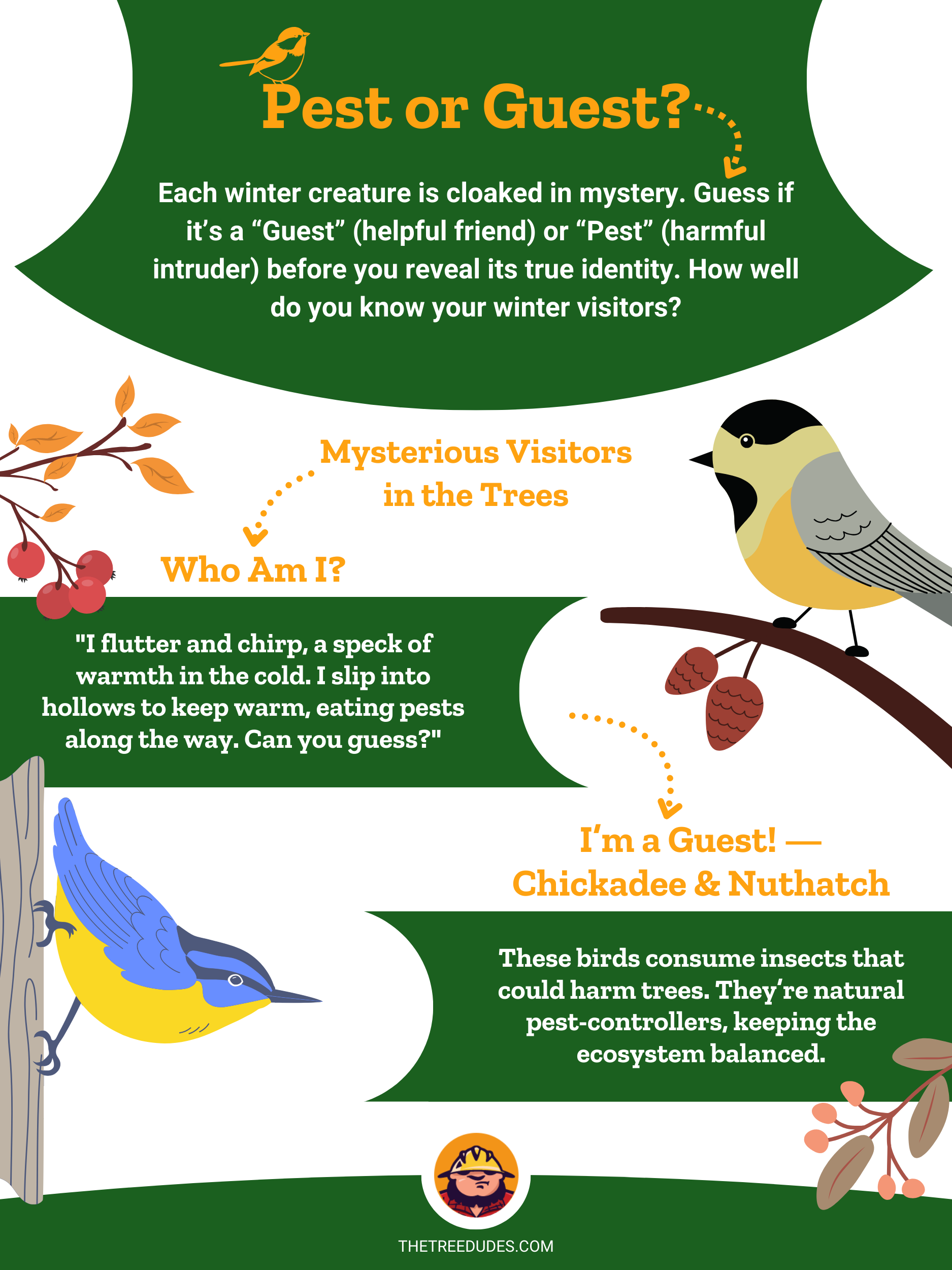
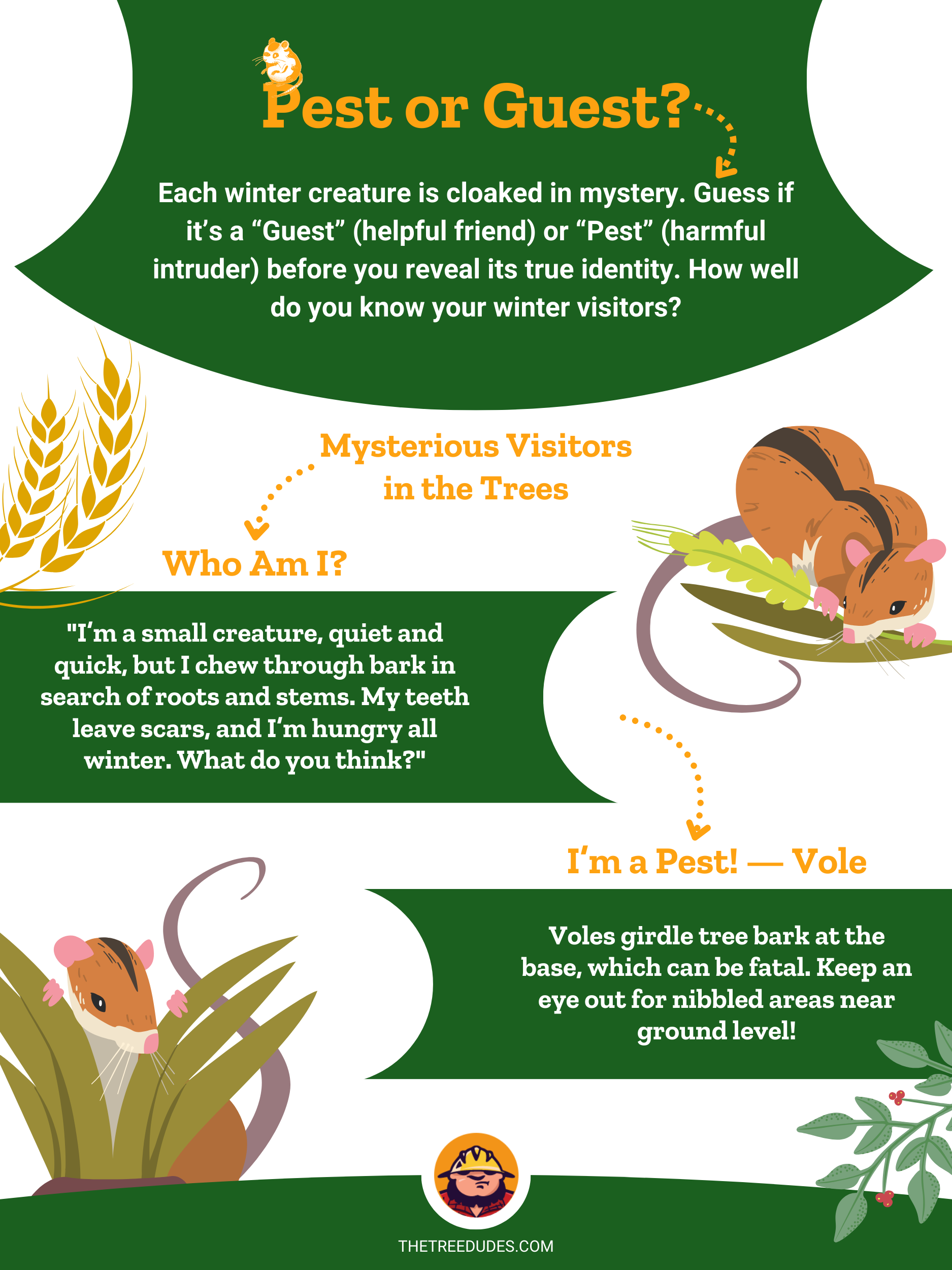
Certain trees in Florida, like oaks and mahoganies, are particularly susceptible to pests. With their stunning bark and beautiful grain, these captivating hardwoods create a perfect haven for insects on the hunt for a cozy nest and a tasty snack.
Left unchecked, these infestations can compromise the health of your trees and the aesthetics of your landscape.
Your Hardwood Tree’s Best Defense
Winter provides a natural shield for hardwood trees, as it slows the life cycles of many pests that threaten these species.
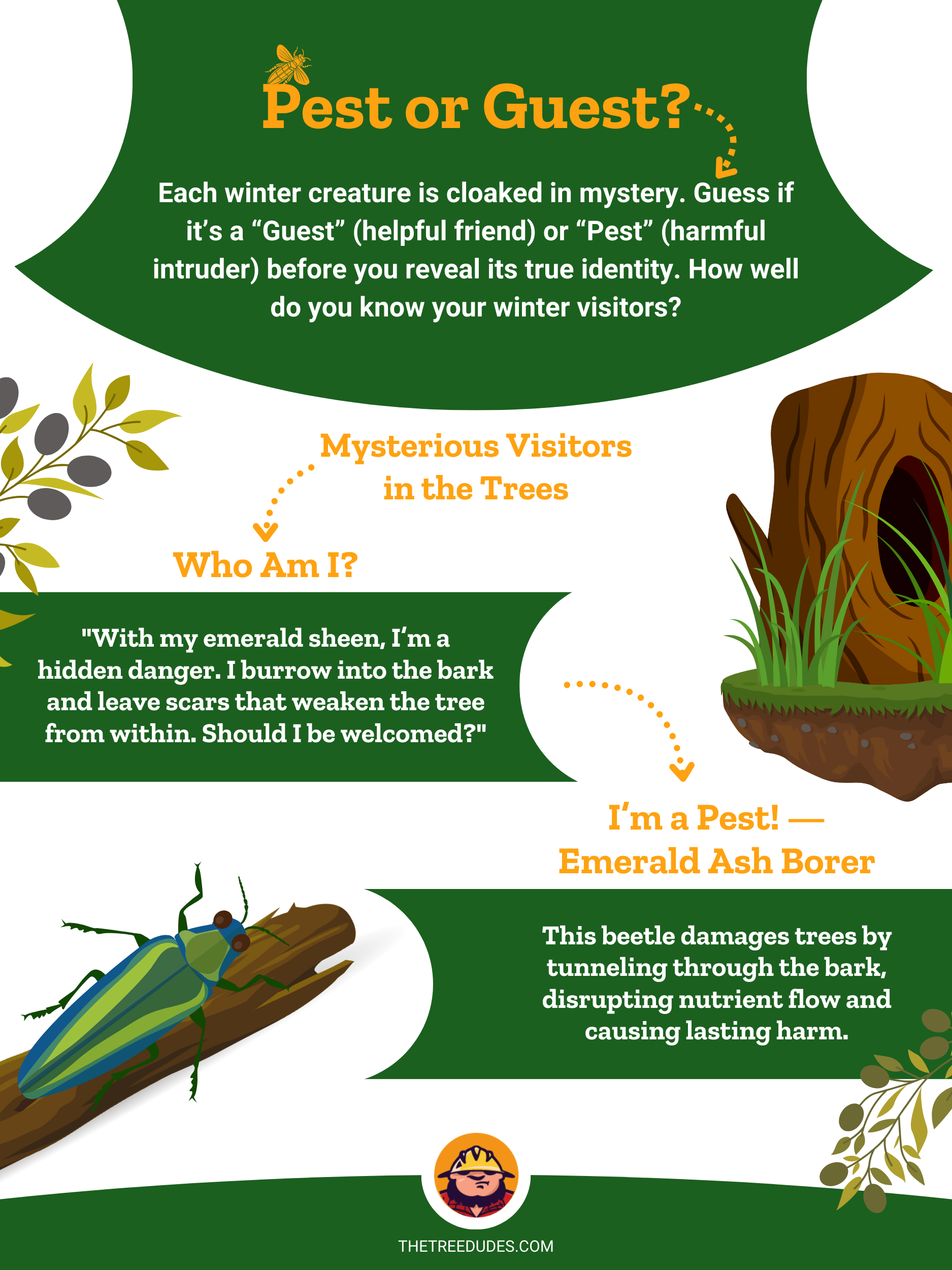
Borers, beetles, and other insects that typically infest hardwoods are less active in winter, giving your trees a chance to heal and strengthen without the added pressure of pest attacks. By trimming these trees during this season, you decrease the likelihood of attracting these pests to the exposed branches.
Careful Timing
With winter trimming, your hardwood trees have the advantage of a cooler, less appealing environment for pests. These insects are far less likely to nest in freshly pruned areas, allowing your trees to remain pest-free and flourish when spring arrives.
Planning for a Professional Trim
While DIY trimming can be effective for minor upkeep, enlisting a professional ensures your trees receive a precise and balanced cut. Skilled arborists bring a trained eye and specialized tools to handle more complex trimming tasks.
Here’s why professional trimming is worth considering:
Protecting the Integrity of Hardwoods
Hardwood trees, such as oaks and maples, require careful trimming to avoid stunting growth. Professionals understand the specific needs of different tree species and tailor their approach accordingly.
Advantages of Hardwood Tree Trimming in Florida Winters
Hardwood trees are pretty impressive and have a lot of history behind them. They’re a signature part of Florida’s scenery and landscape. From the towering oaks that reach for the sky to the stunning mahogany, these magnificent trees not only enhance the landscape but also provide incredible ecological advantages. Taking care of those beautiful hardwood trees in Florida’s scorching heat and weather requires a solid game plan, especially with winter coming up!
Reduced Growth Cycle Impact
Hardwood trees have specific growth cycles that differ significantly from softwoods or other tree varieties. During the winter, hardwoods enter a dormancy period, which reduces the amount of water and nutrients moving through their branches and leaves. This downtime helps reduce the chance of shock or slow growth that could happen if you trim them when they’re actively growing.
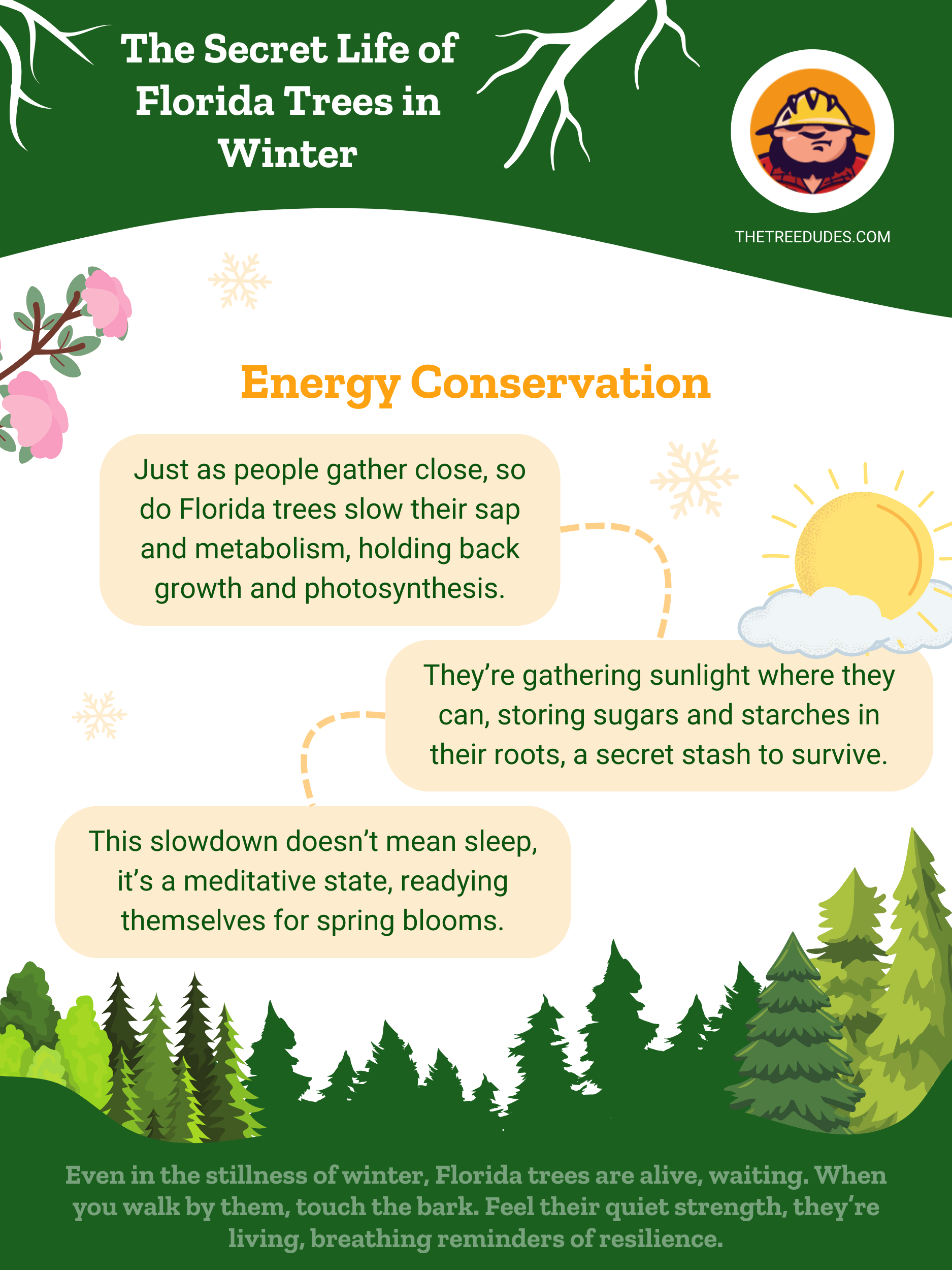
Winter trimming allows hardwood trees to heal and prepare for spring. Unlike trimming in warmer months, winter cuts have less impact on the trees’ energy distribution, letting them focus on stronger, more uniform growth once spring arrives.
Trimming during winter also allows for more precise shaping. You can remove overgrowth and shape the branches with greater control, as the tree’s dormant state keeps regrowth in check. This means there are fewer unexpected growth spurts, which results in a smoother and more appealing shape when it starts growing again.
Disease Prevention
Florida’s hardwoods are particularly susceptible to diseases and fungi that thrive in humid environments. Winter trimming helps create an inhospitable environment for these pathogens, making it an essential preventative step.
Cutting branches creates open wounds, a prime entry point for diseases like oak wilt, leaf spot, and fungal infections. During winter, cooler temperatures and lower humidity slow the spread and growth of pathogens, reducing the likelihood of infections taking root in fresh cuts.
Winter trimming is great because it helps improve airflow in the tree canopy, which is important for keeping hardwoods healthy. Increased airflow minimizes the potential for damp, stagnant areas that fungi and bacteria love, creating a healthier environment for the tree.
Greater Resilience Against Florida’s Challenging Climate
Florida’s climate presents unique challenges for hardwood trees. With intense sunlight, high humidity, and frequent storms, the environment can place significant stress on these trees. Winter trimming gets plants ready for the upcoming seasons, helping them toughen up for Florida’s wild weather.
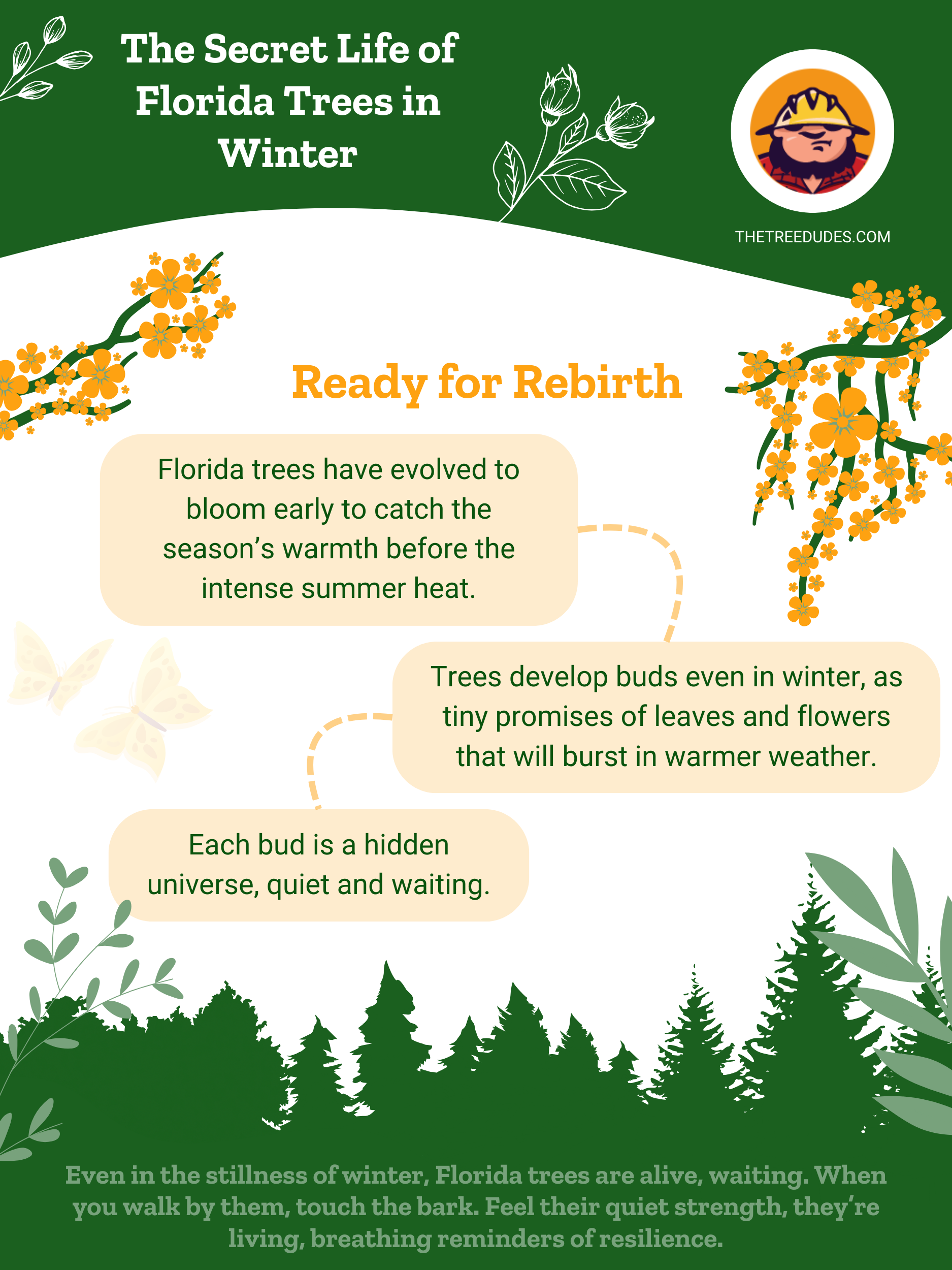
By removing weak, overgrown, or damaged branches in the winter, you allow the tree to concentrate its resources on growing stronger branches. This is especially beneficial for withstanding Florida’s summer storms, where high winds can wreak havoc on trees with weak limbs.
Exuberant growth can lead to uneven exposure to sunlight, making certain branches and areas of the trunk more susceptible to sunscald and heat stress. If you prune your tree in winter, it helps keep the branches evenly spaced. This way, the more delicate parts are better protected from harsh sunlight when summer rolls around.
Environmental Impact
Trimming hardwood trees in winter isn’t just about health and aesthetics; it’s also about creating a healthier ecosystem. Thoughtful, seasonal trimming practices can help these trees play their role in supporting wildlife and maintaining biodiversity.
Florida’s hardwood trees are vibrant ecosystems teeming with life! They provide essential havens for countless bird species, buzzing insects, and playful small mammals. These towering giants not only grace the landscape but also create a bustling world of wildlife that thrives beneath their leafy canopies.
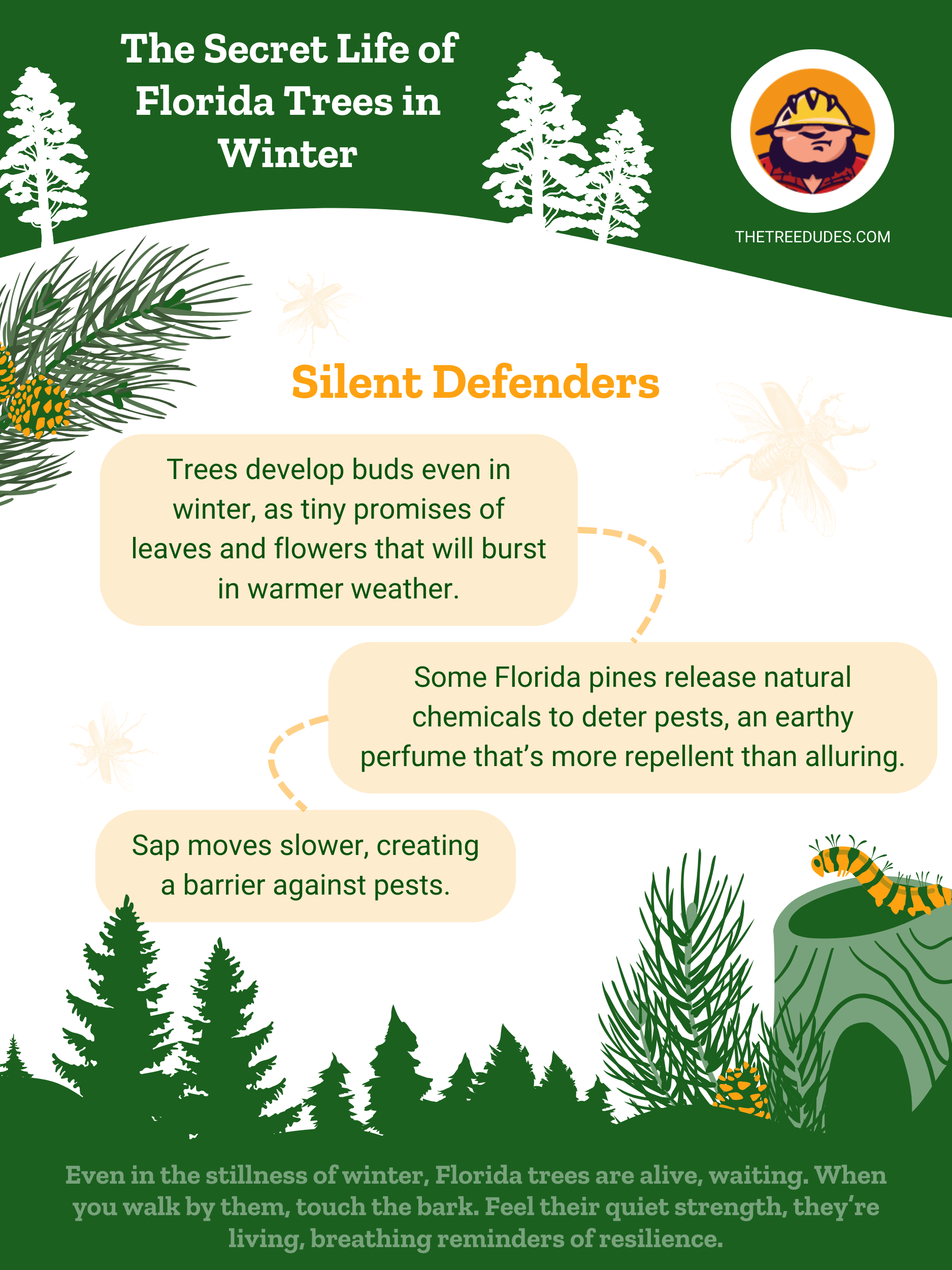
By carefully trimming trees during the winter, you allow these habitats to thrive. Dead or diseased branches, which are removed during pruning, often serve no purpose to wildlife, while healthy branches provide shelter and food sources for the ecosystem.
Why Expert Tree Trimming Services Are Worth the Investment
The trees are pretty amazing! They just grow quietly and steadily, and they support so much life all around them. Plus, they look really beautiful, adding so much to our surroundings. But while trees do a great job thriving on their own, sometimes, they need a little help to reach their full potential, especially in urban settings or residential landscapes like those of Florida.
This is where expert tree trimming services come in, a team of skilled arborists dedicated to helping trees flourish through careful, science-backed techniques. Let’s take a look at why getting professional tree-trimming services is not just a good idea, but important for your property and your peace of mind.
Understanding the Unique Needs of Different Trees
Trees are as individual as people, with unique needs depending on their species, size, age, and health condition. An oak tree, for instance, will respond differently to trimming than a pine tree.
A tree service brings an intimate knowledge of various tree species, especially those that thrive in Florida’s specific climate. Their team dives deep into the world of each tree, meticulously evaluating every detail to uncover the ultimate trimming strategy! They consider everything from unique growth patterns to vulnerabilities to pests, ensuring that each tree receives the perfect care it deserves.
Balancing Growth with Aesthetic Appeal
A beautifully trimmed tree doesn’t just enhance your yard, it complements the entire landscape. Expert trimmers understand how to balance the natural beauty of a tree with its practical needs. They trim trees to help them grow better while keeping the surrounding area in mind. The goal is to make your yard look nice without hurting the tree’s health.
More Than Just Trimming Services
In addition to trimming, we provide a full range of tree care services, including planting, disease treatment, and removal when necessary. You can count on us to take care of your trees from top to bottom. We handle everything with skill and care, so you know any problem will be tackled just right.
Why DIY Tree Trimming Can Be Risky
While it’s tempting to take on tree trimming as a DIY project, there are substantial risks involved, both to yourself and to the tree.
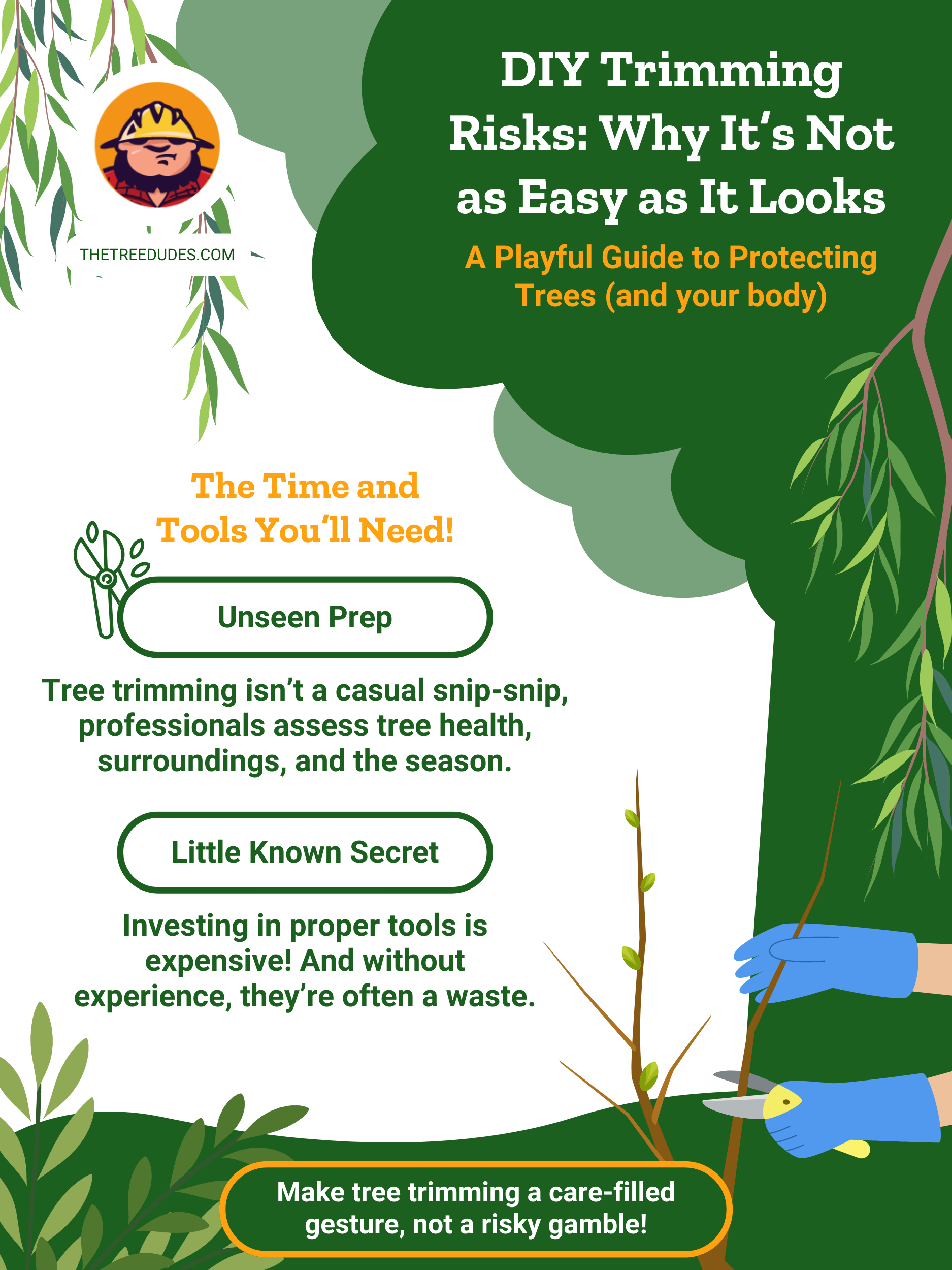
Trimming without proper knowledge or tools can lead to accidental harm to the tree or even create safety hazards.
Potential Harm to the Tree
Incorrect trimming can cause long-term damage to a tree.
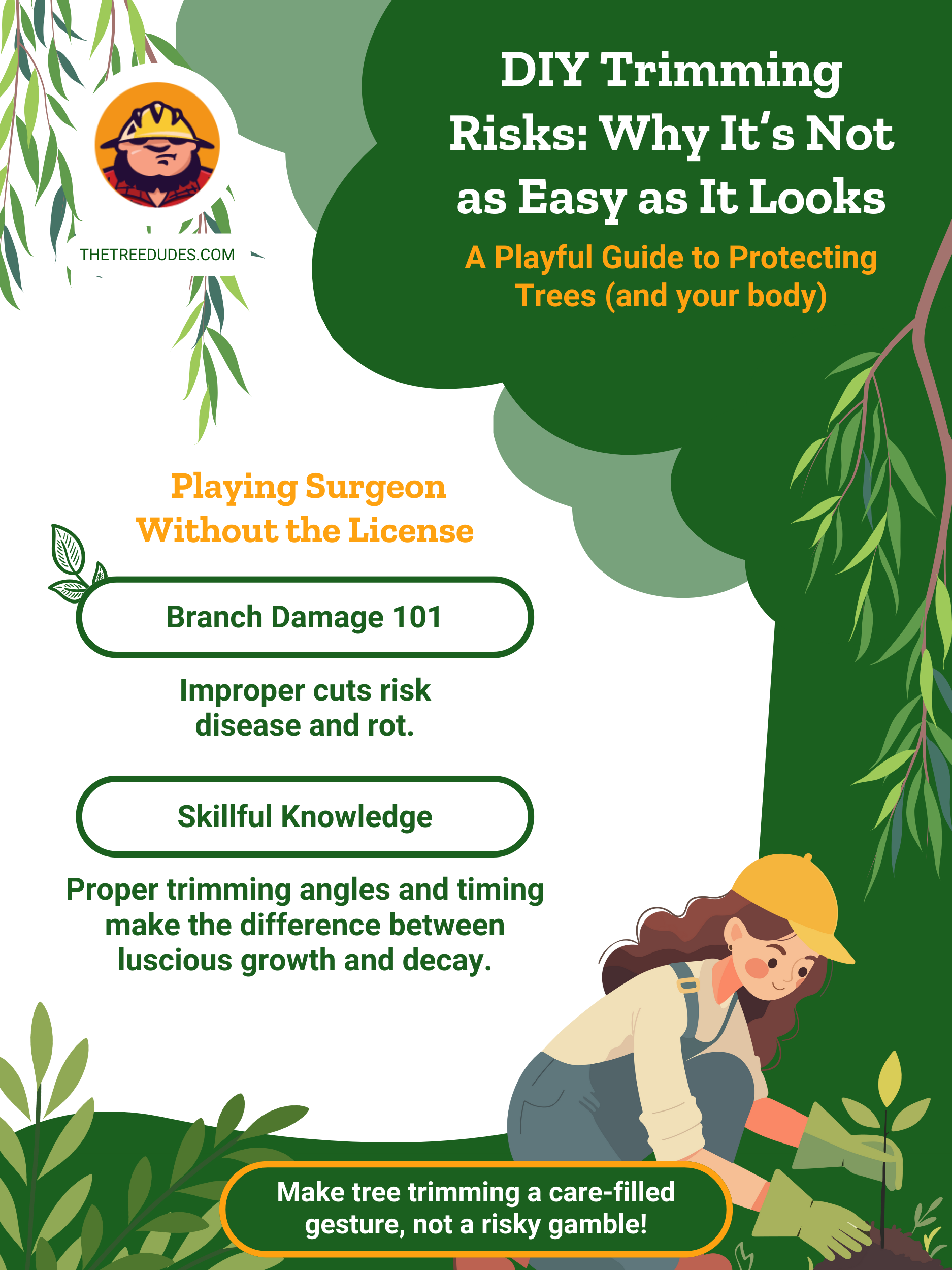
Chopping branches too short, taking off too many leaves, or cutting at weird angles can mess up a tree’s chances of healing.
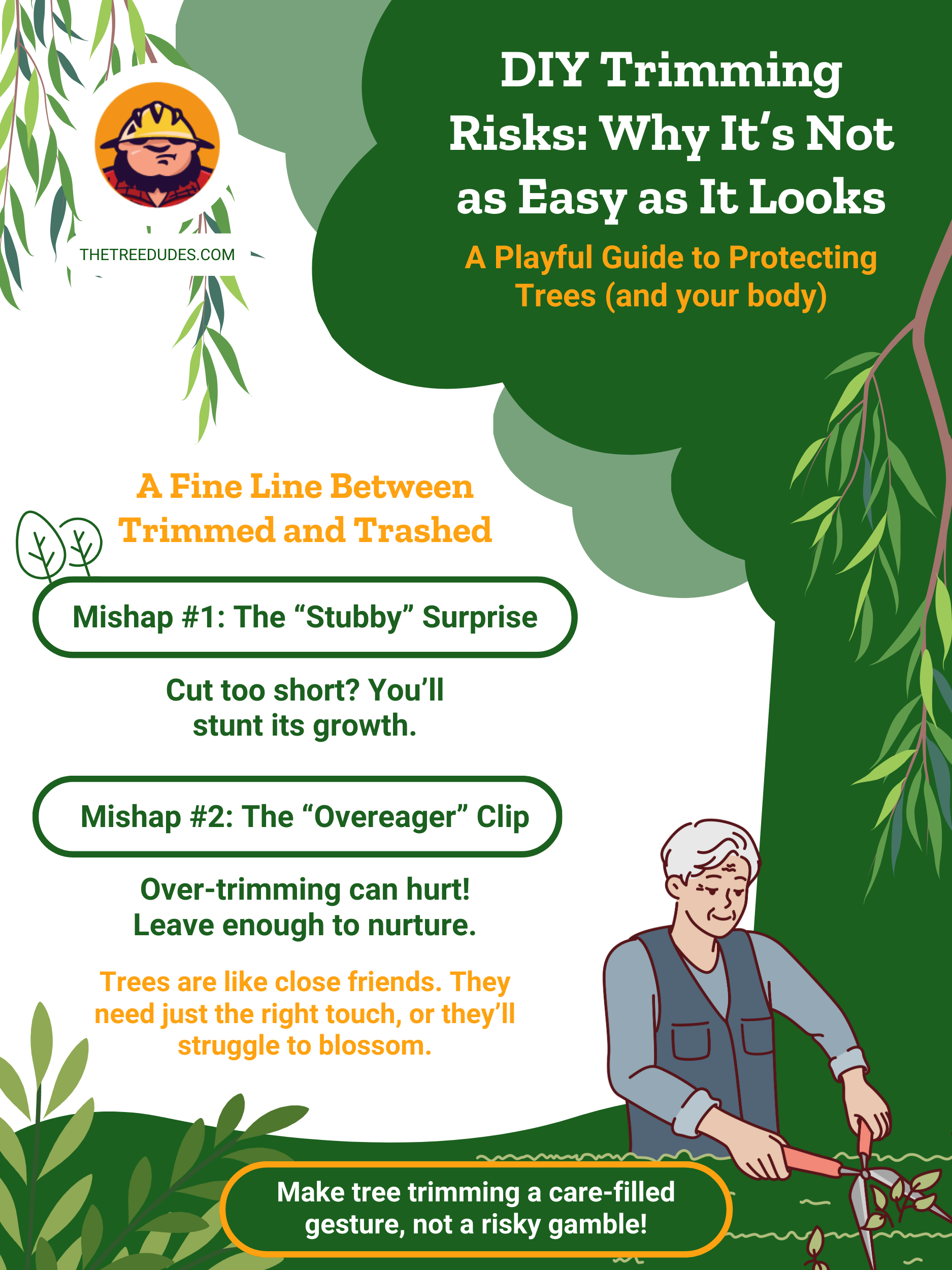
This opens it up to disease, pest infestations, and even death. Our expert arborists know precisely how much to trim and where to cut to promote recovery and growth, preserving the tree’s health and beauty.
Safety Hazards for DIYers
Tree trimming is more dangerous than many realize. From dealing with tall ladders to managing heavy branches, the task requires skill, strength, and caution.
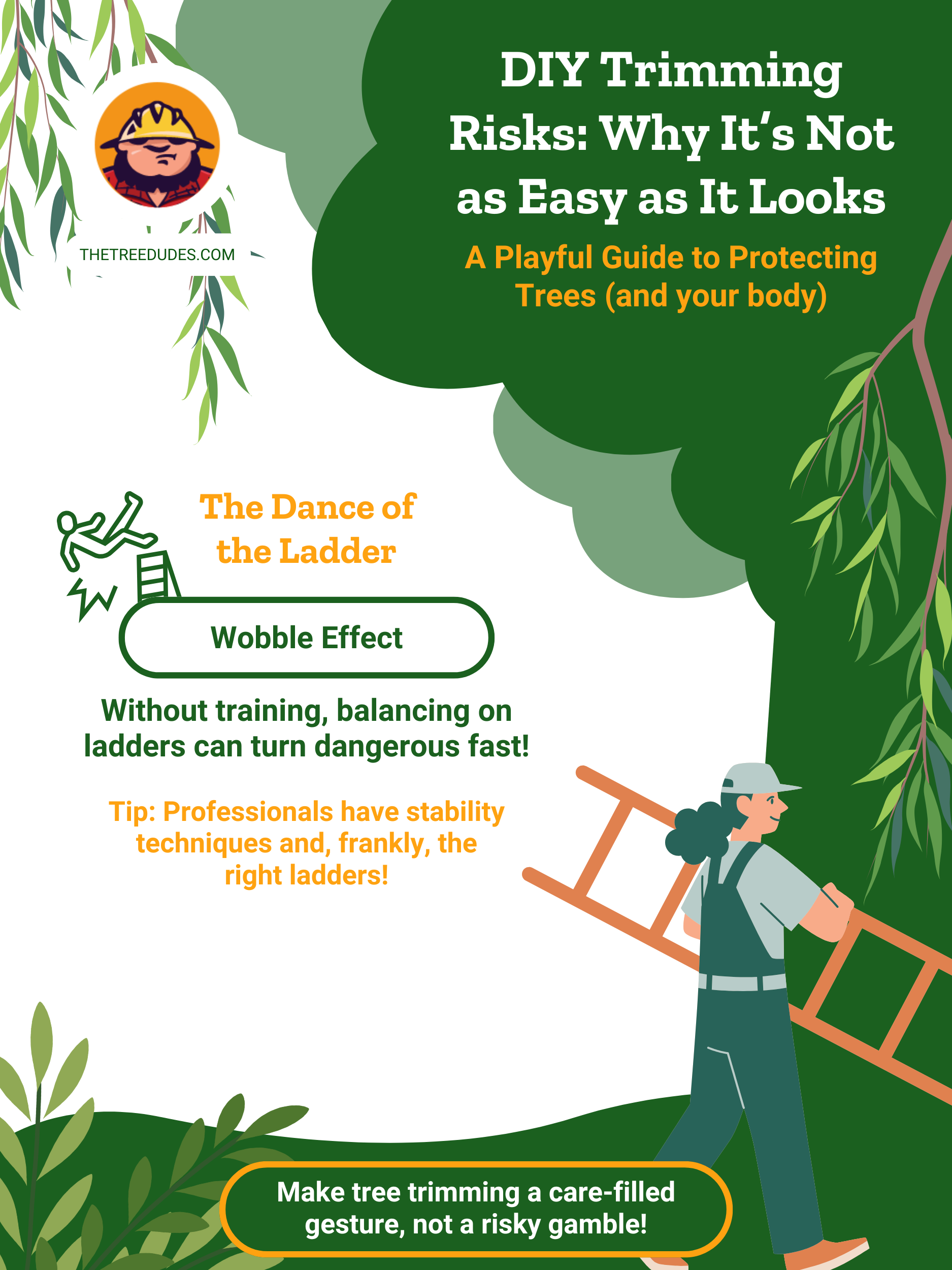
Trained professionals have the experience, tools, and safety protocols to manage these risks, ensuring a job well done without endangering themselves or anyone else on the property.