





Trees are everywhere in Florida. If you have ever wondered who keeps your neighborhood oaks, palms, and ficus looking so good (or, just as importantly, so safe), the answer is simple: certified arborists. These professionals do not just show up with chainsaws, they arrive with years of study, legal credentials, and a responsibility to both you and the ecosystem.
Why does this matter? Because not all “tree dudes” are created equal. When you hire a certified arborist, you are hiring someone who understands the science of trees, the intricacies of South Florida’s climate, and the legal standards that keep your property and your neighborhood in the clear. Certified arborists do not just chop branches, they identify tree diseases, manage risks, and ensure trees remain healthy for years to come.
Why Every Property Owner Should Care About Tree Management
There are places in the world where trees are simply a background feature: nice and controlled. In Florida, trees are not just hanging around, they are everywhere, part of every street, backyard, and neighborhood.
Trees in Florida are great for giving you shade, helping lower your energy costs, and making your place look even better. They are home to birds, squirrels, and, let’s be honest, a few less-welcome critters, too. But these trees also demand attention: pruning, inspection, even legal paperwork. Ignore them, and you will quickly learn how fast a “little tree problem” can become a property emergency.
If you have ever wondered why the word “arborist” pops up so often in Florida real estate discussions, here is the secret: tree care is way more than looking good. Trees can keep your home safe and your neighborhood pleasant. Florida trees shoot up fast, and it can be a bit surprising sometimes. Thanks to our subtropical rain and sunshine, a sapling can turn into a sprawling, shade-throwing monster in just a few years.
Florida and Tree Rules
Here is the part new homeowners rarely expect: Florida has a thick book of tree ordinances, regulations, and “best practices,” all designed to balance nature and neighborhood safety. These rules help keep our neighborhoods looking great and feeling safe. The aim? Protecting native species, managing invasive threats, and preventing the kind of property damage that can turn a backyard dream into a disaster.
Arboriculture in the Age of Regulation
Not every person with a chainsaw and a ladder is an arborist. In today’s Florida, arboriculture is a regulated profession. That means training, certification, and ongoing education, not just a pickup truck and a “can-do” attitude.
What Exactly Is a Certified Arborist?
A certified arborist is a highly trained professional who has passed rigorous exams and stays up to date with the latest in tree science, safety, and regulations. The International Society of Arboriculture (ISA) plays a big role in defining the standards for certification in the arboriculture industry. Their guidelines ensure a high level of expertise among professionals and promote best practices in tree care and management.
Here is what makes them different from the average tree service:
Safety Protocols
Tree work is dangerous, especially in a state known for unpredictable storms and dense vegetation. Certified arborists follow strict safety protocols for every job. This will not only guarantee their safety but also the safety of your pets, family, home, and even neighbors. Florida law has clear safety requirements for tree services, and professional arborists make sure every box is checked.
Legal Compliance and Permitting
Many trees are protected by city or county ordinances, and removing or even trimming the wrong species without the proper permit can result in fines that can ruin you financially. Certified arborists stay on top of local regulations, handle the paperwork, and ensure the book does every job. You get peace of mind, knowing your property improvements won’t come back to haunt you or your family in the future.
Why Properties in Florida Demand Professional Arborist Services
In Florida, trees are a force to be reckoned with. The difference between a luscious, safe property and a landscape of costly headaches? Simple: having a professional arborist working for you.
Storm Season
Florida’s weather does not do “mild.” Every summer brings its mix of sudden storms and major hurricanes, and each one is different from the last. And when the wind starts howling, it is your trees, oaks, palms, banyans, and those notorious Australian pines that become both shield and potential hazard.
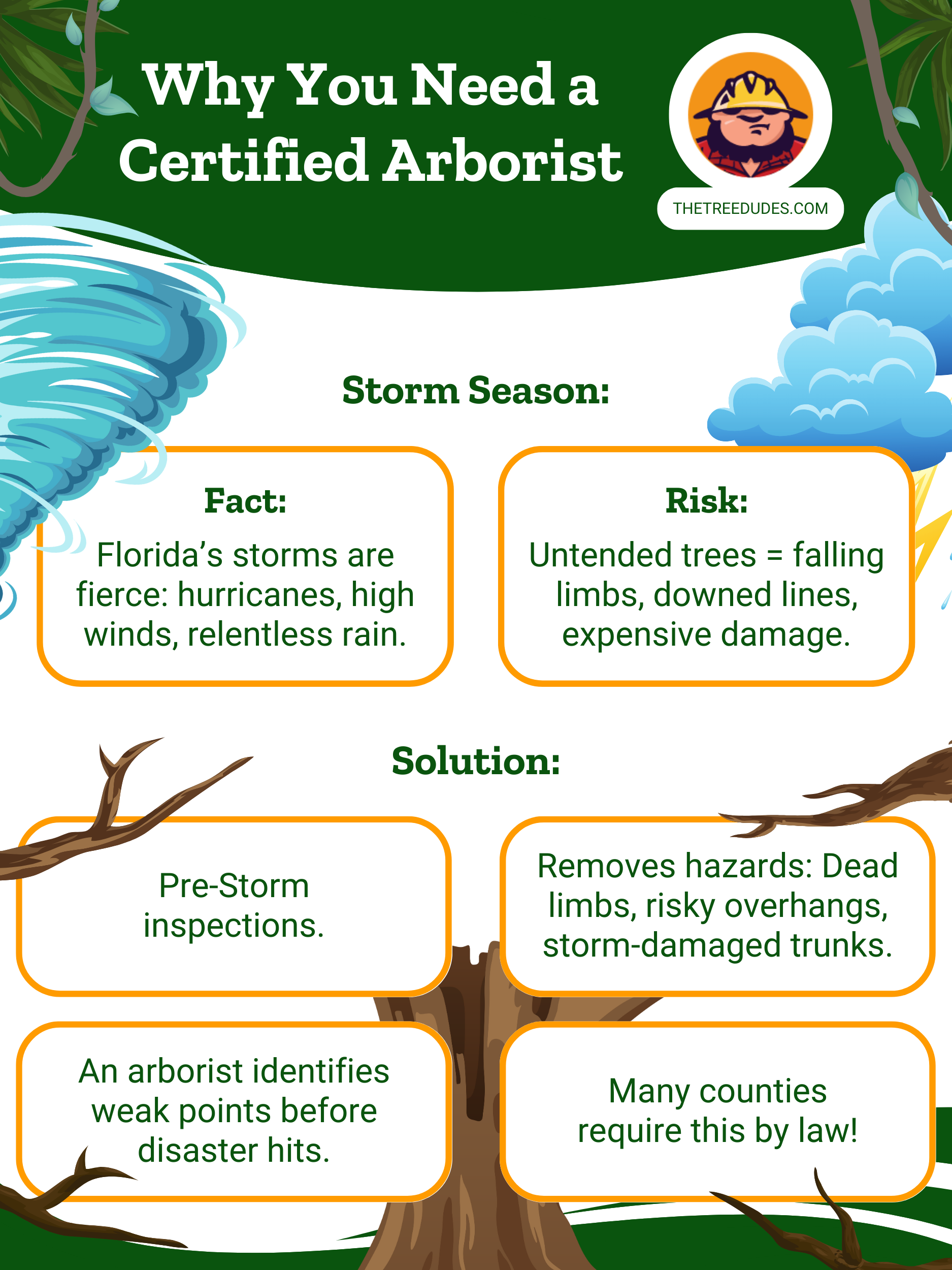
So, what makes a certified arborist indispensable, especially during storm season?
Pre-Storm Inspections
An experienced arborist knows what to look for before the first raindrop falls. They identify weakened limbs, hidden rot, and early signs of disease that could turn a healthy-looking tree into a liability. Strategic pruning and the removal of hazardous branches, especially those threatening roofs or power lines, can prevent thousands in damage. In many Florida counties, city codes even require regular tree maintenance for storm preparedness.
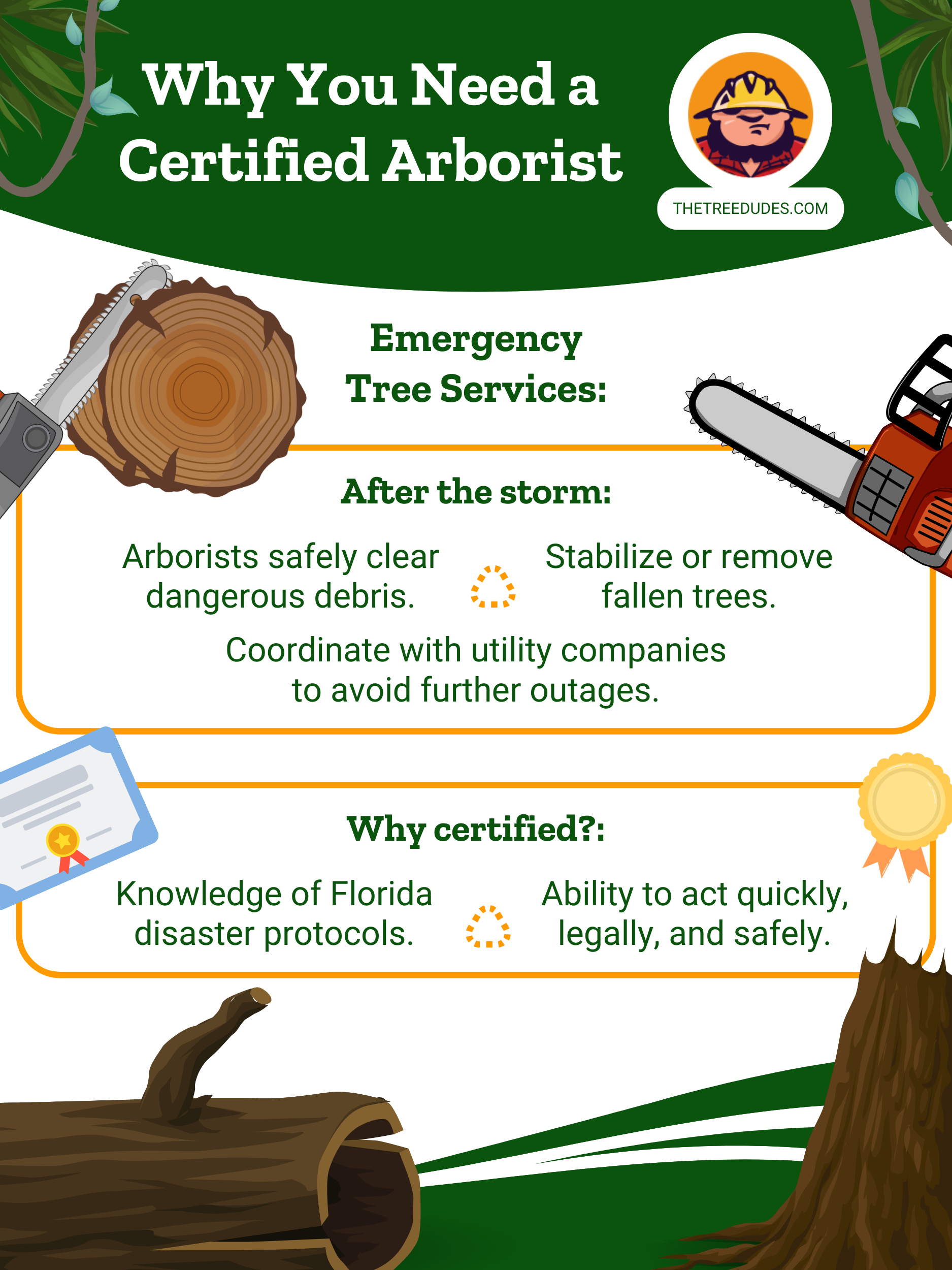
Emergency Tree Services
After the winds die down, the job is not over. Arborists are often among the first on the scene, clearing dangerous debris, securing unstable trees, and making your property safe to re-enter. Many coordinate directly with utility companies to manage downed lines and prevent further outages.
In Florida, emergency tree removal is governed by local or state disaster protocols, which a certified arborist will know inside and out.
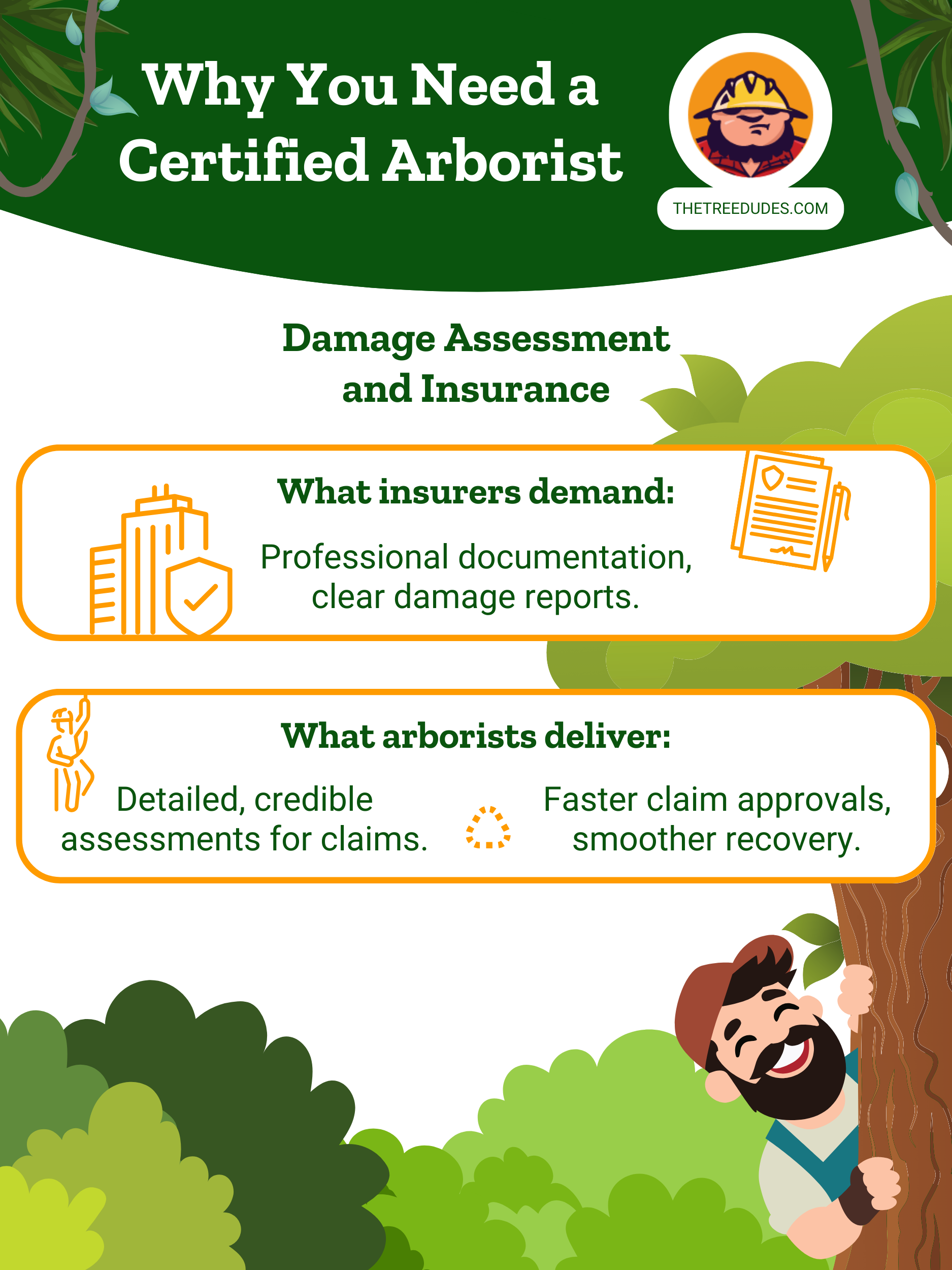
Damage Assessment Reports for Insurance
Insurance companies want proof, paperwork, and professional documentation. Certified arborists provide detailed damage assessment reports, essential for filing successful claims after a storm.
Their expertise helps you get the compensation you deserve and speeds up the path to recovery.
Growth Management
It is tempting to let every sapling grow, but in Florida, unchecked growth can lead to cracked driveways, clogged pipes, and expensive property damage.
Pruning and Maintenance
Routine pruning does not just keep trees looking sharp, it prevents weak limbs from becoming hazards and improves overall tree health. In many Florida municipalities, improper pruning of trees can result in fines or violations. Professional arborists know how to keep your landscape legal.
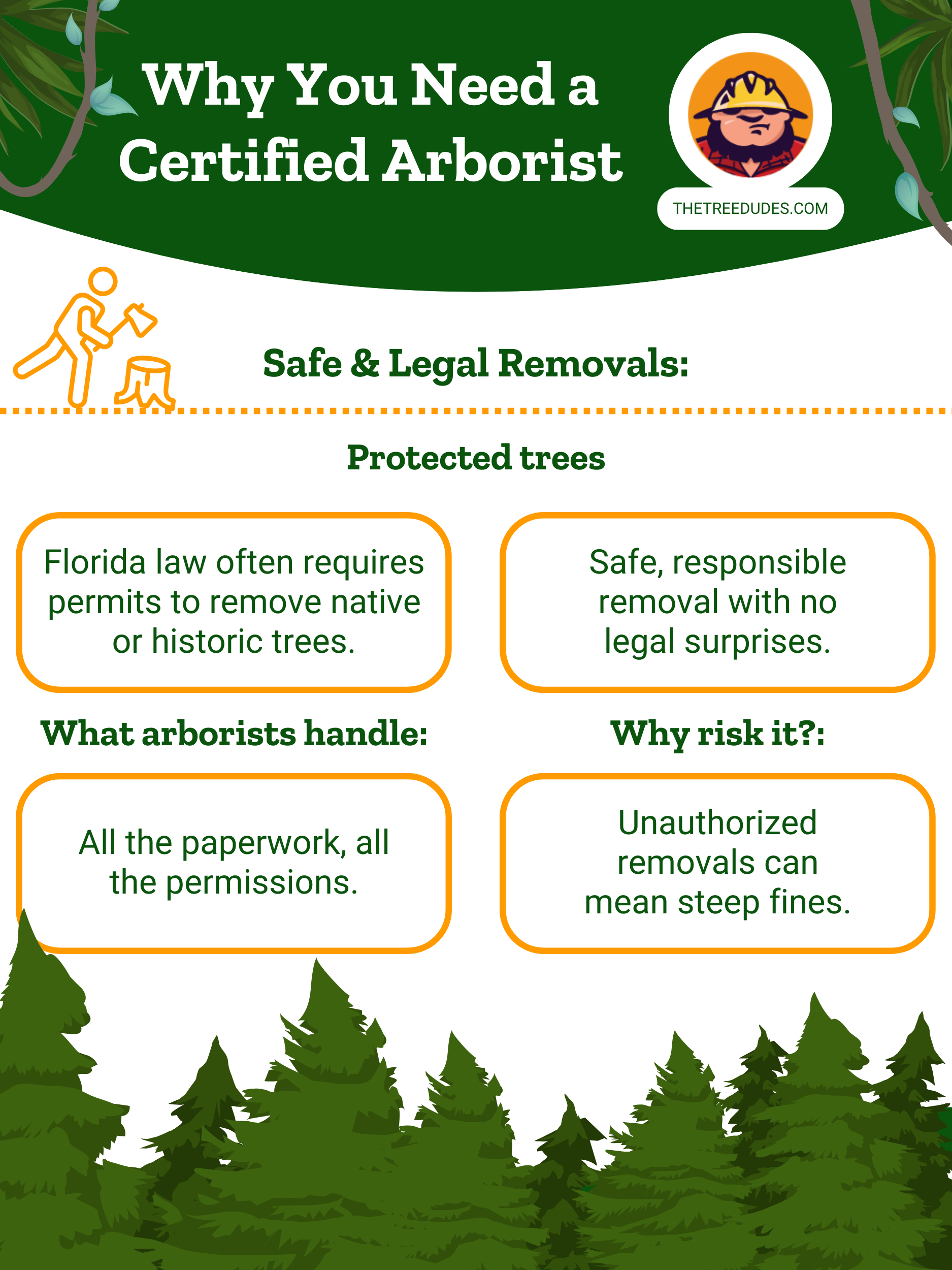
Safe and Legal Removals
Sometimes a tree is in the wrong spot or poses a real threat to your home or infrastructure. Florida law often requires permits for removal, especially for native or protected species.
Certified arborists handle the paperwork, secure the necessary permissions, and carry out removals safely and responsibly, so you do not have to worry about accidental violations.
State of Florida Statutes
The state has its own set of guidelines, and sometimes, they are the most significant and far-reaching rules in the playbook. Knowing the tree laws in Florida is extremely important for homeowners, property managers, and anyone involved in landscaping.
Florida Statute 163.045
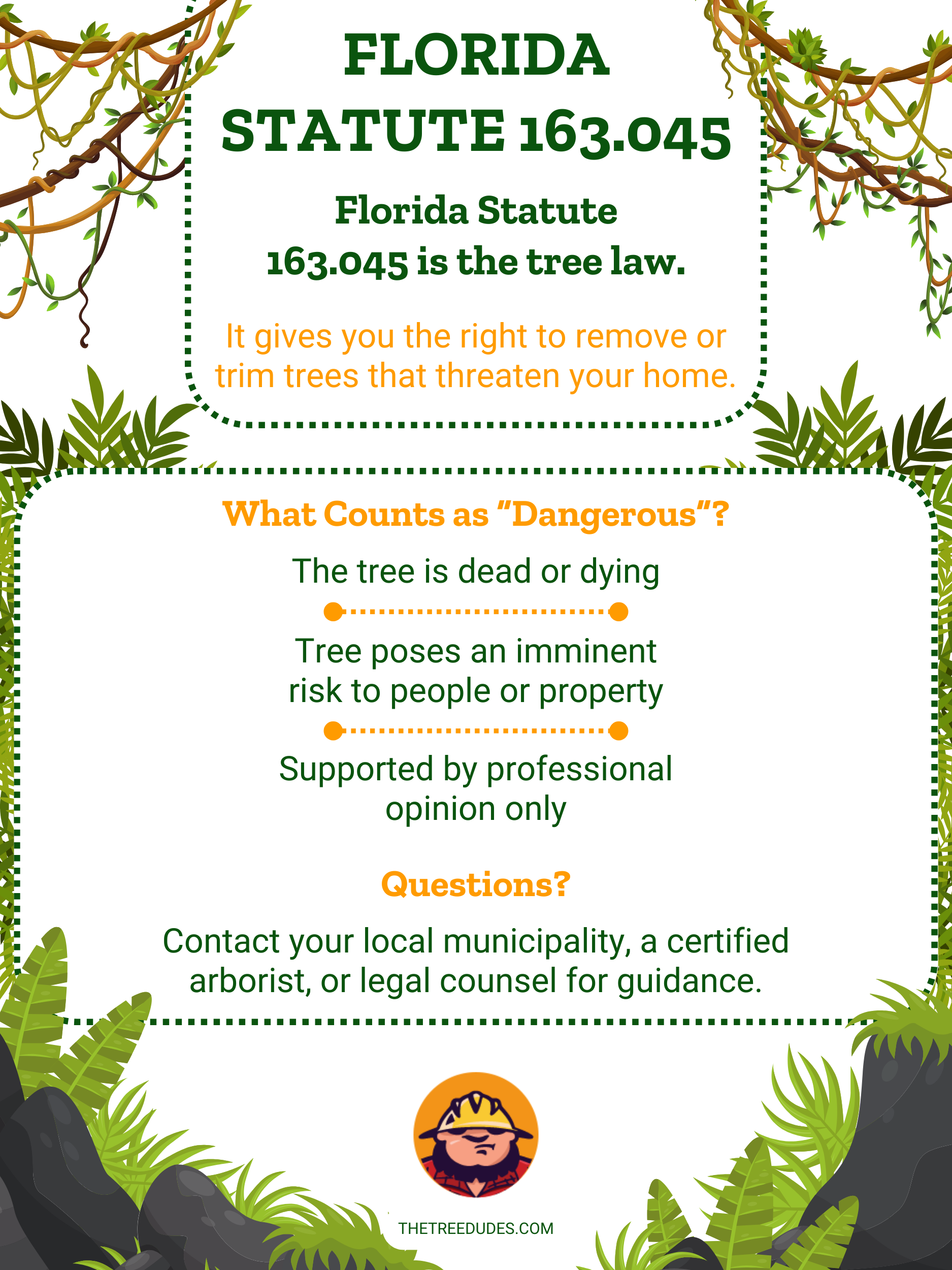
Let’s break down one of the most important laws for Florida property owners: Florida Statute 163.045, often called the “Private Property Rights” law. This statute gives homeowners the right to trim, prune, or even remove trees if those trees pose a real risk to people or property.
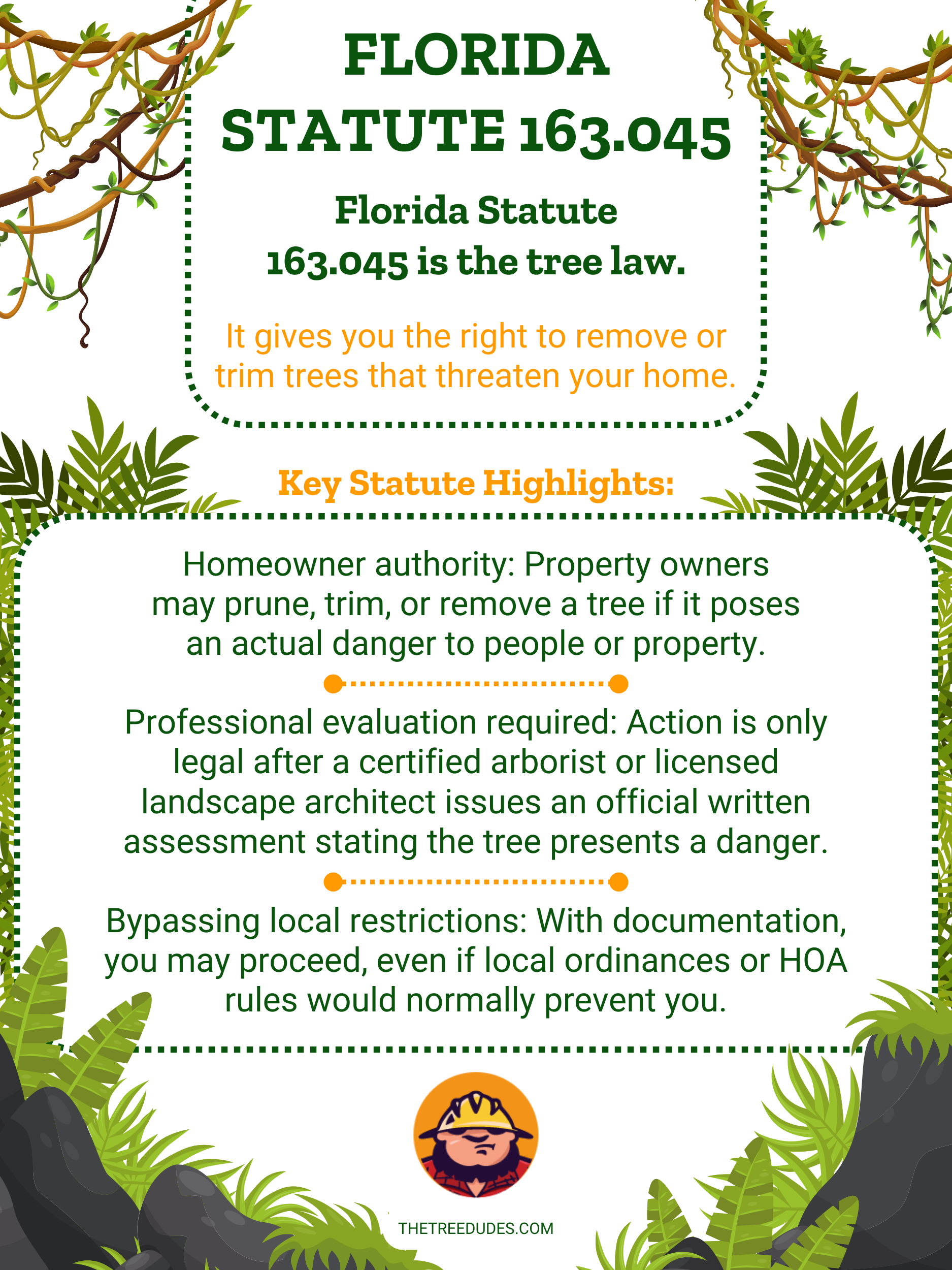
But (and it is a big “but”), you can not just make that call on your own. The law requires that a certified arborist or a licensed landscape architect provide official documentation that the tree in question is dangerous.
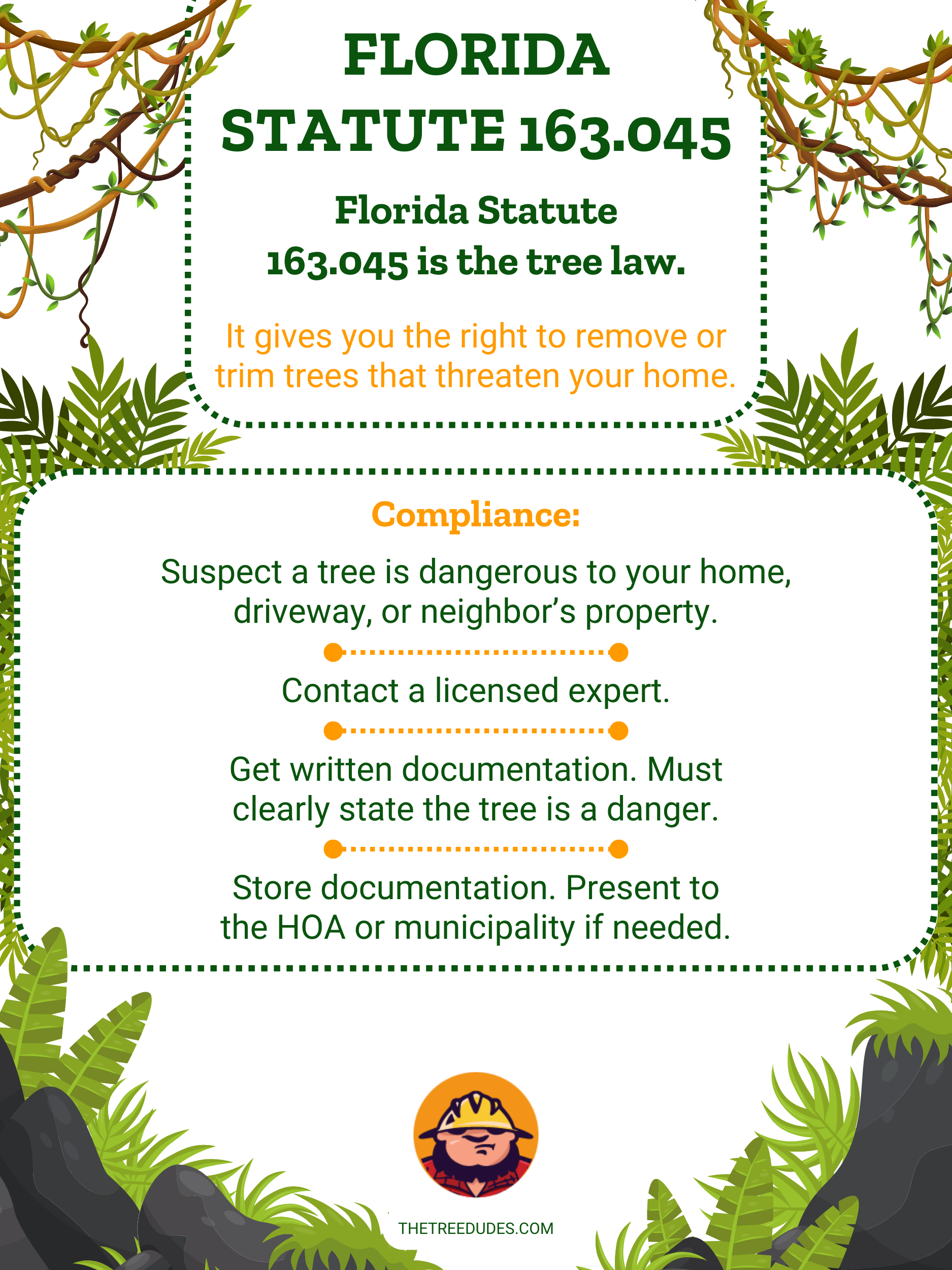
This law cuts through some of the red tape, but it does not give a free pass, professional evaluation and paperwork are a must. If you skip this step, you could still face fines or trouble with your local HOA or municipality.
Florida’s Push for Native Planting
Florida is not just worried about removing trees, but also about planting. The state encourages residents to choose native species for landscaping. Why? Native trees and plants are better adapted to Florida’s climate, support local wildlife, and usually require less maintenance and water. Plus, planting invasive species can lead to environmental headaches and even legal problems down the road.
In many areas, local and state incentives are available for planting the “right tree in the right place.” For example, some Florida cities offer free native seedlings to residents who replace invasive species with native options.
Mitigation Requirements
Thinking of removing a large, protected, or “specimen” tree? Florida law often requires mitigation. In plain English, that means planting new trees to make up for what has been removed.
You may need to plant one, two, or even more new trees for every protected tree you remove (sometimes at a 2:1 or 3:1 ratio). Mitigation ensures that the local environment remains healthy and vibrant, even as properties are developed or improved.
The Florida Property Owner’s Step-by-Step Guide to Arborist Services
In Palm Beach, Miami, Tampa, Orlando, or anywhere else in Florida’s vast subtropical landscape, one thing is for sure: sooner or later, your property is going to throw you a tree curveball. When it does, here is your step-by-step action plan to handle it.
Step 1: Spot the Trouble
Be vigilant. Florida’s trees are beautiful, but they are also unpredictable, especially after storms or long, rainy seasons. Watch out for warning signs like:
- Sudden leaf loss, dead or drooping branches.
- Mushrooms or fungal growth at the base (a classic sign of root rot).
- Sawdust piles (hello, wood-boring insects).
- Weeping sap, cracks, or splits in the trunk.
- Tilting trees or exposed roots after a hurricane.
If you see any of these symptoms, or if a recent storm has left branches dangling dangerously, document everything. Snap clear photos, take down notes, and resist the urge to “just handle it” yourself. In Florida, improper tree work can cause more harm than good, and in some areas like Miami-Dade or Broward County, unpermitted tree removal is a quick way to get fined.
Step 2: Call a Certified Arborist
For real peace of mind (and to stay on the right side of the law), always look for an ISA-certified arborist. Ask to see their credentials, request references, and confirm that they are fully insured. They will help you avoid violations and make sure every step is legal.
Step 3: Professional Assessment and Written Report
When your arborist arrives, here is what to expect:
- A thorough inspection of the tree(s), the surrounding soil, and the property layout.
- Diagnosis of any pests, diseases, or structural issues.
- A clear, written action plan (pruning, removal, treatment, or ongoing monitoring).
If tree removal or major pruning is needed, your arborist will prepare all necessary documentation, often required for permit applications. Many Florida cities require an official arborist’s report for any protected or specimen tree work.
Step 4: Apply for Permits
Florida takes tree protection seriously. In most cities and counties, you can not remove, prune, or even treat certain trees without a permit. Your arborist should guide you, but ultimately, you are responsible for compliance.
Your permit application may include:
- The arborist’s official report.
- Photos and property/site maps.
- Detailed species identification.
- A replanting or mitigation plan (if required by law).
Florida Statute 163.045 allows property owners to remove dangerous trees with certified documentation, but many areas still require you to notify local authorities or apply for a permit, especially if you are in a historic or environmentally sensitive district.
Step 5: Safe Removal or Pruning
Once you have approval, the real work begins. A professional arborist will:
- Mark off work areas to protect your home, neighbors, and passersby.
- Use modern, specialized equipment, not just an old chainsaw from the garage.
- Remove all debris according to strict local regulations.
- Grind down stumps (if permitted or required).
- Document every step with photos and receipts, just in case the city asks for proof.
Owning property in the Sunshine State means more than just tending to a lawn. Here, you are the caretaker of a living, breathing ecosystem, one that is as beautiful as it is demanding. Letting your trees go without care is not the best idea, especially in Florida. With fast growth, the risk of hurricanes, and some pretty strict local rules, ignoring your trees could end up being a costly mistake.
Build a relationship with a trusted, ISA-certified arborist, you can ask them any questions you may have before hiring a professional tree service. Get annual assessments, keep records of all work performed, and never attempt risky removals or major pruning on your own.