







Hurricanes start to form when the low air pressure starts pushing hot air upwards in a spiral. Once the hot air reaches a certain height, it starts to cool and condense, forming large amounts of heavy clouds. That happens above the ocean’s surface, and it starts slow, but as it moves toward the land, it gains momentum and power. Once the wind reaches the speed of 74 miles an hour, the storm turns into a hurricane. There is a calm area in the middle, called the eye of a storm. Everything around it is pure destructive power, capable of destroying entire towns.
Hurricane Power
Hurricane power is usually classified as Category 1, 2, 3, 4, or 5. Category 1 can destroy a few houses and cause power outages.
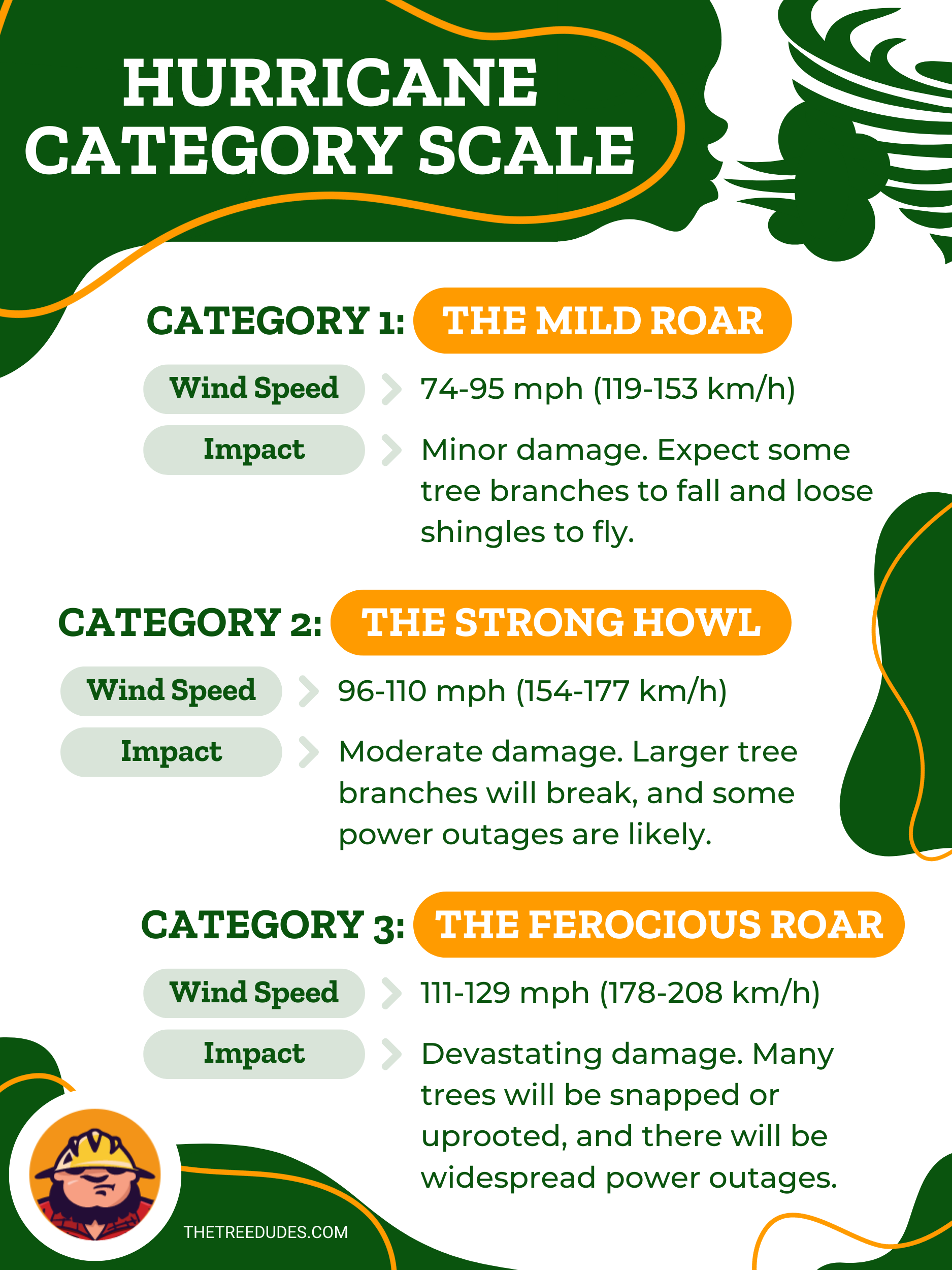
In contrast, Category 5 is so strong that it can destroy everything in its way and people must be evacuated from the area. Hurricanes are also accompanied by torrential rains that cause flooding.
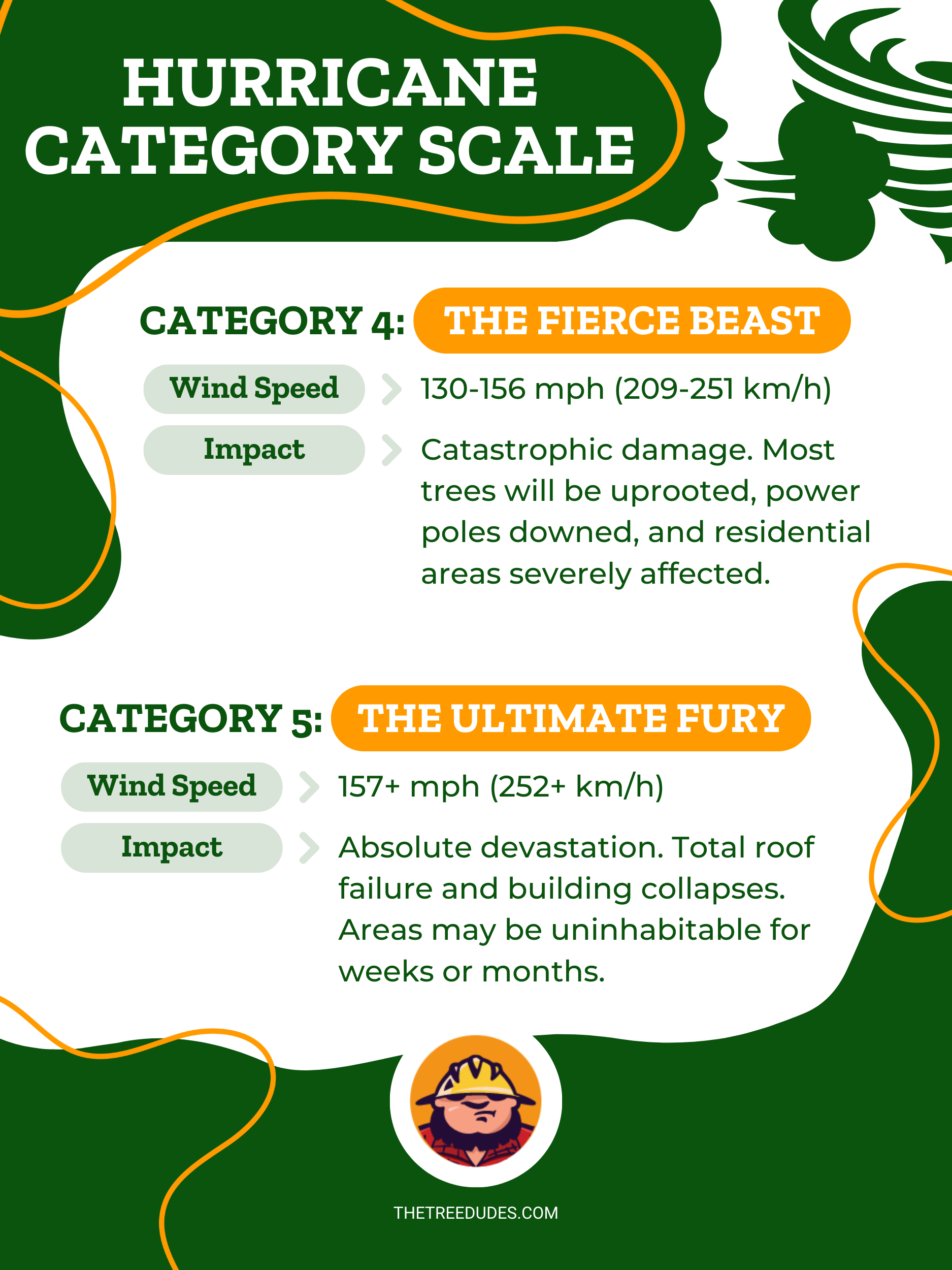
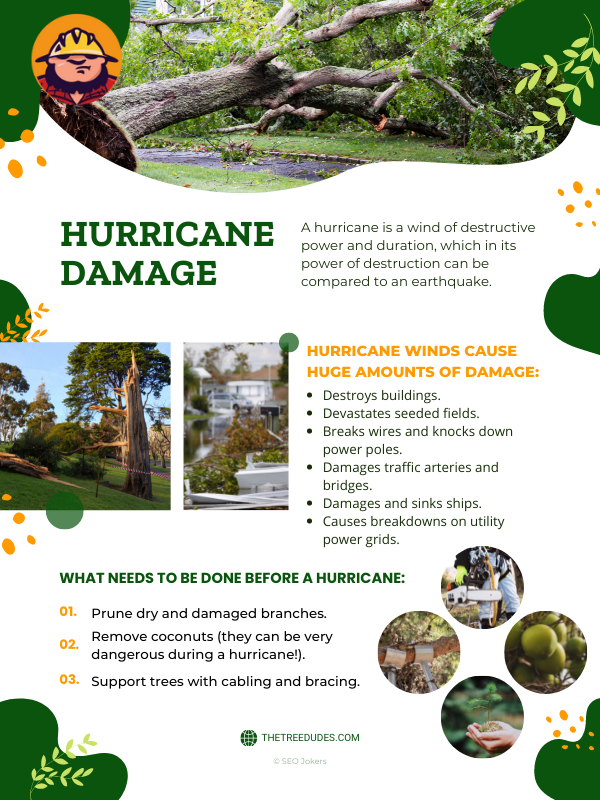
Hurricane winds can cause some serious damage. They can:
- Destroy buildings
- Devastate seeded fields
- Break wires and knock down power poles
- Damage traffic arteries and bridges
- Damage and sink ships
- Cause breakdowns on utility power grids
There have been cases where hurricane winds have derailed trains and collapsed factory chimneys.
From 2000 to 2020, Florida was hit by 79 tropical storms, causing more than $123 billion in damages. Additionally, tropical cyclones in Florida have caused 145 direct deaths and at least 92 indirect deaths during this period.
In 2017, Hurricane Irma caused the most damage in Florida’s history. The entire state was declared a disaster zone, with about 6.3 million people evacuated, which is a third of Florida’s population. Power lines were utterly broken, leaving villages, towns, and many parts of major cities without power.
Tree Damage
The effects of a hurricane can be catastrophic for trees as well. During a storm, branches break, the trunk is damaged, and a tree can even be uprooted in strong gusts.

Such trees are dangerous because they can crash on cars, buildings, structures, and even people. Suppose a tree falls on electrical wires during a hurricane. In that case, there is a high possibility of a fire. Trees also often fall directly onto the roadway, creating car accidents and traffic jams. Such situations can lead to the death of many people.
A hurricane is dangerous enough even for healthy trees. However, if a tree is susceptible to a disease or is considered an emergency, there is a high chance that it may fall even in a weak gust of wind.
Especially dangerous during the hurricane are trees with:
- Dry branches or leaves
- A damaged root system
- A very sloping trunk
- A crooked trunk
How to Prepare Trees for a Hurricane?
The best way to deal with dangerous situations is to prevent them. If you want your trees to stand strong despite powerful winds, preparing them in time is the best way forward.
Start with removing smaller branches that could break easily. Then carefully inspect the trunk and try to locate any signs of decay or disease.
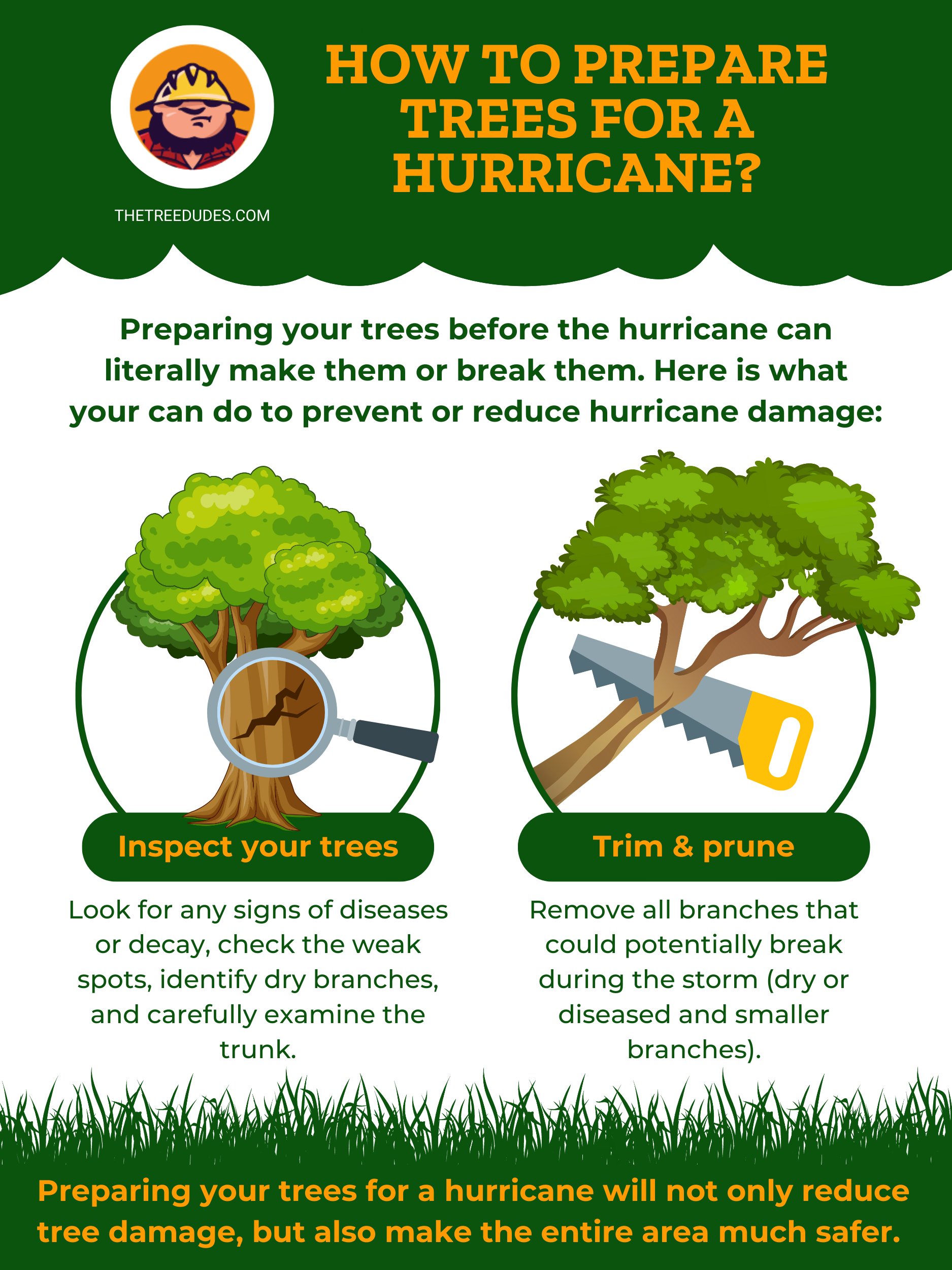
Check the canopy too, because sometimes pests like to linger high above the ground, and cause damage that you did not notice before.
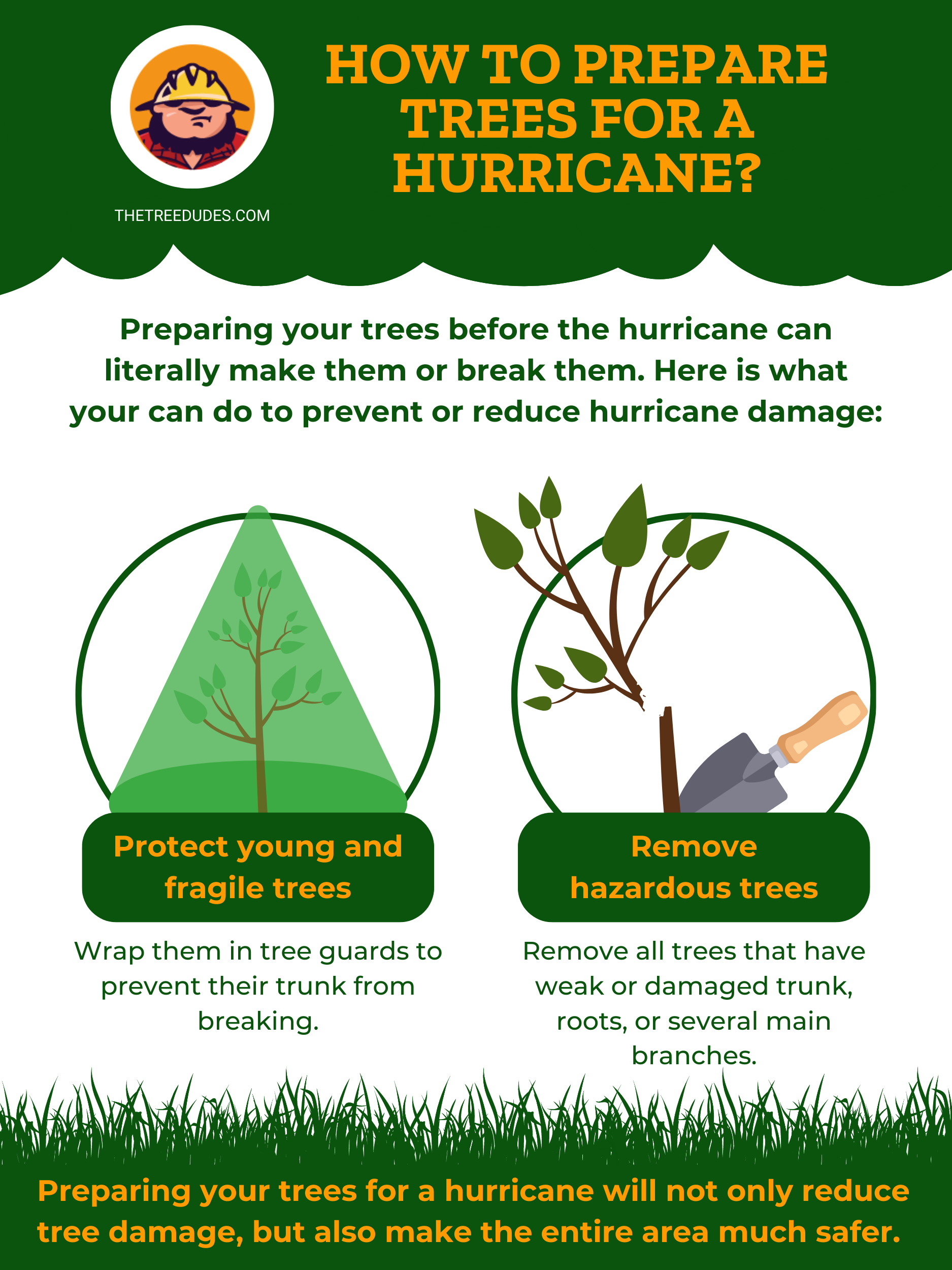
If you notice any dry or diseased branches, remove them as well, because the wind could break them faster than you think.
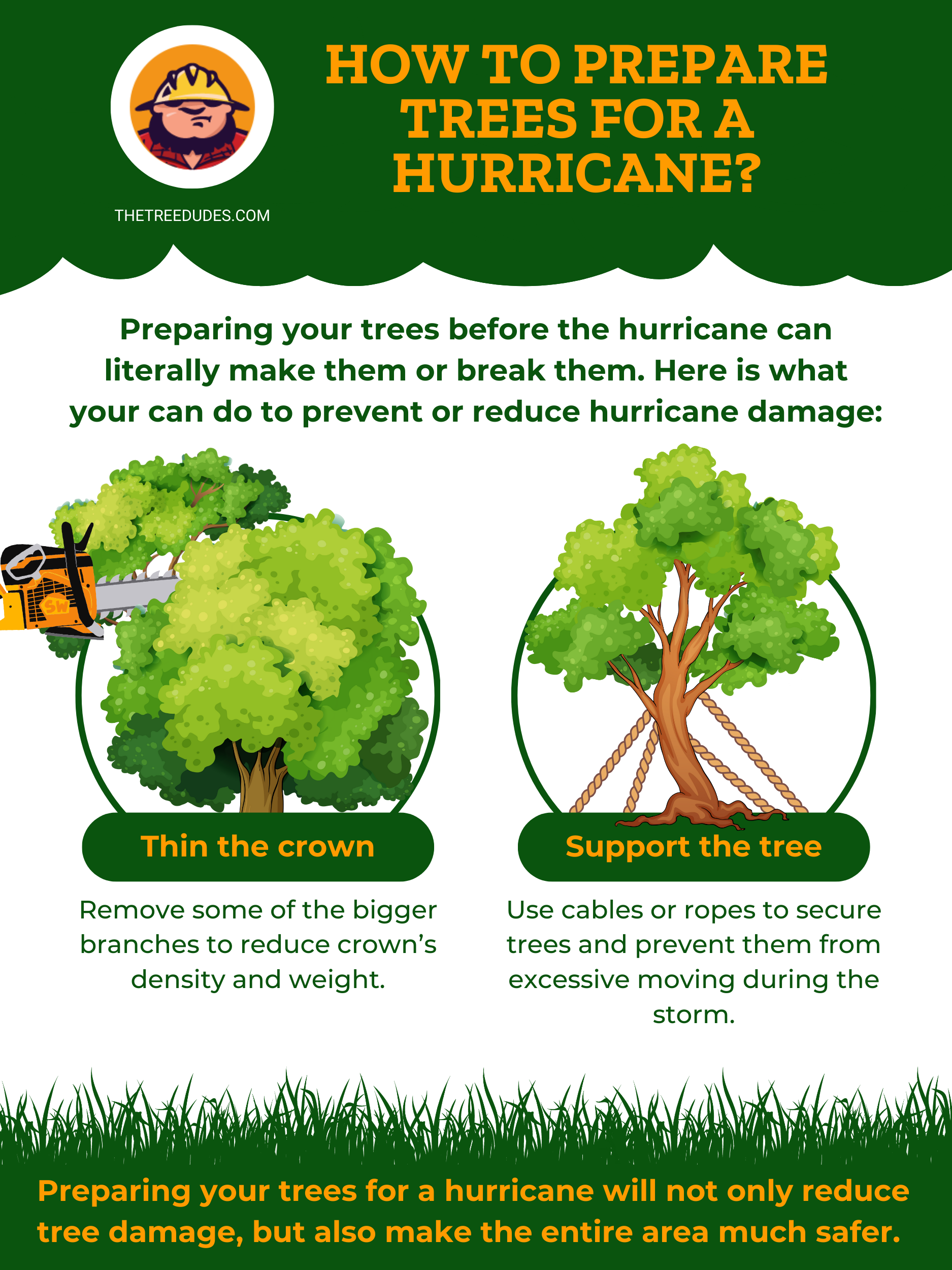
If your trees are bigger and their crown is particularly heavy, try to reduce their weight by removing some of the heavier branches. You can also reinforce the tree with cabling or bracing.
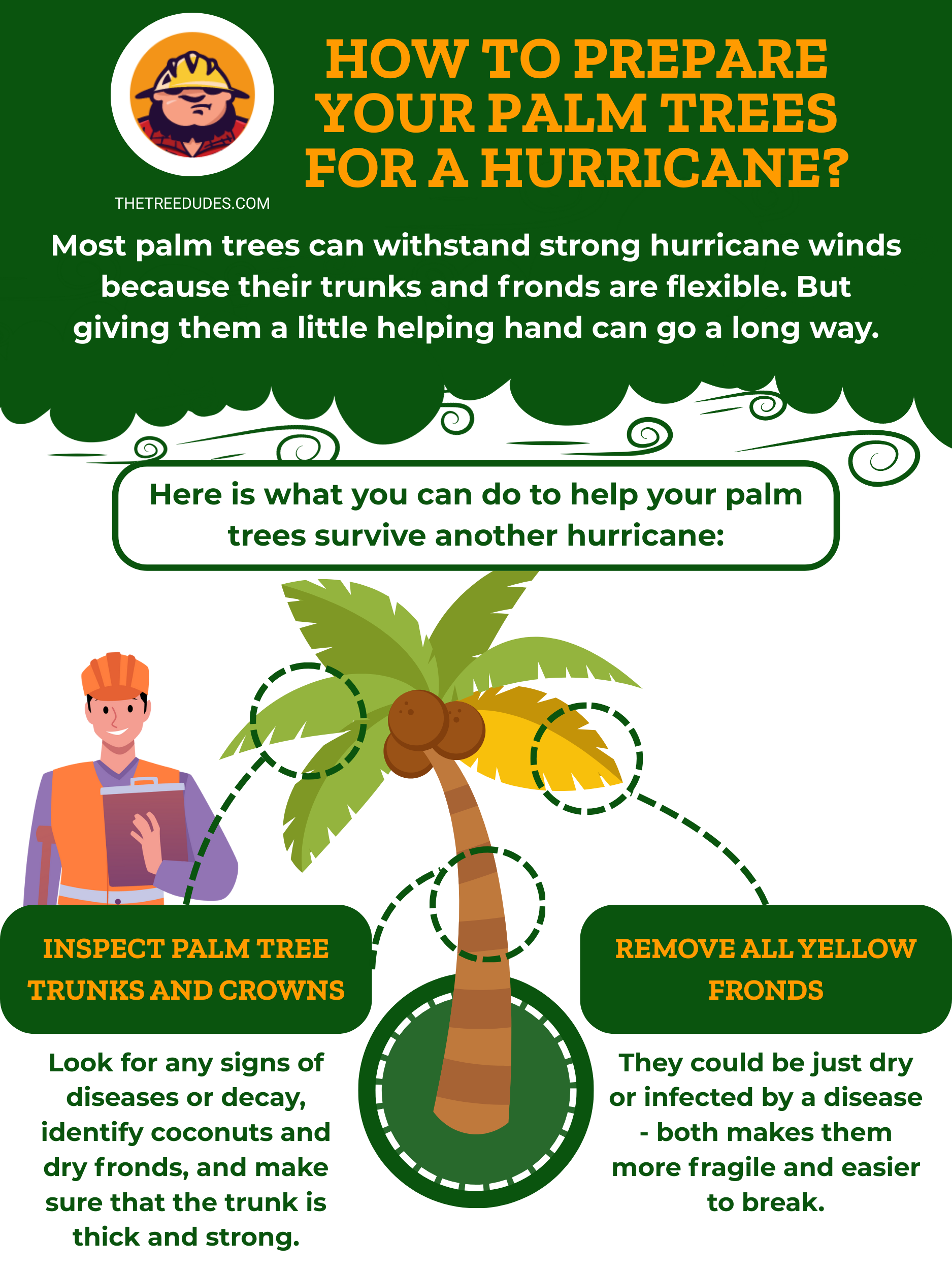
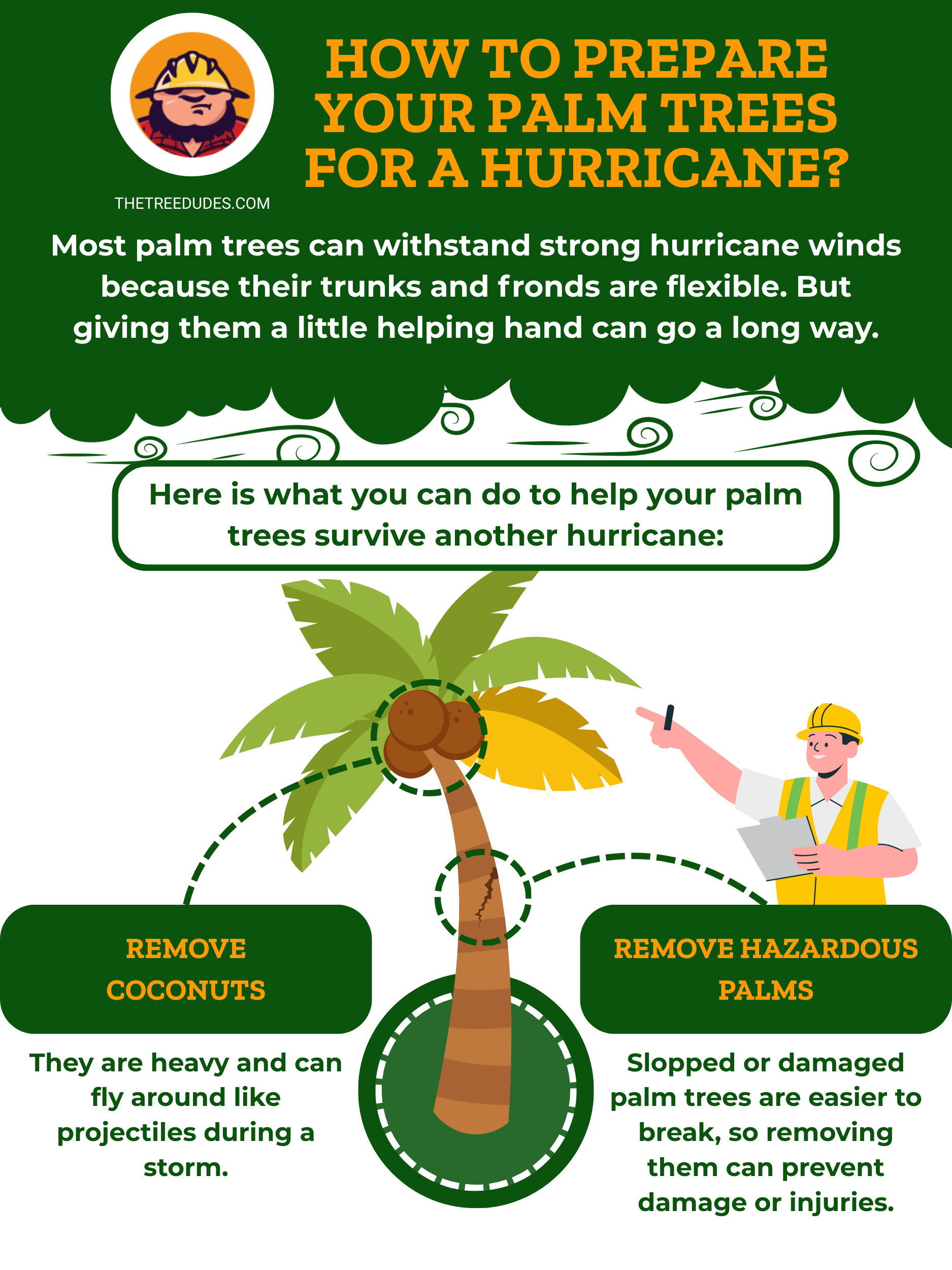
If you have palm trees, make sure to remove any coconuts or dry fronds to prevent them from flying around.
Preparing trees for a hurricane is is not a one-man job, especially if you have lots of trees around the property, so hire a tree service and let professionals do the work. Our team offers all tree services you need to prepare your trees for a hurricane, from thorough estimate, trimming & pruning, to hazardous removal and cabling & bracing.
So, to sum it up, here is what you should do BEFORE a hurricane:
- Prune dry and damaged branches
- Remove coconuts (they can be very dangerous during a storm!)
- Support trees with cabling and bracing
How to Clear Hurricane Damage?
After the storm has passed, the first thing you should do is assess the damage. If you cannot do it yourself, contact professionals and consult. A team of qualified experts will immediately take your call and go to the place to evaluate the damage and eliminate bad weather consequences.
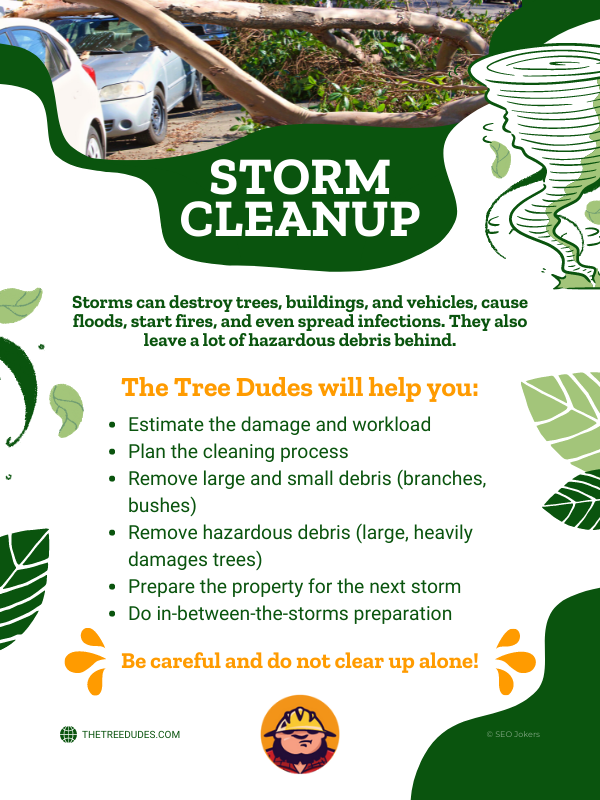
After they assess the situation, they will provide professional tree removal services to reduce further damage and to return your property to normal. They will, on demand, remove debris and clear out the area without exposing you to any danger.